
 English
 русский
 Español
 عربى

No 1255, Xingye Road, Tianzihu Modern Industrial Park, Anji County, Zhejiang Province, China
Content
When you fit out a 60-seat dining room or a 150-cover hotel breakfast area, the chairs you choose will be used more in one year than a home dining chair sees in a decade. A model that feels comfortable in a showroom can develop loose joints, compressed foam, and visible fabric wear within months of commercial service. The right approach is to treat dining chairs as operational equipment rather than decor. Evaluate the frame, upholstery, dimensions, and sourcing process before you approve a single sample. In short, the correct chair for a restaurant, hotel, or other commercial space balances construction durability, maintenance effort, guest comfort, and the manufacturer's ability to reproduce that quality consistently at scale.
Every commercial venue uses chairs differently, so the first step is defining the workload. A cafe in a busy retail district may turn each table over four or five times a day, while a fine-dining restaurant serves fewer covers but keeps guests seated for two hours. A hotel meeting room stores chairs in racks and moves them between events on a weekly basis. These operating patterns determine which chair specifications you should prioritize.
| Venue type | Daily exposure | Priority factors |
|---|---|---|
| Fast-casual / cafe | High turnover, frequent wiping and moving | Durable frame, stain-resistant fabric, stackable |
| Casual dining restaurant | Continuous seating, moderate turnover | Comfort plus cleanability, stable construction |
| Fine dining | Low turnover, long dwell times | Comfort, premium appearance, quiet movement |
| Hotel / banquet | Storage, transport, mixed guest profiles | Nestability, lighter weight, batch consistency |
Defining the workload first prevents the most common specification error: selecting a non-stacking armchair for a function room, or ordering heavy upholstered seats for a cafe where staff must wipe them clean five times a day. The summary above is a starting point, but adjust the priorities based on your actual operation, floor plan, and staff capacity.
The frame determines how long a dining chair lasts in commercial service. Steel is the sensible default for restaurants and hotels because it resists flexing, keeps its geometry under repeated loading, and stands up to the alkaline cleaning chemicals common in foodservice environments. Wood frames can work in low-turnover fine dining settings, but they require higher-grade hardwoods and precise joinery, which raises both the price and the risk if you cannot inspect the production process closely.
When evaluating any chair, look for welded joints in high-stress areas rather than screws that can loosen over time, and confirm that the frame has a powder-coated or electroplated finish to resist corrosion. Ask the supplier for load-test data and dimensional tolerances. Batch consistency matters as much as individual strength: when a manufacturer delivers 120 chairs, every unit should feel identical when placed on an uneven floor.
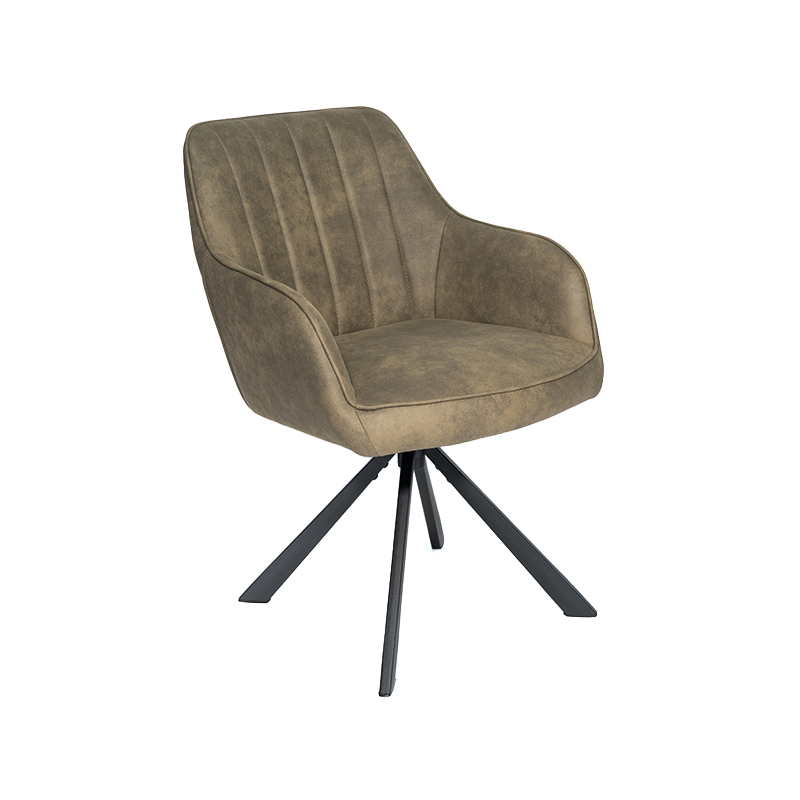
One practical example is a 360-degree swivel dining chair with a steel frame and padded upholstery. The metal base provides commercial-level rigidity, while the swivel function reduces strain when guests enter and leave tight table arrangements.
 360-Degree Swivel Fabric Dining Chair with Steel Frame and Padded UpholsteryThis swivel chair pairs a cold-rolled steel base with padded fabric seating, offering rotation that helps guests move easily in tight table arrangements. Its construction suits residential and light commercial dining spaces.View Product →
Fabric in a dining environment has a harder life than it does in a home. Guests slide in and out, servers lean across the table, and spills happen daily. Two fabric specifications matter most: abrasion resistance and cleanability. For commercial use, look for an abrasion rating around 30,000 Martindale rubs or higher. But the fabric is only as good as the layers beneath it, so check three things before ordering: the density of the foam, whether the fabric is treated against water- and oil-based stains, and how the upholstery reacts to repeated cleaning with commercial disinfectants. Treated polyester and performance fabrics can handle direct wiping, while untreated cotton blends will discolor and wear quickly.
High-back dining chairs with easy-to-clean, stain-resistant upholstery are a common choice for restaurants that want a more private dining feel without adding hours of upkeep. The higher back also reduces noise in open dining rooms and protects walls from scuffs.
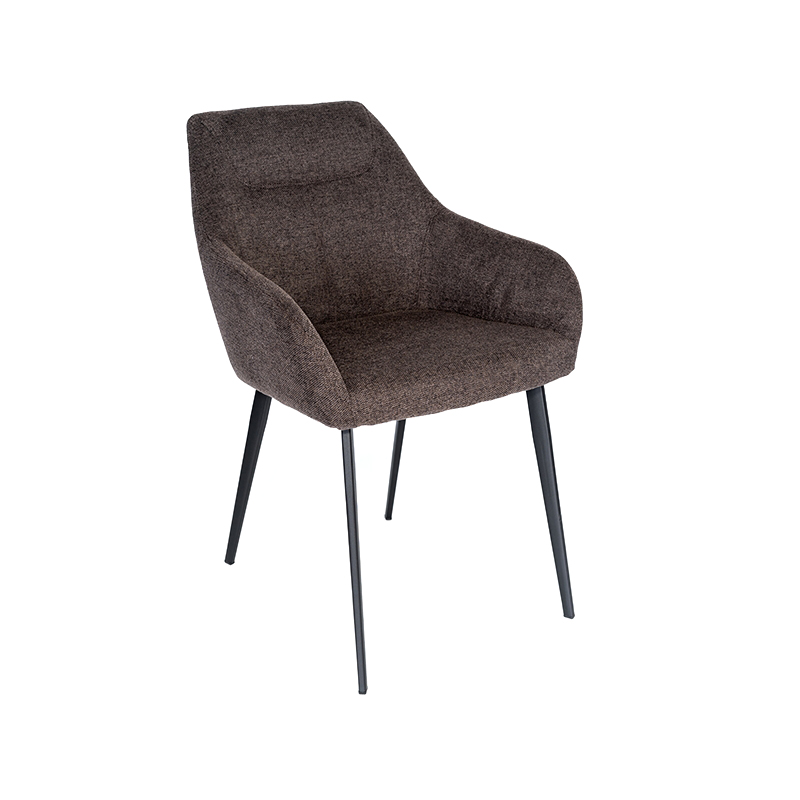
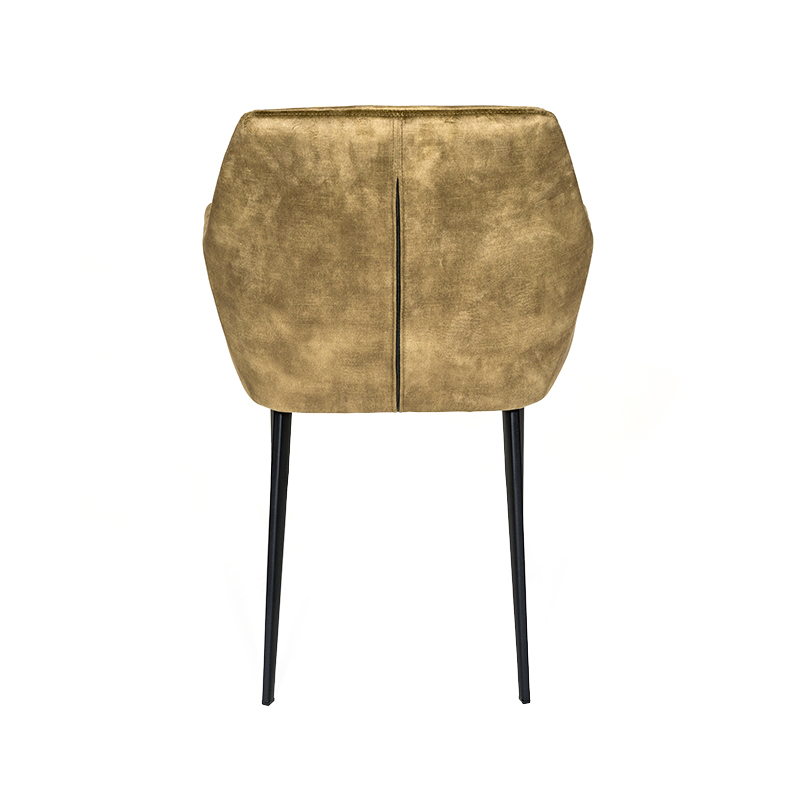 High-Back Stain-Resistant Fabric Dining Chair with Four Metal LegsDesigned for restaurants and cafes, this high-back chair uses stain-resistant fabric and high-density foam to simplify cleaning and resist deformation. Its stable iron legs and supportive back make it a practical choice for busy dining areas.View Product →
Comfort in commercial seating comes from dimensions, not vague descriptions. Seat height must match your table height: a standard 30-inch dining table pairs with a seat height of about 18 inches, leaving a 10-to-12-inch gap between the seat surface and the table edge. Seat depth should stay around 17 to 18 inches so guests can sit fully back with their feet planted comfortably. A backward tilt of two to four degrees reduces lower-back pressure without feeling reclined.
If you are sourcing for a hotel or venue that hosts guests of all sizes, avoid sharp front edges, choose medium-density foam that will not bottom out quickly, and consider swivel functionality in tighter floor plans. A steel-framed upholstered swivel chair combines the ergonomic flexibility of rotation with the structural consistency required in commercial use.
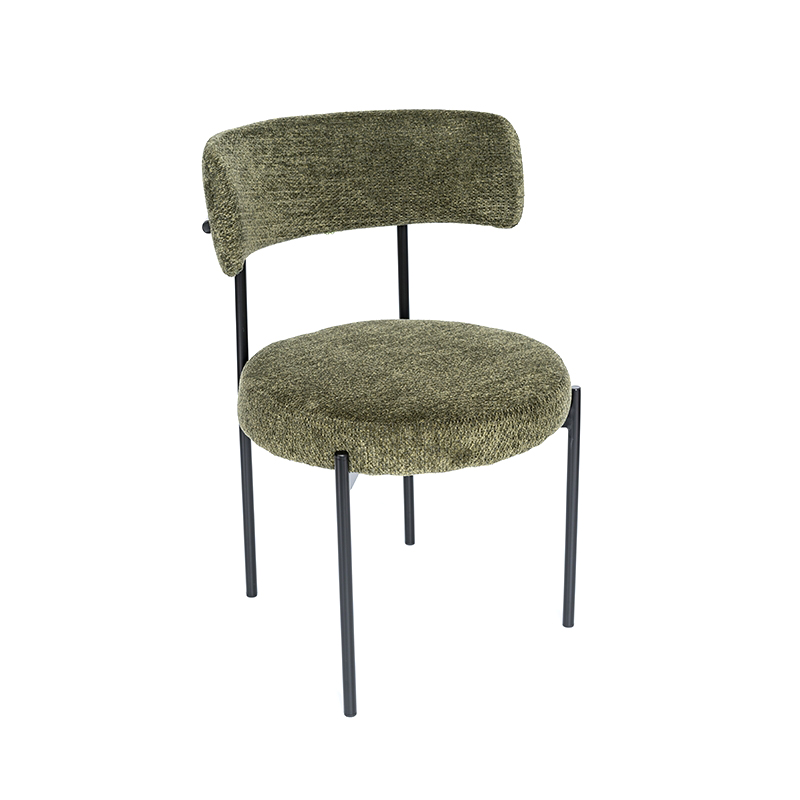
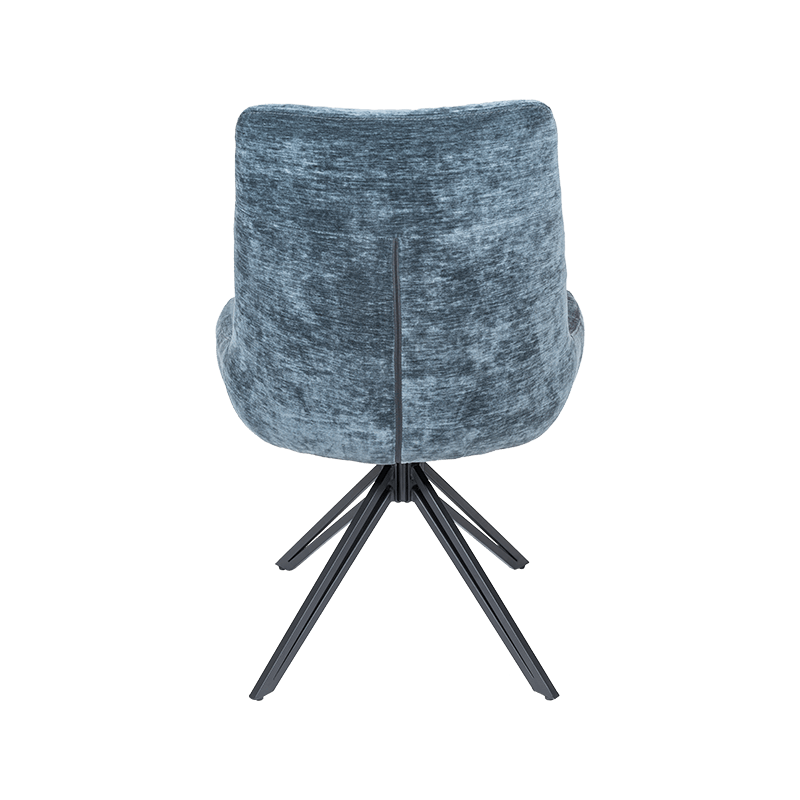 Navy Blue Velvet Swivel Dining Chair with Steel Frame and Four Metal LegsThis armless chair combines navy velvet upholstery with a powder-coated steel frame and silent 360-degree swivel. Its slim profile and stable four-leg base suit modern dining rooms or kitchen islands while offering comfortable, space-saving seating.View Product →
Few commercial spaces have spare room for idle chairs. Multi-purpose venues stack chairs in corners, banquet halls wheel them into staging areas, and hotel staff moves dozens of units between events every week. Before you choose a design, answer two questions: how many chairs can you stack or nest in the space you actually have, and how heavy is each unit? Steel-frame stackable chairs usually stack four to six high, while heavily upholstered models may stack only two or three. If staff carries chairs daily, weight becomes a labor issue as much as a storage issue. Lightweight does not have to mean fragile, but it does require a closer look at the frame gauge and joint design.
Once your order exceeds a few dozen units, you are buying a production run, not a single chair. That changes the selection process. A manufacturer controls the frame material specifications, the upholstery grade, the foam density, and the final inspection, so evaluate the factory as carefully as you evaluate the product. When you work directly with a manufacturer that produces commercial chairs at scale, you can validate materials, request load-test data, and approve a physical sample before mass production begins.
If you need specific dimensions, fabric choices, colors, or branding elements, an ODM/OEM approach lets you adapt an existing design or develop a custom chair around your requirements. Confirm how the factory handles sample approval, production lead times, batch quality checks, and replacement parts before you sign. These operational details are often the difference between a smooth project and a costly retrofit.
Run through these checks before confirming a bulk order:
Choosing the right dining chair for a commercial space is ultimately a process of verification: verify the workload, verify the construction, verify the fabric, and verify the manufacturer behind the order.

Products
Contact info.
No 1255, Xingye Road, Tianzihu Modern Industrial Park, Anji County, Zhejiang Province, China
+86-13587919519
sales@bftfurniture.com
