
 English
 русский
 Español
 عربى
عربى

No 1255, Xingye Road, Tianzihu Modern Industrial Park, Anji County, Zhejiang Province, China
Content
A procurement manager recently opened a supplier catalog and found fourteen chair models, each labeled "ergonomic." Only three had an adjustable lumbar support, two had a seat depth mechanism, and no two shared the same height range. That scenario is common in modern workspace buying. In offices where people switch between focused solo work, video calls, and standing-desk breaks, chair selection depends on measurable specifications, not marketing labels. When choosing ergonomic office chairs for modern workspaces, the practical conclusion is to check five areas: adjustability range, lumbar geometry, seat depth and tilt, material durability, and base stability. This guide walks through each checkpoint, explains the numbers that matter, and covers what to verify when sourcing chairs in bulk.
Ergonomic chairs succeed when they fit different body sizes across an eight-hour day. The first number to verify is the seat height range. A pneumatic lift that spans roughly 40 to 53 cm from floor to seat allows users with different leg lengths to sit with knees near a 90-degree angle. For a standard 72-75 cm desk, that range covers most adult statures.
The second number is lumbar support travel. A fixed lumbar bump cannot serve both a 165 cm analyst and a 190 cm supervisor. Look for vertical lumbar movement of at least 6 to 8 cm, and ideally a depth adjustment of 2 to 3 cm. The center of the support should rest near the belt line, where the lower spine curves inward.
Seat depth is the third number. A pan that is too deep presses against the back of the knees; one that is too shallow fails to support the thighs. A 2 to 4 cm sliding seat pan lets each user find the right position. Keep a tape measure handy when comparing models; published dimensions vary more than product photos suggest.
Not every budget needs a fully loaded task chair, but every purchase should be based on controls a user can actually reach and adjust from the seated position. Compare any shortlist against these five points.
Height must be adjustable while seated, using a gas-lift lever. The range should match the desk height in the intended workspace, and the lever should be easy to reach without leaning forward.
At least vertical adjustment is the minimum; depth adjustment is a genuine plus. The backrest should support the lower curve instead of forcing one preset posture that fits only a narrow range of body sizes.
A sliding seat pan accommodates thigh length. A tilt mechanism that shifts the seat angle from 0 to 12 degrees reduces pressure on the back of the legs and encourages small posture changes throughout the day.
Armrests that cannot move lock the user into one arm position. Vertical height, width, and pivot adjustments are the useful upgrades. If the budget is tight, priority goes to height-adjustable armrests over width or pivot control.
The backrest should follow the body when the user leans back, with tension tuned to the user's weight. A lockable recline helps for tasks that require a fixed posture, such as extended writing or drawing work.
| Feature | Basic Chair | Task Chair | Multi-Adjustable |
|---|---|---|---|
| Seat height range | Fixed or narrow | 8-10 cm span | 12-14 cm span |
| Lumbar adjustment | None | Vertical only | Vertical plus depth |
| Seat depth | Fixed | Fixed or 2 cm | 3-4 cm slide |
| Armrests | Fixed | 2D (height and width) | 4D (height, width, angle, pivot) |
| Recline tension | Single position | 2-3 positions | Continuous plus lock |
| Typical use | Occasional seating | 4-6 hours daily | 8+ hours, multiple users |
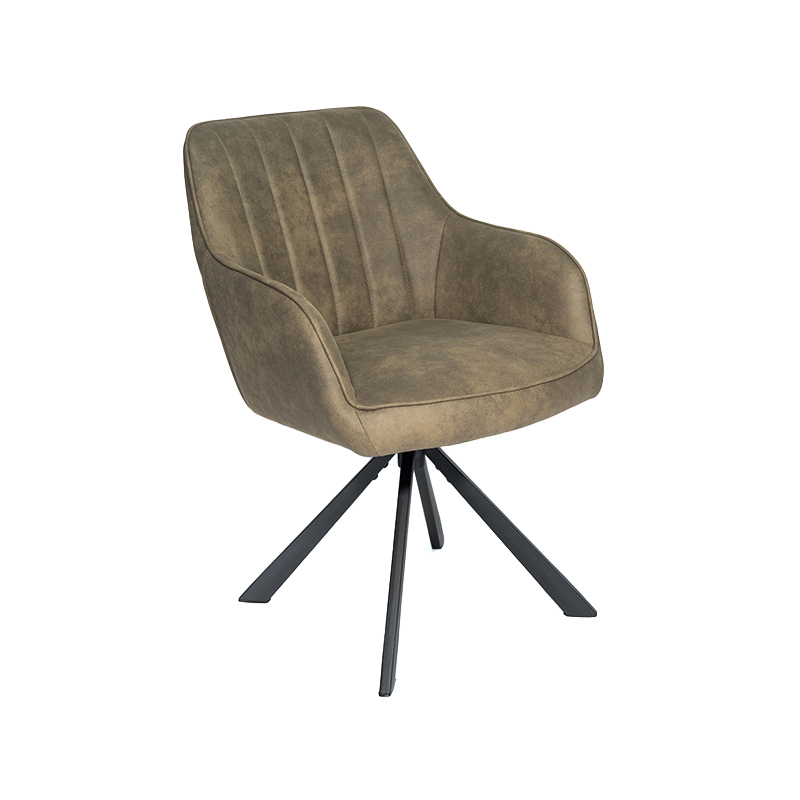
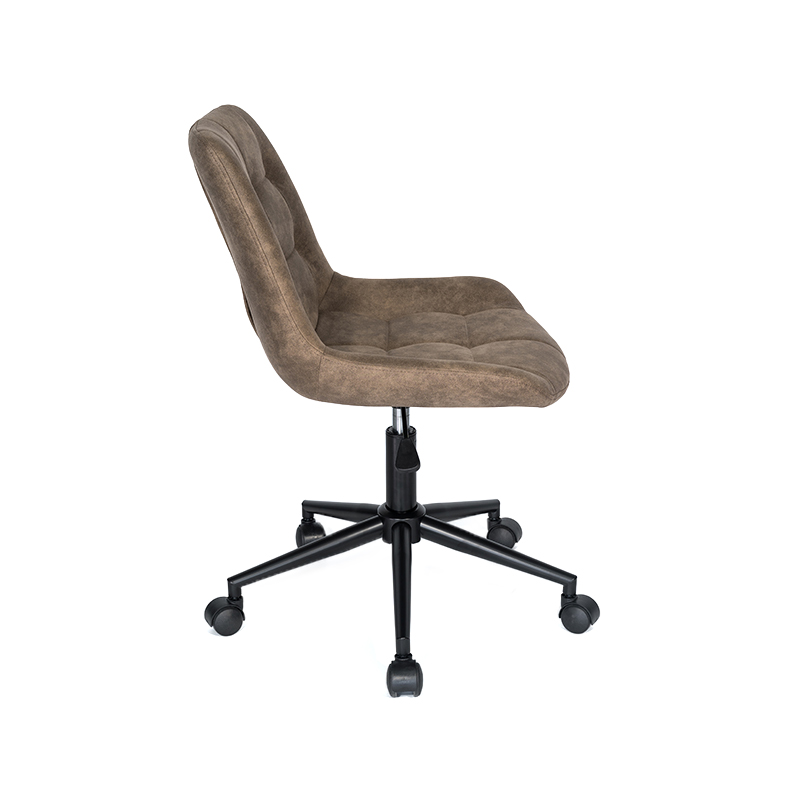 360 Degree Rotation Brown Lift and Swivel Task Chair for Office and LoungeThis chair offers full swivel movement and height-lift adjustment, making it a practical choice for shared workstations and home offices. Its sturdy base supports stable rotation and continuous use, aligning with the paragraphs on backrest motion and fabric durability.View Product →
Fabric choice drives both comfort and maintenance costs in a working environment. For upholstered office chairs, look for a fabric with a Martindale abrasion rating of at least 30,000 rubs for general office use, and 50,000 or higher for high-turnover spaces. Breathable weaves reduce heat buildup during long meetings, a common complaint with synthetic leather seats. Stain-resistant finishes cut the frequency of professional cleaning.
PU leather wipes clean easily but performs poorly in warm climates and can peel at seams after a year of continuous use. For the seat cushion, high-resilience cold-cure foam with a density near 40-50 kg/m3 keeps its shape, while low-density foam develops visible dents after about six months of daily seating. A 5-8 cm thick cushion is the practical minimum for all-day sitting.
The base and rolling components are the most common cause of premature chair failure, yet they receive the least attention during selection. A five-star base is the minimum configuration for a swivel chair with a pneumatic lift. Check the stated load capacity; for commercial environments, 120 kg or more is a practical threshold.
Casters must match the floor: hard nylon rolls easily on carpet, while polyurethane suits wood, tile, and concrete. If the workspace has mixed flooring, ask the supplier for dual-duty casters. The lifting column should be a Class 2 or Class 3 gas spring with no side play under load. Rock the chair from side to side before buying; the column and base should resist deflection, and the swivel should turn smoothly without catching or grinding.
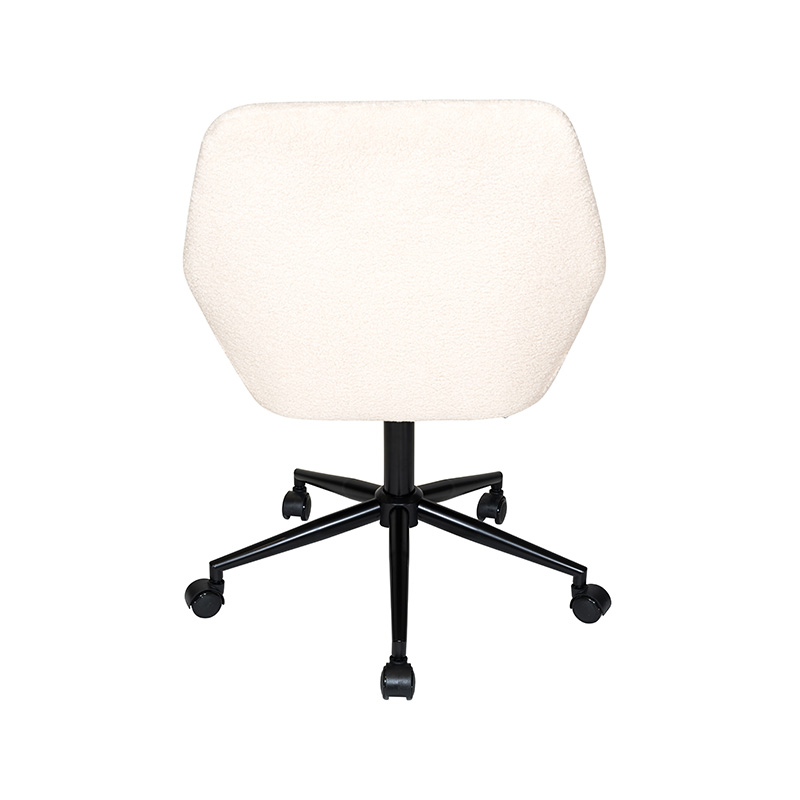 360 Degree Swivel Plush Teddy Fabric Office Chair with WheelsWith 360-degree rotation, height adjustment, and plush teddy fabric, this chair suits areas where mobility and soft seating matter. The wheeled base and cushioned seat match the guidance on casters and gas-lift stability, offering a comfortable option for mixed-floor settings.View Product →
Modern workspace layouts mix open bench desks, quiet focus zones, meeting rooms, and home offices. A swivel chair serves users who turn between two screens or reach a side table without twisting the spine. Armless or flip-arm chairs fit compact bench desks and allow push-back clearance at the end of the day.
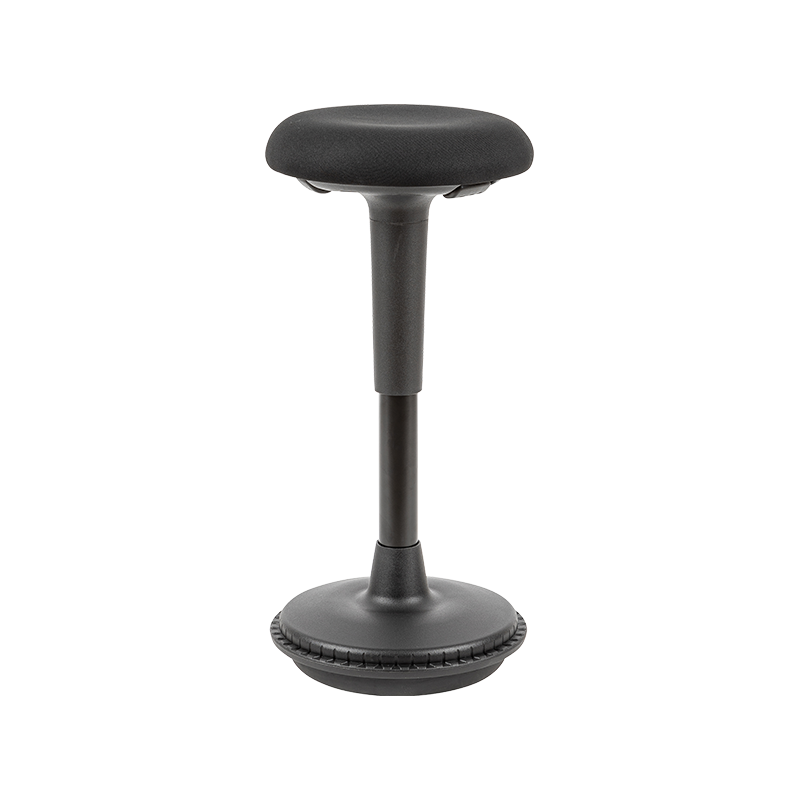
For standing-desk benches, a height-adjustable stool supports posture during standing intervals. Aesthetic consistency also matters: a gold-base fabric chair can warm up a residential-style home office, while a dark, stain-resistant fabric works better in a high-traffic shared environment. When outfitting a whole floor, keep the same base model across zones and vary the fabric or finish per area so the product range stays manageable.
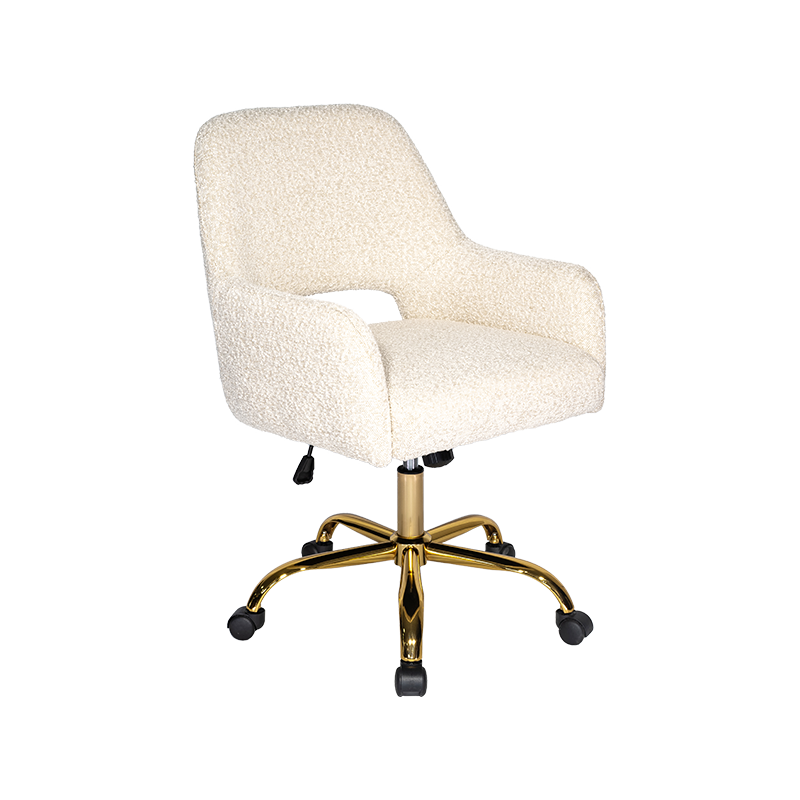
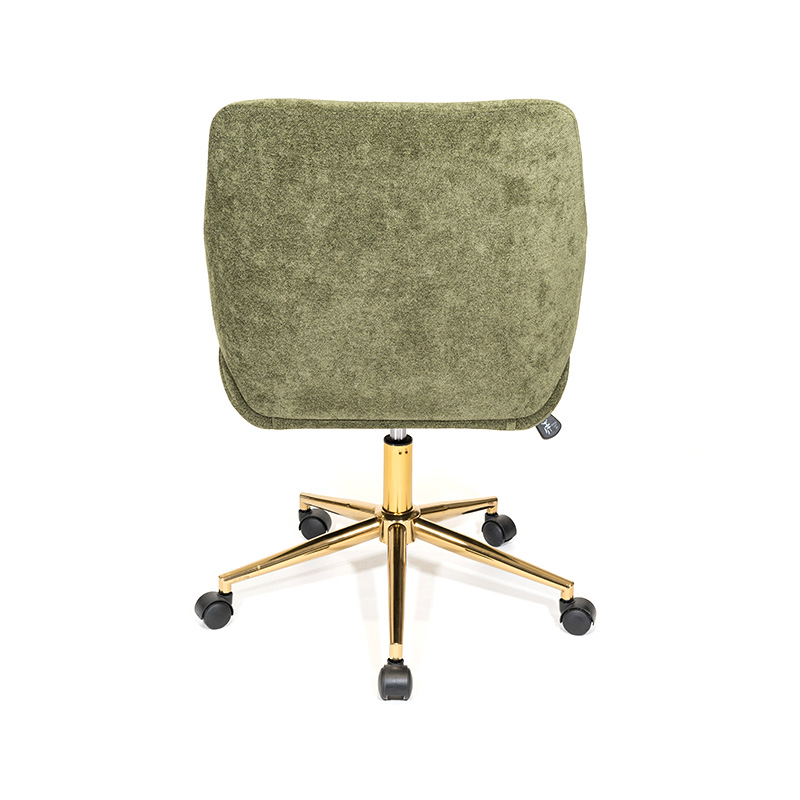 Modern Fabric Swivel Chair with Golden Base for Home and OfficeThis chair combines a gold-tone metal base with fabric upholstery and smooth swivel casters, adding a refined look while supporting daily work. Its adjustable height and durable build fit both residential and commercial spaces, meeting the need for style and function in varied settings.View Product →
For purchasing teams, one perfect sample is not enough. When a chair will be ordered in hundreds or thousands of units, request the performance data behind the claims:
A manufacturer that offers both custom design and in-house production can usually adjust seat height ranges, fabric types, or colorways to meet project requirements without excessive lead time. That flexibility often decides which supplier gets the order.
Choosing ergonomic office chairs for modern workspaces is ultimately about verification. Confirm the adjustability ranges, check the material grades, test the base stability, and ask the manufacturer for data. A chair that fails these checks will be a recurring cost rather than a comfortable seat. Start with the measurements that matter, and the right chair will stand up to both the specifications and the workday.

Products
Contact info.
No 1255, Xingye Road, Tianzihu Modern Industrial Park, Anji County, Zhejiang Province, China
+86-13587919519
sales@bftfurniture.com
