
 English
 русский
 Español
 عربى

No 1255, Xingye Road, Tianzihu Modern Industrial Park, Anji County, Zhejiang Province, China
Content
An import manager for a European furniture brand sends a sketch of a low-back chair with steel legs and a specific fabric color to a factory in Anji, China, and asks for 5,000 units before the next season. The reply must cover design feasibility, materials, sampling time, and delivery. For anyone buying seating at scale, that reply decides whether the project moves forward. Furniture chair manufacturers that genuinely support custom designs and large-volume orders do three things well: they turn a customer’s idea into a manufacturable product, they scale up without losing consistency, and they communicate realistic limits before production starts. This article explains how those manufacturers operate and what buyers should look for.
Custom work from a furniture factory usually falls into one of two categories: OEM or ODM. With OEM, the buyer provides drawings, specifications, or existing samples, and the factory builds to those requirements. With ODM, the factory applies its own design and engineering resources to develop a product based on the buyer’s brief. In practice, most custom programs mix the two. A retailer may start with an existing dining chair silhouette, modify the frame finish, adjust the seat height, and specify a performance fabric.
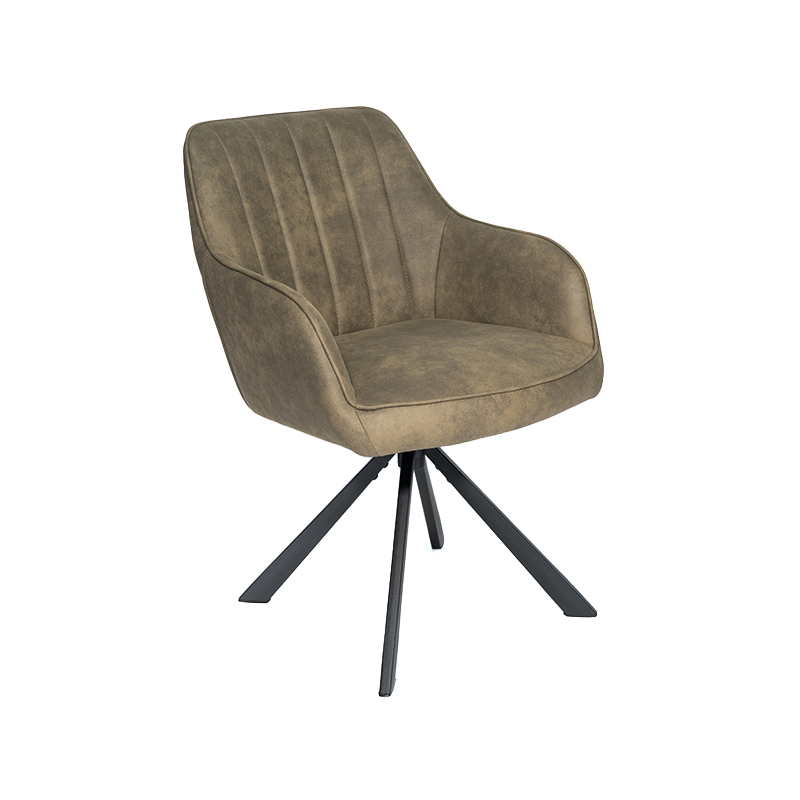
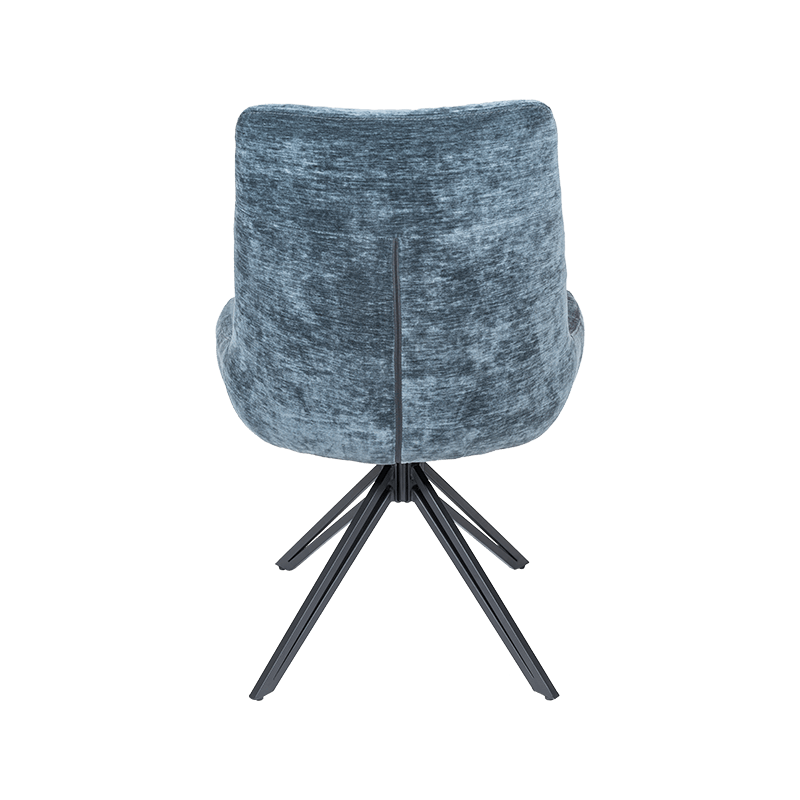 Navy Blue Velvet Swivel Dining Chair with Steel Frame and Four Metal LegsThis chair combines a velvet upholstery with a 360-degree swivel mechanism and a powder-coated steel frame. Its armless, space-saving profile suits dining rooms and kitchen islands, offering a practical option for custom seating programs.View Product →
A manufacturer that supports this kind of work must be able to evaluate the design from a production perspective. That means checking whether the frame can be made with existing tooling, whether the upholstery can be cut from standard fabric widths, and whether the assembled chair will pass stability and load requirements. The factory should flag problems early instead of discovering them after the sample is sewn.
Custom requests usually start with materials. Buyers ask for easy-to-clean fabrics, stain-resistant covers, metal finishes, or specific foam densities. The factory should be able to source those options and explain how each one affects cost, durability, and lead time. For example, a high-back dining chair with a stain-resistant surface works well in restaurants and busy kitchens because it can be wiped down frequently without showing wear.
Prototyping is the next stage. A professional factory builds one or more samples to confirm dimensions, comfort, stitching, and finish. Good factories ask pointed questions at this point about seat height, weight capacity, packaging, and carton dimensions, because those details affect both freight costs and customer satisfaction. A solid custom process usually includes at least two sample rounds: one for fit and one for production approval.
Large-volume orders are not simply about running more machines. They require space, equipment, and a production plan. Anji Beifeite Furniture Co., Ltd., for example, operates a 60,000-square-meter plant in Anji, the chair industry hub of China. The company integrates design, development, and production in one facility, which shortens communication loops and makes it easier to adjust specifications during a run.
A factory that produces thousands of chairs relies on repeatable processes. Fabric cutting, foam molding, frame welding, sewing, and final assembly must be standardized. Once a sample is approved, the factory creates production limits, pre-produces a small batch, and only then moves to full production. This reduces defects and keeps the order on schedule.
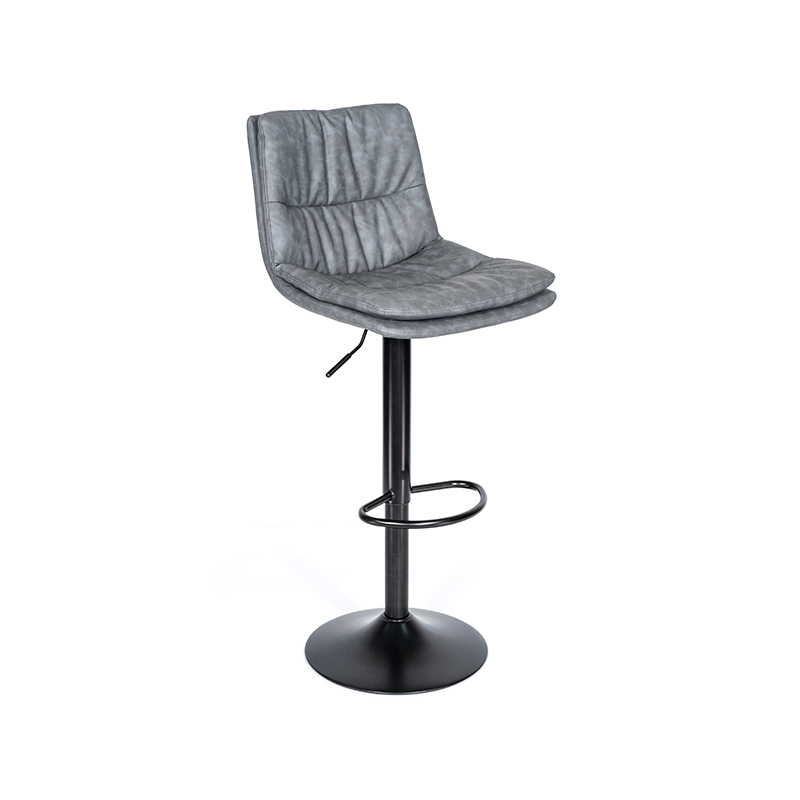
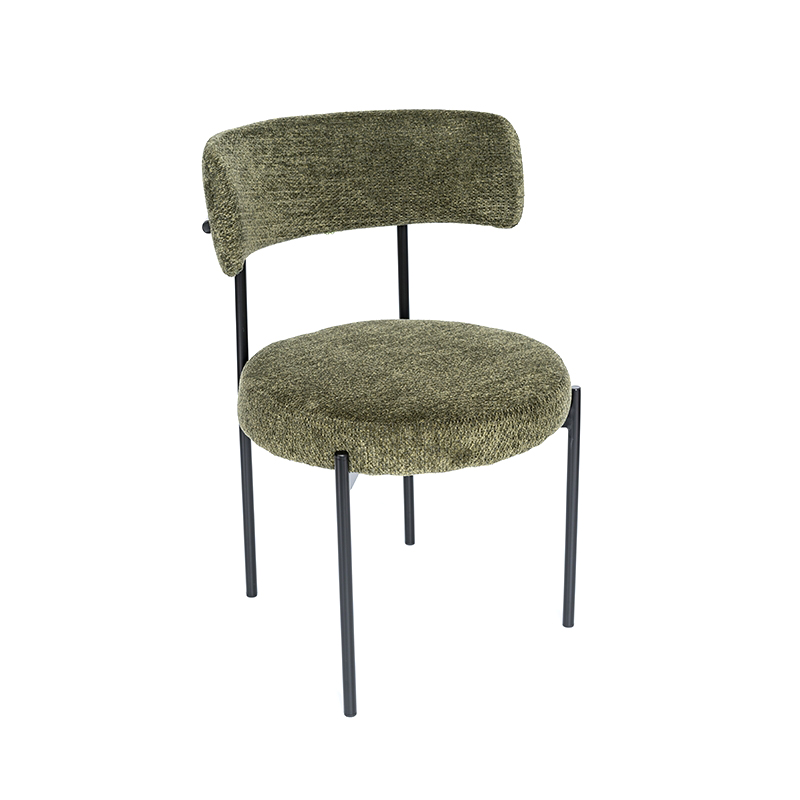
 Black Steel Bar Stool with Gray Fabric Seat and Curved BackrestFeaturing a sturdy steel frame, ergonomic curved backrest, and stain-resistant gray fabric, this four-legged stool is designed for kitchen, bar, or restaurant use. Its compact armless style makes it easy to tuck under counters.View Product →
Capacity planning matters as much as equipment. The factory needs to reserve raw materials, allocate workstations, and schedule QC personnel for the expected volume. Buyers should ask about the factory’s monthly output for the specific chair category they need, not just the overall plant size. That number reveals whether the order fits comfortably into the production calendar or requires special arrangements.
Bulk orders fail when quality varies from piece to piece. A good manufacturer applies incoming material inspection, in-process checks, and pre-shipment inspection. For metal frames, that includes weld strength and surface corrosion checks; for upholstered chairs, it includes stitch quality, fabric grain direction, and seat foam density.
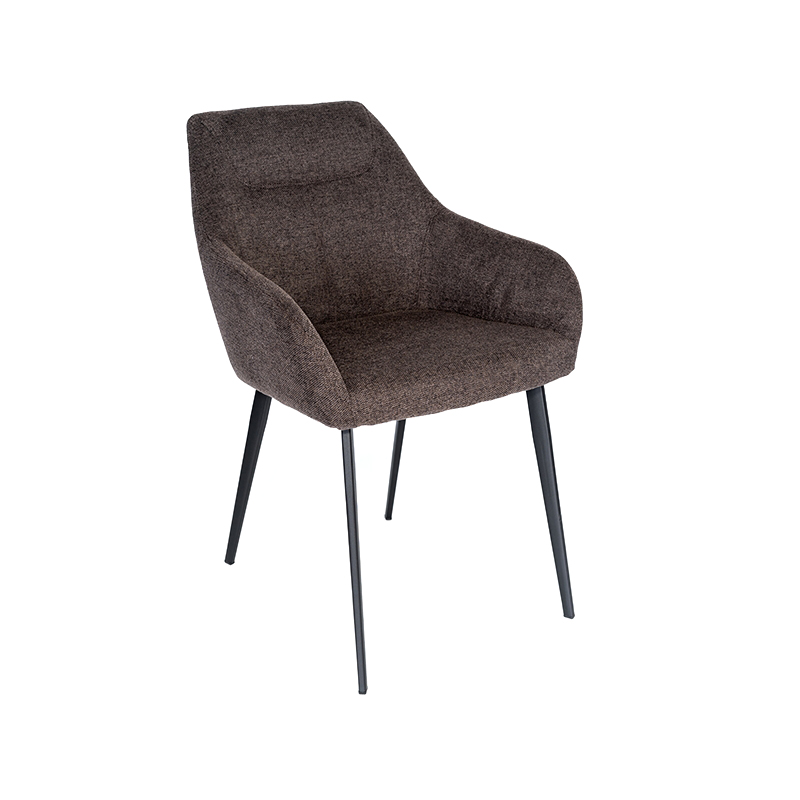
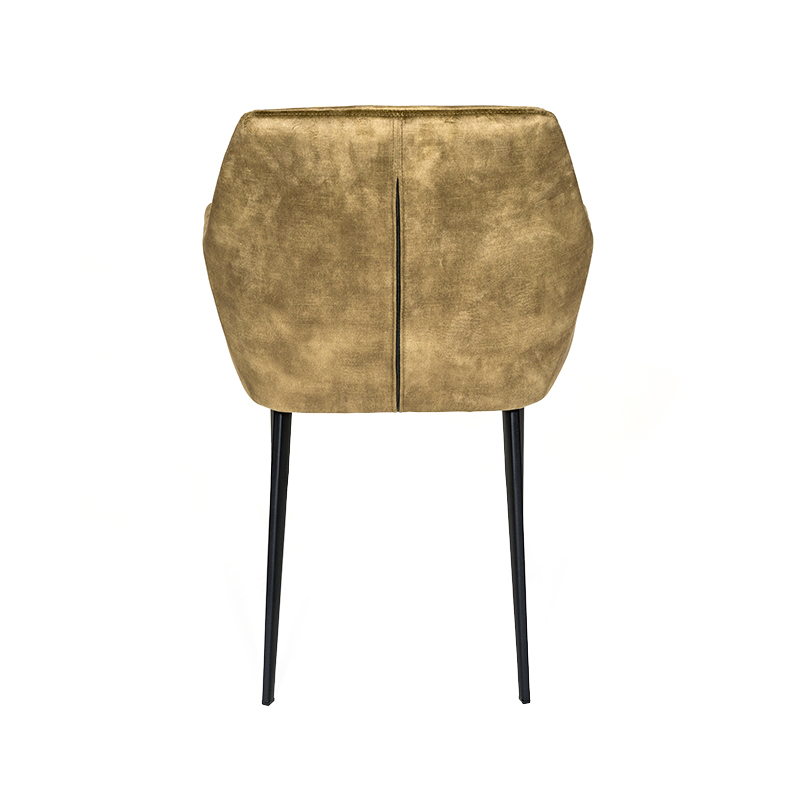 High-Back Stainless Dining Chair with Easy-Clean Brown Fabric SeatingBuilt for commercial dining, this high-back chair uses stain-resistant brown fabric and high-density foam for durability. Solid four-corner metal legs provide stability, making it a dependable, low-maintenance seating option for restaurants and cafes.View Product →
Buyers should ask which industry standards the factory follows. Common performance requirements for commercial chairs include stability tests, weight capacity limits, and durability cycles similar to BIFMA guidelines. Even if the buyer does not require formal certification, knowing whether a factory can test to these standards reveals its level of engineering maturity.
Documentation is also part of quality control. A reliable supplier can provide inspection records, material certificates, and packing lists that match the batch. Clear records help both sides settle disputes quickly and give the buyer confidence that the next order will repeat the same results.
Before committing to a factory, procurement teams should verify a few key points. The table below summarizes practical checks and the reasons behind them.
| Check | Why it matters |
|---|---|
| Design engineering capability | Confirms the factory can turn drawings into manufacturable products |
| Material sourcing | Shows which fabrics, coatings, and components are regularly available |
| Sampling process | Clarifies how many sample rounds are included and how long they take |
| Production capacity | Compares your required quantity against the factory’s real monthly output |
| Quality control | Reveals inspection points, testing standards, and defect tolerance |
| Communication | Ensures there are dedicated staff for your market and time zone |
This list is especially useful for large-volume orders, where the cost of a wrong decision multiplies quickly. A factory that cannot answer these questions clearly may struggle with the coordination that custom seating requires.
Anji Beifeite Furniture Co., Ltd. describes itself as a large-scale manufacturer with integrated design, development, and production. Its product range covers office chairs, dining chairs, bar stools, accent chairs, rocking chairs, and wobble stools, giving buyers a broad starting point for customization. The company’s design and custom page and manufacturing overview show how it structures custom projects and production capabilities.
For a buyer, this setup means one supplier can take a project from concept to container. The factory can develop a new model from a sketch, adjust an existing catalog product, or run a large series with consistent quality. In an industry where small details often decide success, a manufacturer that combines engineering, production, and direct communication reduces the risk on every order.
Supporting custom designs and large-volume orders is not a matter of doing everything; it is about doing the right things in a disciplined way. A capable furniture chair manufacturer will help you define the specification, build the right sample, control production, and deliver a consistent product. When that partnership works, the entire procurement process becomes simpler—from the first sketch to the last carton.

Products
Contact info.
No 1255, Xingye Road, Tianzihu Modern Industrial Park, Anji County, Zhejiang Province, China
+86-13587919519
sales@bftfurniture.com
