
 English
 русский
 Español
 عربى

No 1255, Xingye Road, Tianzihu Modern Industrial Park, Anji County, Zhejiang Province, China
Content
When a restaurant operator ordered five hundred upholstered dining chairs from a low-cost supplier, the first fifty units looked acceptable. By the three-hundredth unit, seat foam had collapsed visibly and the powder coating was peeling on a growing share of frames. The buyer spent months arranging replacements and explaining delays to venue owners. That sequence is far too common in furniture sourcing, and it is almost entirely preventable when the right questions are asked early.
The production model determines how consistent output will be across large orders. A factory that integrates design, development, and manufacturing in one facility can react faster to specification changes, control quality at each stage, and trace defects to their root cause. A supplier that coordinates several subcontractors is exposed to variations in tolerances, finishes, and assembly quality.
Anji Beifeite Furniture operates a 60,000-square-meter facility in Anji, Zhejiang, the region widely known as China's chair town. The company functions as a manufacturer rather than a trading house, with in-house processes that convert steel tubes, fabric rolls, foam, and hardware into finished seating. When you evaluate a potential partner, ask to see the production floor and confirm that welding, painting, upholstery, and assembly happen under one roof. You can inspect the manufacturing capabilities on the manufacture page of the supplier before you even request a quotation.
Material quality accounts for most long-term product failures in chairs. Upholstery that abrades after a few months of daily use, foam that loses resilience, and frames that corrode are consequences of material decisions made at the sourcing stage. Material verification should therefore be part of your purchasing process, not an afterthought.
Steel tube wall thickness, weld seams, and surface finishing are the first places to look. For metal-framed chairs used in commercial settings, wall thickness directly affects load capacity and resistance to deformation. Surface treatment such as powder coating or electroplating determines how long the frame stays corrosion-free in humid environments. A competent manufacturer describes tube thickness, coating type, and finish options precisely instead of answering with generic phrases like "quality steel."
One example is the steel-framed upholstered swivel dining chair, which combines a tubular steel base with a padded seat and backrest. Products of this type hold up well in dining rooms and cafés where chairs are moved and cleaned daily.
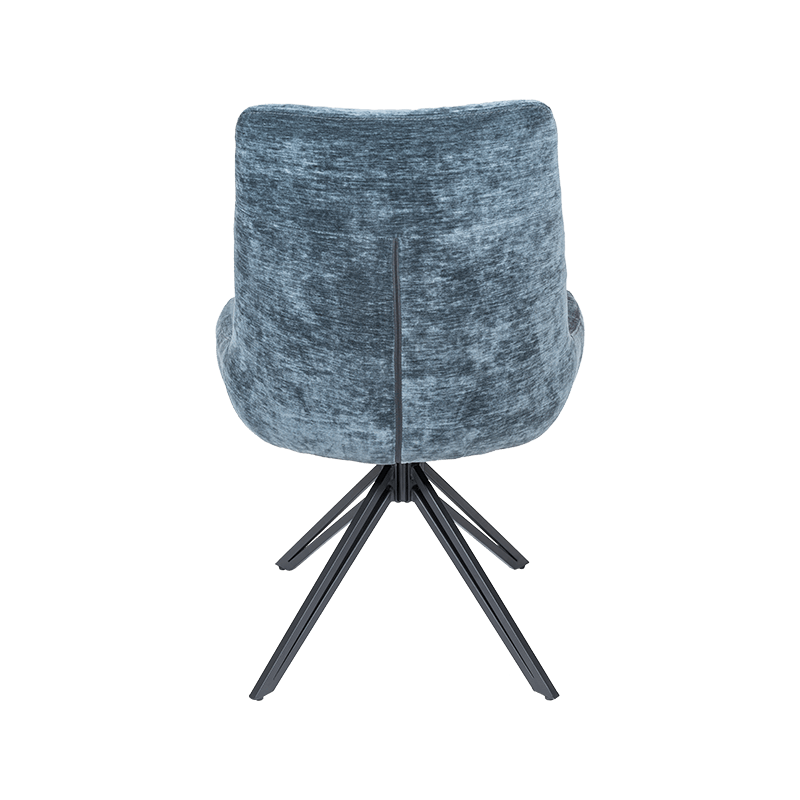 Navy Blue Velvet Swivel Dining Chair with Steel Frame and Four LegsThis armless swivel dining chair pairs a powder-coated steel frame with high-density foam padding, making it a durable option for dining rooms and cafés that require daily cleaning and movement.View Product →
Fabric durability is commonly expressed through Martindale rub counts. Residential seating may work with 20,000 rubs, while busy restaurants, hotels, and offices need 30,000 rubs or more. Stain resistance and cleanability matter as well: treated fabrics that resist liquid absorption reduce maintenance costs over the product's lifetime. Foam density, measured in kilograms per cubic meter, determines how quickly a cushion loses shape. Low-density foam may feel comfortable in a showroom yet flatten within months under regular use.
When a manufacturer provides the exact rub count, foam density, and finish specifications, treat that as a positive signal. When a sales representative answers with vague promises, request written technical sheets before committing.
Functionality is a purchasing risk factor, not an aesthetic extra. A bar stool that cannot be adjusted to the correct seat height creates complaints in any hospitality setting. An office chair without smooth swivel movement and sufficient height adjustment causes discomfort during long working sessions. Defining functional requirements before sourcing prevents expensive mismatches.
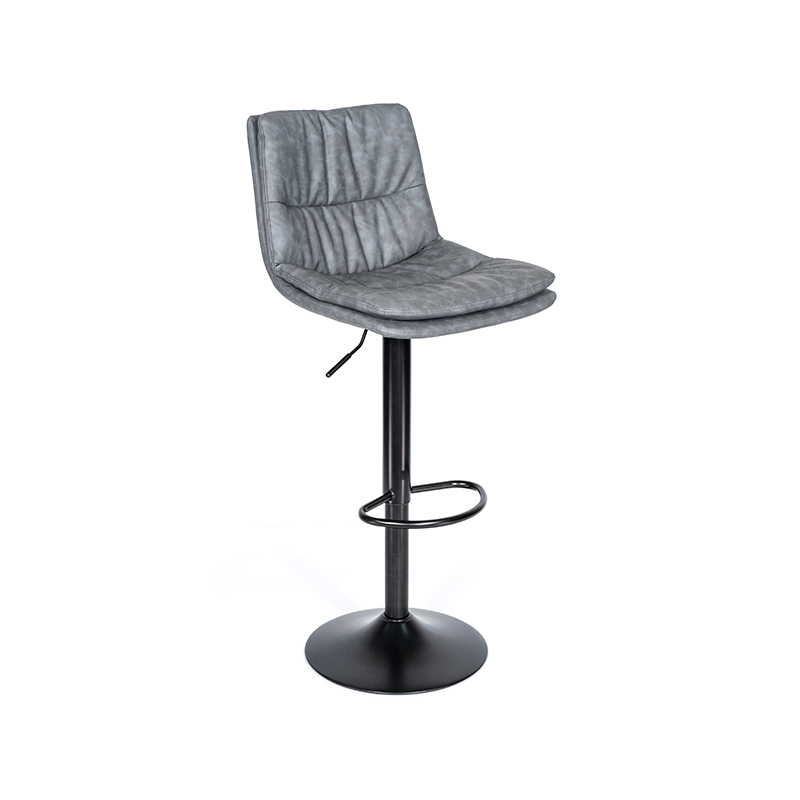
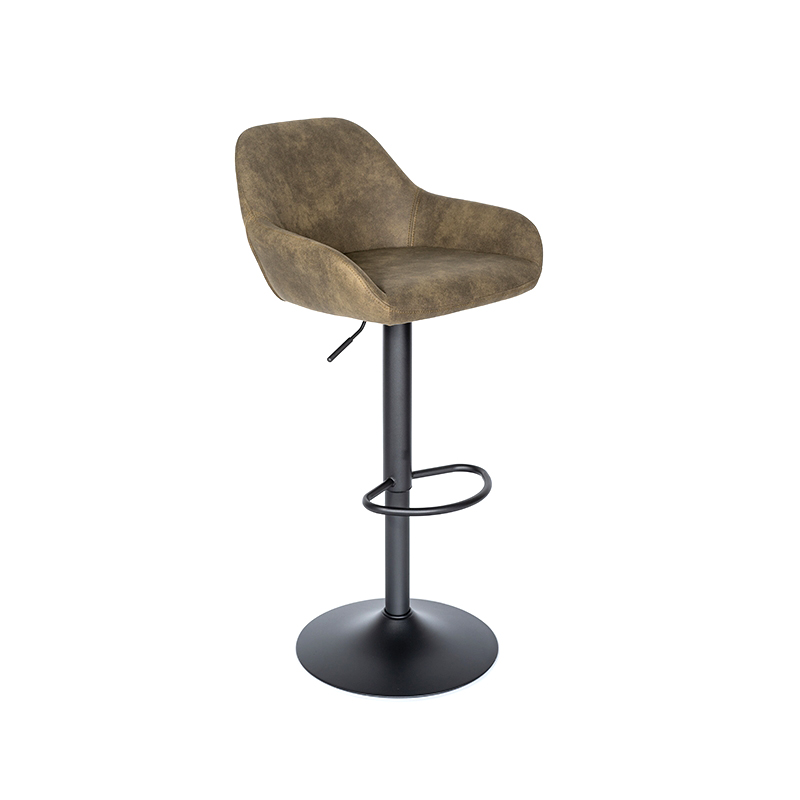
For bar and counter seating, seat height relative to the counter is the most common specification error. A standard bar counter at roughly 105 cm from the floor pairs with a stool seat height around 75 cm. A kitchen counter at 90 cm needs a shorter stool, usually about 65 cm. Adjustable-height stools simplify the question in mixed-use venues because one product serves different surfaces.
 Height-Adjustable Fabric Bar Stool with Backrest and SwivelWith pneumatic height adjustment and three fabric colors, this bar stool adapts to different counter heights, making it a flexible choice for bars and kitchens where mixed-use surfaces are common.View Product →
For office and task seating, look for pneumatic height adjustment, stable bases with smooth-rolling casters, and backrests that support the lumbar area. Seating that combines these features in one unit reduces the number of SKUs in a project, whether the installation is a corporate office or a home workspace.
Very few sourcing projects use a product exactly as shown in a catalog. A buyer may need a specific fabric, a different metal finish, a branded label, or a modified seat height. The difference between an easy customization process and an inflexible one can determine whether a project stays on schedule.
A professional chair manufacturer with an in-house design team takes a reference image, a material board, or a rough sketch and turns it into a producible specification. The design and custom page of Anji Beifeite documents a workflow that supports custom development, from material selection to prototyping and bulk production. Customization also covers more than private-label branding. In a hotel lobby or café, for instance, a fabric swivel accent chair with an ottoman can be adapted with the client's chosen textile, a different metal finish, or a modified seat height to fit the interior scheme.
 Fabric Swivel Accent Chair with Matching Ottoman and 360-Degree RotationThis lounge chair combines full swivel motion with a coordinating ottoman, offering adaptable comfort for living rooms, offices, or reading areas while supporting custom fabric and finish options.View Product →
Ask a prospective supplier how many design iterations are included in a quotation, how samples are handled, and whether bulk production follows the approved sample or drifts based on material availability. Custom orders also expose the difference between factories that control their supply chain and those that do not. When a fabric becomes unavailable, a strong manufacturer offers a documented alternative with comparable test results rather than forcing the buyer to accept an unspecified substitution.
The approved sample is a snapshot; what matters is whether every batch matches it. Reliable manufacturers run incoming material inspections, in-process checks during welding and upholstery, and final random inspections before packing. The absence of a documented quality system appears only when a shipment arrives with inconsistent color, squeaky mechanisms, or frames that are not square.
| Component | What to Check | Common Red Flag |
|---|---|---|
| Steel frame | Tube wall thickness, weld consistency, coating adhesion | Rust spots, uneven powder coating, wobbly leg joints |
| Upholstery | Martindale rub count, seam strength, stain resistance | Fabric pilling within weeks, easily torn seams |
| Foam and padding | Foam density in kg/m3, shape recovery after compression | Visible collapse after short-term use |
| Swivel and lifting mechanisms | Smooth rotation, vertical stroke, load rating, gas lift certification | Grinding noise, uncontrolled height adjustment |
It is reasonable to request photos or video of the production line and to include batch-to-batch consistency clauses in the purchasing agreement. Some buyers commission third-party inspections on a per-shipment basis, a standard practice when distributing furniture to multiple retail or project locations.
Capacity and communication determine whether a sourcing relationship survives the first large order. A factory's production capacity affects minimum order quantities, lead times, and the buffer available when something goes wrong. A 60,000-square-meter facility with multiple production lines can accommodate parallel orders and accept urgent programs, whereas a small workshop might have to stop one line to complete another.
Communication does not end at the quotation stage. You need a supplier who answers technical questions with precise data, alerts you to material substitutions before they happen, and provides production milestones instead of a single vague delivery date. Experienced buyers also verify how a supplier handles claims. The willingness to document issues, review root causes, and offer corrective actions tells you more about reliability than any marketing copy on a website.
When sourcing chairs from a professional manufacturer, start by evaluating the production model, then move to material specifications, functional requirements, customization flexibility, and quality systems. The right partner is one that can show you the factory floor, answer specification questions with measurable data, and document what happens during production and after delivery. The time spent on these checks is small compared with the cost of discovering a weak supplier only after your first container arrives.

Products
Contact info.
No 1255, Xingye Road, Tianzihu Modern Industrial Park, Anji County, Zhejiang Province, China
+86-13587919519
sales@bftfurniture.com
