
 English
 русский
 Español
 عربى
عربى

No 1255, Xingye Road, Tianzihu Modern Industrial Park, Anji County, Zhejiang Province, China
Content
A hotel renovation in Portugal needs 40 fabric dining chairs for the breakfast lounge and 60 more for the restaurant. The designer wants a light-beige upholstery; the operations manager wants a fabric that survives daily cleaning; the owner wants a cost per seat that fits the FF&E budget. That combination is exactly why fabric dining chairs in commercial projects cannot be judged by looks alone. Comfort, durability, and commercial design requirements have to be defined together before the order is placed.
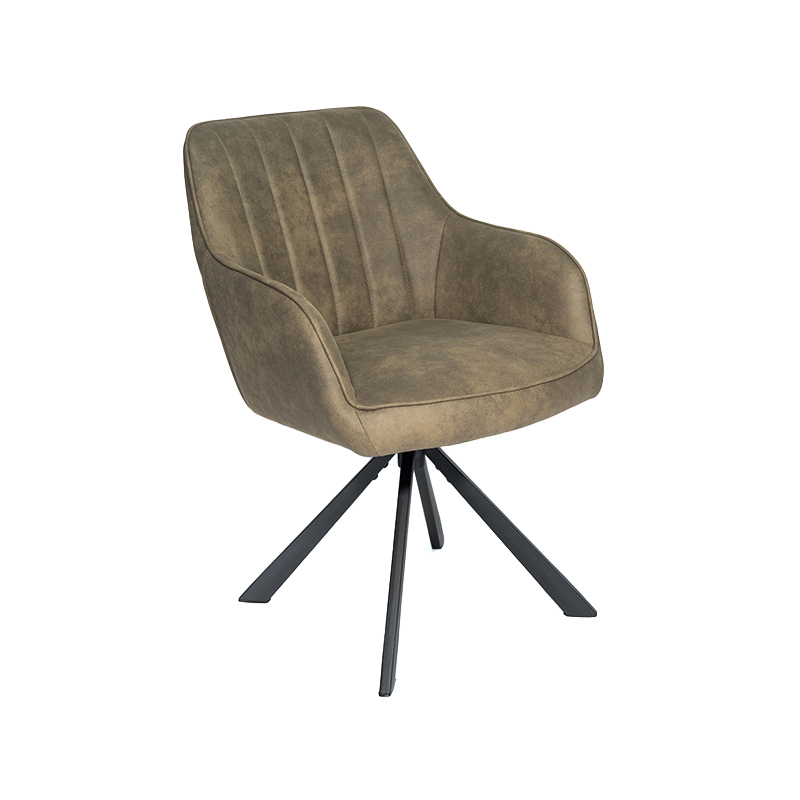
 360-Degree Swivel Fabric Dining Chair with Steel Frame and Padded SeatThis swivel chair combines a sturdy steel frame with generously padded fabric upholstery, offering reliable support and easy rotation for busy dining areas, making it a practical choice for hotel breakfast lounges and restaurants.View Product →
When a chair is used 10 to 15 times a day, sometimes for hours at a time, comfort stops being a soft surface and becomes a structural property. Different body weights, posture habits, and dining times all act on the same seat. A residential chair can feel comfortable because it is lightly used; a commercial chair has to remain comfortable under continuous use.
Cushion density drives long-term comfort more than initial softness does. A seat cushion made with higher-density foam keeps its shape and stops the sitter from sinking through to the frame. Low-density foam feels pleasant on first contact but collapses quickly under continuous load. Look for polyurethane foam around 30 to 35 kg/m³ for daily service, and make sure the seat platform spreads the load evenly across the frame.
Seat geometry matters just as much. A seat height near 46 to 48 cm works with standard 75 cm dining tables, and seat depth should let the user plant both feet and keep knees at roughly 90 degrees. A full fabric upholstery cover adds friction that keeps the body from sliding, while a swivel base lets guests rotate naturally without dragging the chair across the floor. These details are not styling choices; they decide whether a dining area feels right or wrong after the first twenty minutes.
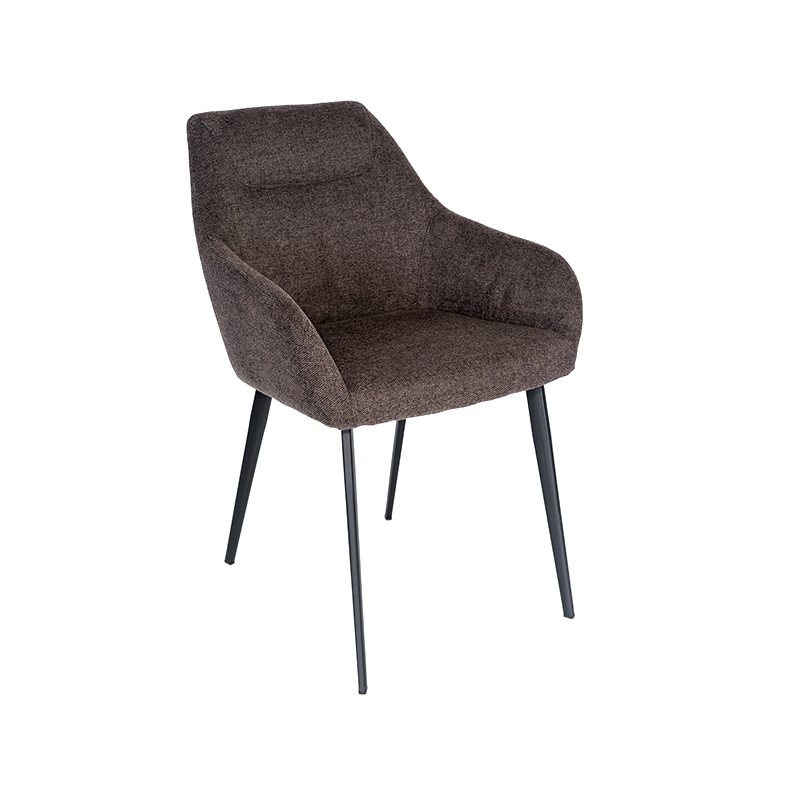
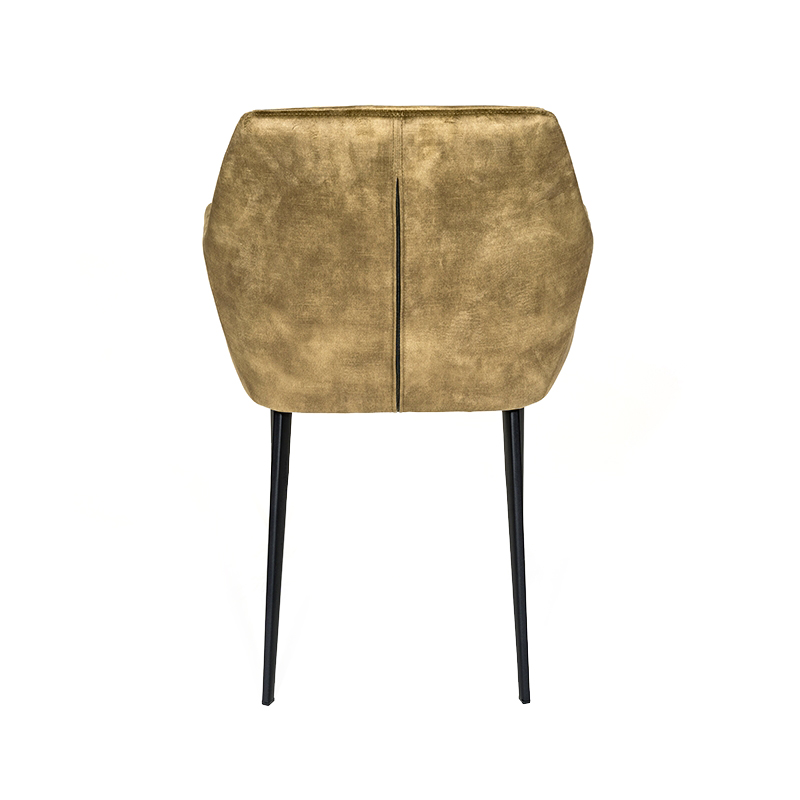 Stain-Resistant High-Back Fabric Dining Chair with Metal LegsDesigned for commercial durability, this high-back chair features an easy-to-clean, stain-resistant fabric and stable metal legs, providing long-lasting comfort and minimal maintenance for restaurants, coffee shops, and other high-traffic venues.View Product →
Commercial durability is a system. The face fabric has to resist abrasion and staining, the foam has to hold its shape, and the frame has to carry the load without loosening. Each component can be checked against a measurable threshold.
| Property | Commercial threshold | Why it matters |
|---|---|---|
| Martindale abrasion resistance | 30,000 cycles or more | Fabric keeps its surface intact under high turnover |
| Colour fastness to light | Blue wool scale 4 or higher | Prevents fading near windows and glass walls |
| Seam strength | No separation at normal load | Reduces tearing at the seat and back connection |
| Foam density | 30–35 kg/m³ polyurethane | Cushion shape holds up over years of use |
| Frame integrity | BIFMA X5.1 or similar load test | Leg and joint rigidity under repeated lateral force |
Fabric abrasion is usually measured on the Martindale scale. For guest seating, 30,000 cycles is a practical minimum; below that, wear marks around the seat edge and armrests become visible within a year. Stain-resistant finishes make the surface easier to clean, but the base fabric still determines how the chair looks after repeated spot cleaning. Because abrasion, staining, and fading leave different signs on different fibres, we have documented the three test methods and their practical limits in our commercial upholstery Martindale, stain, and colour fastness guide.
The frame is the second source of durability. Steel frames with welded joints resist the forward rocking, sideways bending, and natural torque that guests and serving staff apply over time. Powder-coated steel handles moisture and floor-cleaning chemicals better than raw metal or painted surfaces. The leg-to-seat connection is equally important: a slight wobble in an early sample becomes a structural complaint under commercial use.
Commercial design is not only about looks. A fabric dining chair has to carry the visual direction of a room: the fabric tone, back height, silhouette, and material mix all contribute to the space. Design requirements in a commercial project also define what the chair cannot do. It cannot clash with the table line, cannot overpower the floor area, and cannot fail under the cleaning regime.
Procurement teams rarely choose a chair from a single product page. They select a base model, then request changes in fabric, finish, seat dimensions, or back height to suit the project. This is where the manufacturer’s engineering depth matters. A custom chair specification through OEM/ODM design support lets the factory adapt the base design without changing the production flow, which is how commercial buyers get a custom look without designing an entirely new chair.
Fabric choice is also a brand decision. A dining chair in a café often defines the room’s texture more strongly than the paint on the walls. The right balance between durability and aesthetics is usually found in performance textiles: fabrics with high abrasion resistance that still carry a soft hand feel and a dense colour palette.
A quick way to balance the three factors is to rank them in order of severity for each space. A busy café handles the chair constantly, so durability usually comes first. A hotel breakfast room needs cleanability and a domestic look in equal measure. A coworking lounge puts comfort and noise control ahead of stain resistance. That ranking changes the choice of fabric, foam, and frame more than personal taste does.
| Venue | Priority | Fabric direction |
|---|---|---|
| Restaurants and cafés | Durability first, cleanability second | Performance weave, 30,000+ cycles, mid or dark tone |
| Hotel breakfast areas | Cleanability and domestic look | Easy-clean finish, light or warm tone, breathable texture |
| Offices and mixed-use lounges | Comfort and noise control | Soft handle, moderate abrasion level, smooth swivel base |
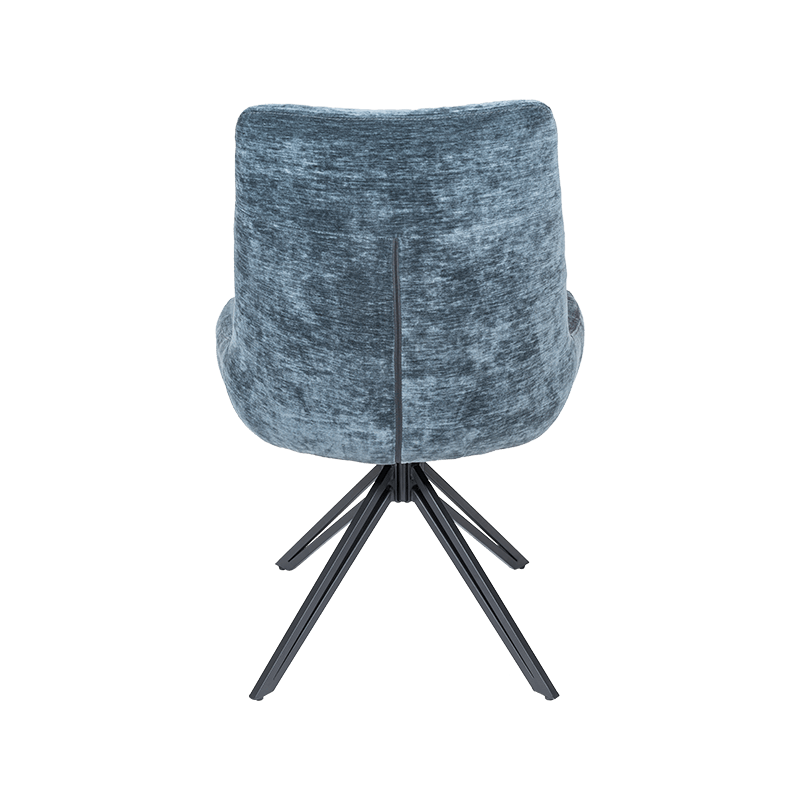 Navy Blue Velvet Swivel Dining Chair with Steel Frame and Four Metal LegsThis armless swivel chair offers a rich navy velvet finish, a silent 360-degree rotation mechanism, and a powder-coated steel frame with four legs, blending elegance with practical comfort for upscale dining or lounge settings.View Product →
Before a buyer signs a purchase order for fabric dining chairs, six checks prevent the majority of long-term seating problems:
The step from sample approval to bulk production is where unplanned material substitution usually happens. A reliable supplier should demonstrate that the production batch uses the same foam, fabric, and frame tolerances as the approved sample.
There is no universal formula that works for every dining room. A student cafeteria needs a harder-wearing seat and a darker fabric; a premium restaurant needs a softer edge and a richer colour; a hotel breakfast area needs quick cleanability without losing a domestic feel. The task is to define the level of each property that fits the application.
Once comfort, durability, and design requirements are written into a consistent specification, the purchase decision becomes a comparison of facts rather than first impressions. Fabric dining chairs that perform well in commercial use are not the ones with the thickest cushion or the most expensive material. They are the ones where foam density, abrasion level, frame construction, and visual logic have been balanced for the room in which they will spend the next five years.

Products
Contact info.
No 1255, Xingye Road, Tianzihu Modern Industrial Park, Anji County, Zhejiang Province, China
+86-13587919519
sales@bftfurniture.com
