
 English
 русский
 Español
 عربى
عربى

No 1255, Xingye Road, Tianzihu Modern Industrial Park, Anji County, Zhejiang Province, China
Content
One buyer we met last year ordered 300 fabric dining chairs from a supplier after approving a single photo. When the shipment arrived, the seat heights varied by almost 3 cm, the front legs wobbled on a hard floor, and the fabric started pilling after a month of normal use. The order was not a one-off quality defect; it was a specification and inspection failure.
Wholesale buying is different from choosing a showroom sample. When you buy fabric dining chairs in bulk, your real concern is repeatability: frame quality, fabric durability, dimension consistency, and packaging that protects the product. A low unit price means little if the batch is unacceptable or the fabric fails during the warranty period.
Fabric is what buyers see first, but the frame determines how long a chair will stay straight and comfortable. In homes and restaurants, diners slide in and out, lean back, and sometimes land hard on the seat. A weak frame will start to wobble after a few months, no matter how nice the upholstery looks.
Ask the factory what material the legs and the connecting rails use. Steel tube is a common choice for fabric dining chairs because it balances strength and weight. The two numbers that matter most are the wall thickness of the tube and how the welds are made. On the sample, look at the transition around the joints. A weld that is thin, rough, or interrupted will break under repeated side loads.
Rush a weld and you create a chair that looks fine on the showroom floor but loosens in the hands of a customer. Check the feet too. Rubber or plastic glides protect wood floors, while an exposed metal edge can scratch a floor or a foot. For commercial buyers, ask for a powder-coated finish on steel frames because it resists rust and chips better than a simple painted surface.
A steel frame is also a good match for swivel dining models. The steel-framed upholstered swivel dining chair uses a welded steel base, so wholesale buyers can offer a moving seat without sacrificing basic stability.
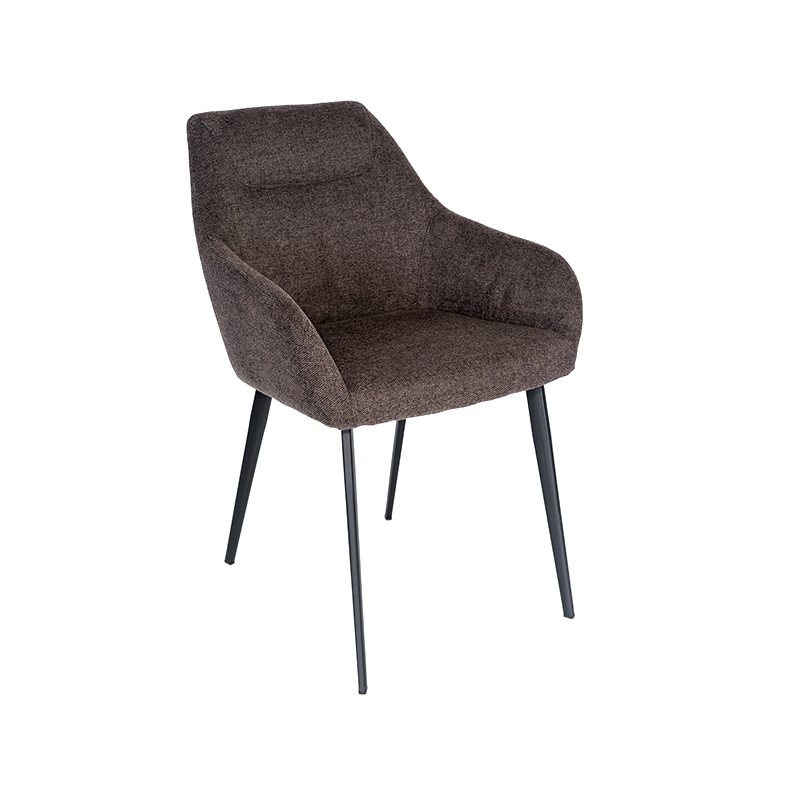
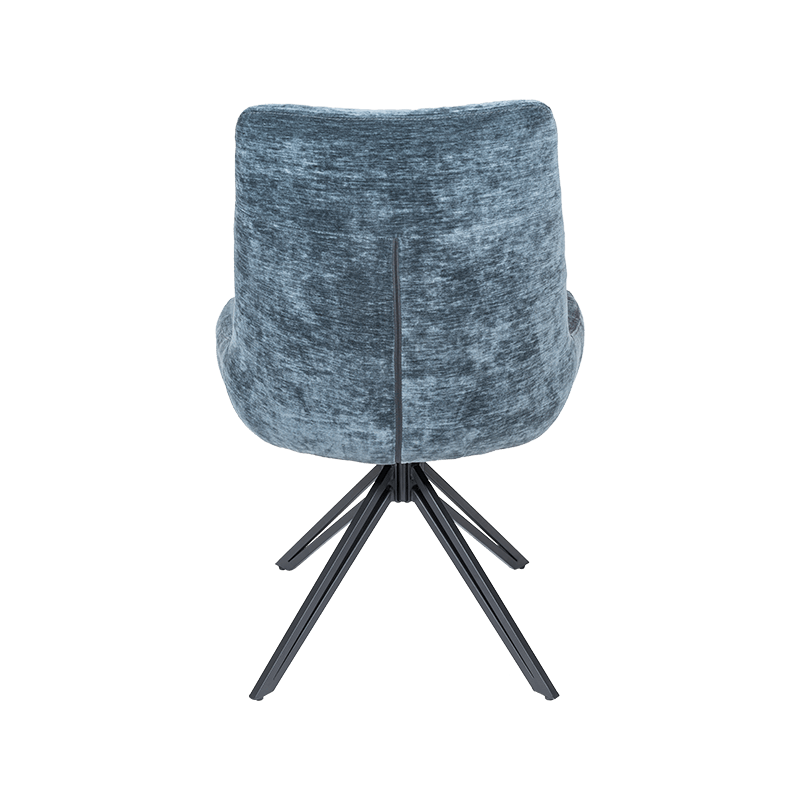 Wholesale navy blue velvet dining room chairs, Four Metal Legs Steel Frame UpholAnji Beifeite Furniture Co., Ltd Is China Wholesale navy blue velvet dining room chairs, Four Metal Legs Steel Frame Upholstered Armless ...View Product →
Fabric selection is a production decision, not a styling decision. The same chair model can be covered with a fabric that lasts three years or one that lasts ten years, and the difference is not always visible in a photo.
Before you order, ask for the fabric’s Martindale rub count. For a light residential dining setting, 20,000 to 30,000 rubs may be acceptable. For a family dining room, a restaurant, or a café, look for 50,000 rubs or more. A high rub count is not the only factor—comfort and recovery matter as well—but it is the most direct measure of abrasion resistance.
Dining chairs see coffee, tomato sauce, oil, and unexplained marks. Ask whether the fabric has a stain-resistant finish and what cleaning method your customers will receive. Treated polyester blends and performance velvets handle spills far better than untreated linen or cotton. Also check the seams: a loose seam on the back panel is one of the first complaints in a commercial setting.
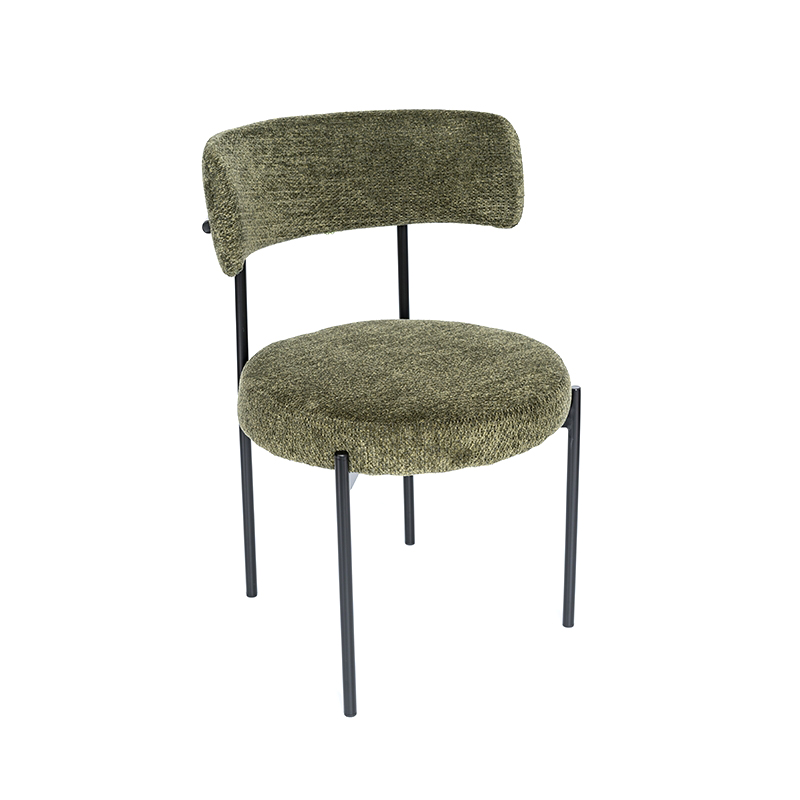
One practical example is the easy-to-clean stain-resistant high-back dining chair, built for everyday food-contact use with an eye on routine cleaning.
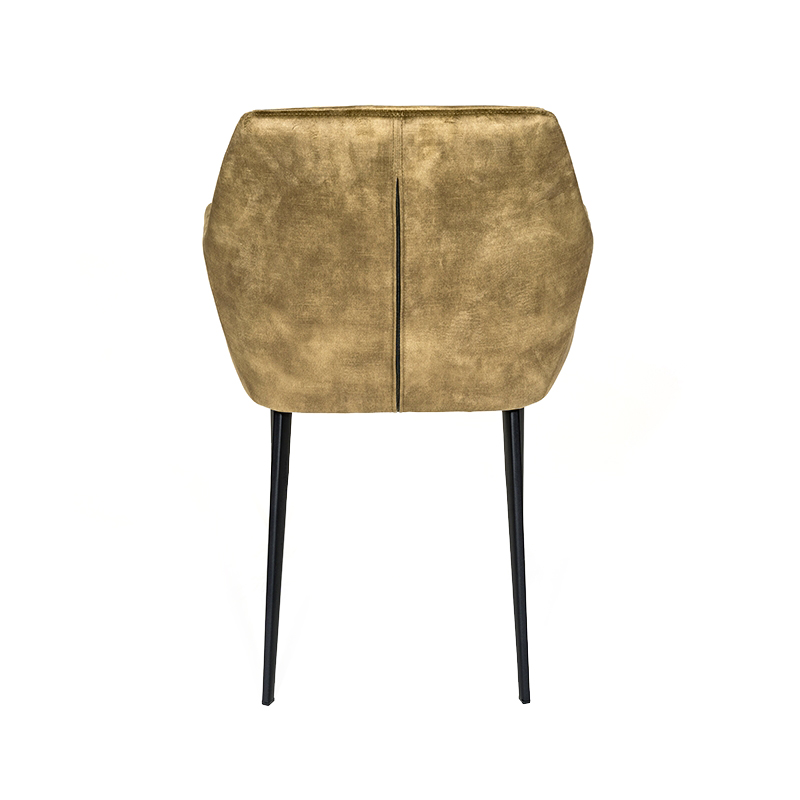 Wholesale Easy to clean, stain resistant, high back dining chair Suppliers, CompAnji Beifeite Furniture Co., Ltd Is China Wholesale Easy to clean, stain resistant, high back dining chair Suppliers, Company And Easy to...View Product →
Once the chairs are in use, the right maintenance routine keeps the fabric looking newer for longer; our fabric dining chair care guide covers the main cleaning and protection steps.
A fabric dining chair has to fit the table, the room, and the people who will sit in it. In wholesale, that also means the factory must hold the specified dimensions from one piece to the next.
A typical dining table is 74 to 76 cm high. That puts the chair seat at 45 to 48 cm. If the seat height shifts by more than 2 cm, diners feel it immediately. Before approving a sample, ask for the target seat height and the production tolerance. On critical dimensions like seat height and seat depth, a reasonable tolerance is plus or minus 5 mm; more variation usually signals weak process control.
| Dimension | Typical Range | Why It Matters |
|---|---|---|
| Seat height | 45-48 cm | Affects leg comfort under the table |
| Seat depth | 42-48 cm | Determines whether the front edge presses against the thighs |
| Backrest height | 35-45 cm above seat | Supports the lower back without blocking movement |
A chair that feels fine for a two-minute sit can become uncomfortable after twenty minutes. Check the seat cushion density and the angle of the backrest. A slightly reclined backrest reduces pressure on the lower spine, while a shallow, over-horizontal seat makes you feel like you are sliding forward. If the chair swivels, ask how many cycles the mechanism is rated for and whether the swivel axis has a bearing or a simple bushing.
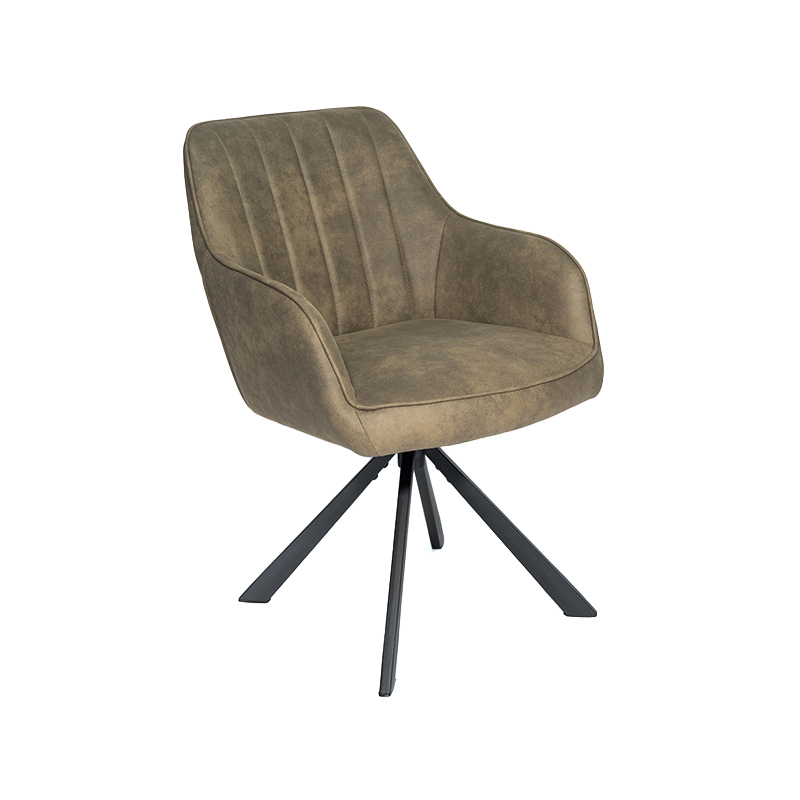
The 360-swivel classic dining chair shows how a fabric seat can include swivel movement and still keep a typical dining seat height. It is the kind of model that helps a buyer test whether swivel seating is right for their market.
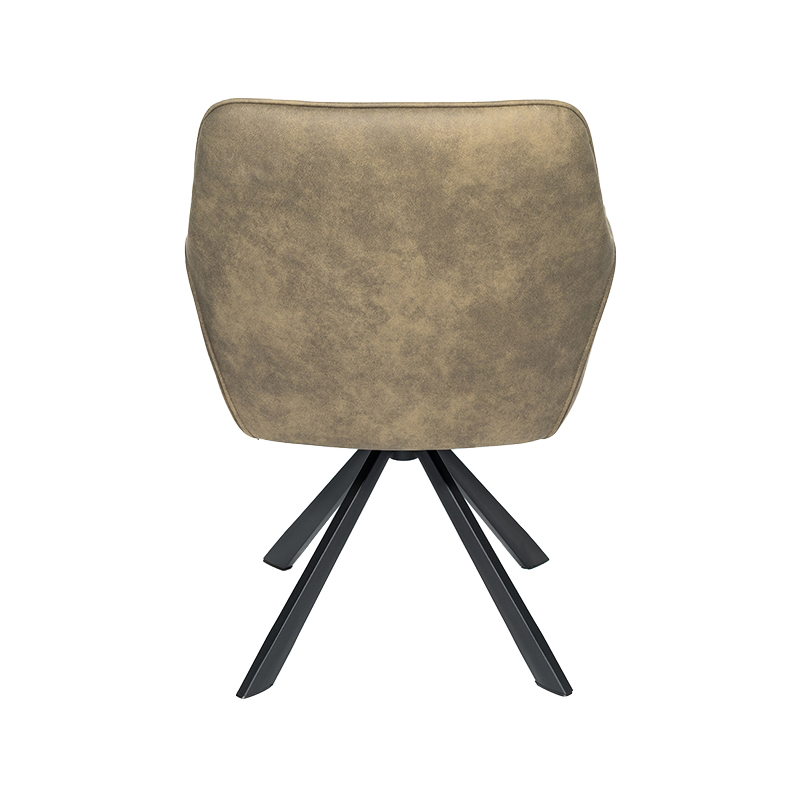 Wholesale 360° Swivel Function Classic Suede Fabric Dining Chair Suppliers, CompAnji Beifeite Furniture Co., Ltd Is China Wholesale 360° Swivel Function Classic Suede Fabric Dining Chair Suppliers, Company And 360° Sw...View Product →
The approved sample is a promise; the shipment is the contract. During production, fabric dye lots can change, upholstery workers can stitch seams differently, and welding can shift. The buyer’s job is to define how much variation is acceptable before the production line starts.
Fabric color can vary between dye batches. Ask whether the production fabric comes from the same dye lot as the pre-production sample. Also ask whether spare fabric will be available if a customer needs replacement cushions or covers. Put these details in the purchase order, not just in a phone call.
Many importers use an AQL 2.5 inspection level for major defects and a separate level for minor visual issues. Define the key checks before production: frame stability, seat height measurement, fabric color, seam alignment, and packaging. A simple checklist is more useful than a vague promise of quality.
The lowest quote usually hides its costs in the handover. Confirm these details before signing the purchase order.
Ask for the minimum order quantity per model and per color. Some factories will allow a mixed container, combining several fabric colors or two or three chair models. That flexibility matters when you are testing a new market or a new customer segment.
Fabric-upholstered chairs are more vulnerable than metal-only or wood-only chairs because the fabric can snag, stain, or rub during transit. Confirm the packaging plan: thick poly bags, foam corner protectors, and export-grade cartons. Check whether chairs ship fully assembled or need minor assembly. If they need assembly, ask for hardware and an instruction sheet. Finally, agree on a lead time after the deposit and decide how delivery delays will be handled.
The most attractive fabric dining chair wholesale price is dangerous if the factory cannot reproduce quality. Spend time on the production setup before you compare prices.
Ask about the factory area, production equipment, and the number of quality-control staff. A manufacturer with in-house cutting, sewing, welding, and assembly is easier to coordinate and faster to correct. At Anji Beifeite Furniture, for example, the production process covers cutting, upholstery, and final assembly under one roof. You can review how that works on our manufacturing facility pages.
If you plan to launch your own design or adjust a fabric, confirm that the supplier can manage ODM/OEM work. A supplier with custom ODM/OEM programs can help you choose fabrics, adjust seat heights, and adapt packaging for your market. That same capability matters after the first order: when your customers ask for a different color or a higher seat, a design team shortens the change cycle.
In the end, buying fabric dining chairs wholesale is about turning a visual product into a repeatable specification. The sample tells you what one chair can look like; the supplier’s process tells you what 500 chairs will actually be. Use the frame, the fabric, the dimensions, the batch checks, and the logistics terms as your checklist, and you will avoid the mistakes that most often turn a good deal into a costly one.

Products
Contact info.
No 1255, Xingye Road, Tianzihu Modern Industrial Park, Anji County, Zhejiang Province, China
+86-13587919519
sales@bftfurniture.com
