
 English
 русский
 Español
 عربى
عربى

No 1255, Xingye Road, Tianzihu Modern Industrial Park, Anji County, Zhejiang Province, China
Content
Before you order a batch of dining chairs, it helps to know that a genuinely sustainable fabric choice is not just a material choice. The fabric needs to perform under daily use, be easy to clean, and survive the lifespan of the chair frame. That is why the most practical way to think about sustainable fabric options for modern dining chairs is to combine material sourcing with durability and maintenance.
Here is the conclusion up front: the best sustainable fabric for dining chairs is a durable, stain-resistant textile that can be cleaned without harsh chemicals and holds up for years. A low-impact fiber that wears out quickly is not sustainable; a higher-impact fiber that lasts decades can be the greener choice. In this guide, we compare the main fabric categories, explain the standards that matter, and show how a manufacturing partner can help you make the right call.
To evaluate sustainable fabric options properly, look at the full product life cycle: how the fiber is grown or made, how it is dyed and finished, how well it performs in a chair, and what happens when the chair is finally used up.
Start with the raw material. Some fibers are renewable, some are recycled, and some are neither. A useful first screen is to look for certification from a recognized body rather than relying on vague green labels.
Fibers are only part of the story. A fabric can be natural but still finished with high-VOC dyes, stain treatments, or softeners that are not kind to indoor air or factory workers. For dining chairs in particular, ask whether the finished fabric meets a limit like OEKO-TEX Standard 100, and look for water-based or low-VOC finishing systems. Stain-resistant finishes that are fluorochemical-free are becoming easier to source and much better for the environment.
The most overlooked part of sustainability in seating is abrasion resistance. A fabric that fails after a year of normal dining use sends the whole cushion, and sometimes the entire chair, to waste. Strong woven fabrics, tightly constructed weaves, and high rub counts are not only a performance issue; they are an environmental decision. A chair that can be reupholstered or that uses replaceable seat covers further reduces long-term waste.
The table below summarizes the most common sustainable fabric categories for modern dining chairs. Use it as a starting point, not a final answer, because blends and finishing treatments change performance.
| Fabric option | Sustainability strengths | Typical durability signal | Best suited for |
|---|---|---|---|
| Recycled polyester | Diverts plastic waste; often GRS-certified; lower water and energy footprint than virgin polyester | High abrasion resistance when tightly woven; look for 30,000+ Martindale rubs | High-traffic dining areas and commercial settings |
| Organic cotton | GOTS certification; grown without synthetic pesticides; breathable and soft | Moderate; may pill or fade over time unless blended with a stronger fiber | Residential dining rooms and daily family use |
| Linen | Made from flax; low water use in temperate climates; biodegradable | Strong in tension but creases easily; abrasion life depends on weave density | Casual and rustic interiors |
| Hemp | Fast-growing; low pesticide input; very strong fiber | Very high durability and good aging behavior | Busy kitchens and restaurants |
| Wool | Renewable; naturally resistant to soil and flame; can be certified through responsible wool programs | Very high resilience and recovery; performs well in rub tests | Premium residential and contract upholstery |
| Lyocell | Made from wood pulp in closed-loop production; biodegradable and comfortable | Good strength but needs careful construction to handle heavy wear | Modern, soft-touch dining chairs in residential settings |
| Performance polyester blends | Often contain recycled content and are designed for easy cleaning | High durability and strong stain resistance | Everyday dining chairs, homes with children or pets |
Most commercial dining chair fabrics are blends, so you do not have to choose between natural fiber and synthetic performance. The key is to ask for test data and certification documents before committing to a bulk order.
Sustainability claims mean little if the fabric cannot handle daily use. A fabric that looks eco-friendly on a sample card but fails after six months is a poor business and environmental choice.
Martindale and Wyzenbeek are the most common abrasion tests for upholstery. Results are expressed in double rubs. For a residential dining chair, look for a fabric that can withstand at least 15,000 double rubs. For a restaurant, cafe, or bar area, choose a fabric with 30,000 or more. The exact number is less useful than the fact that the fabric was tested under a recognized method, because that gives you a consistent benchmark between fabric suppliers.
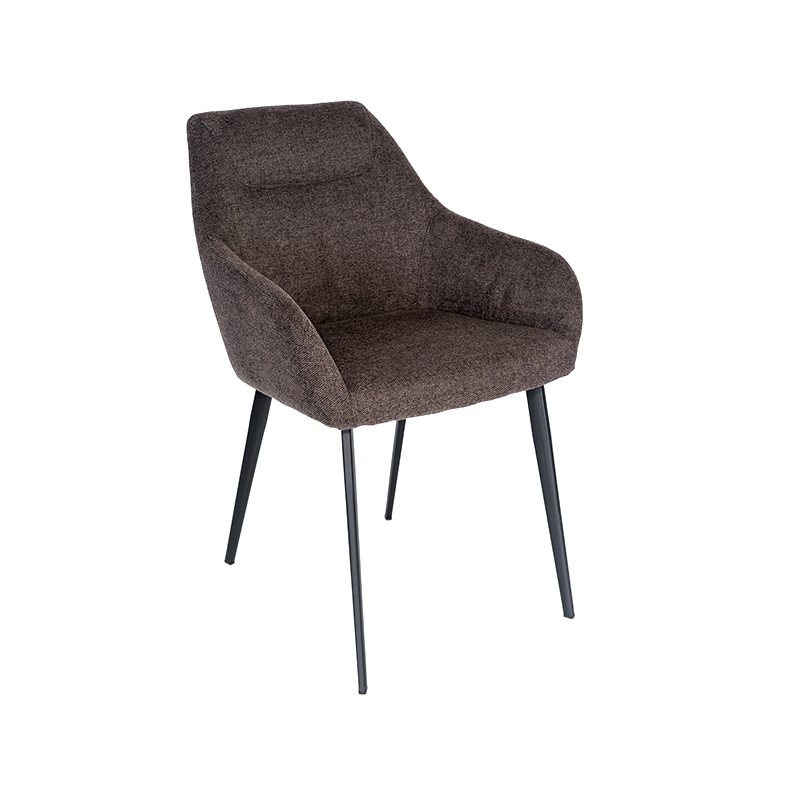
Dining room fabrics need to survive food spills, hand oils, and occasional sauce splashes. Stain-resistant finishes are useful, but a tightly woven fabric with a smooth face is often easier to clean without chemical treatments. Ask about colorfastness to water and crocking; light-colored fabrics need strong dye fastness to stay presentable. In a busy home, a stain-resistant high-back dining chair is a practical example of how performance upholstery and protective shape work together to extend the useful life of the seat.
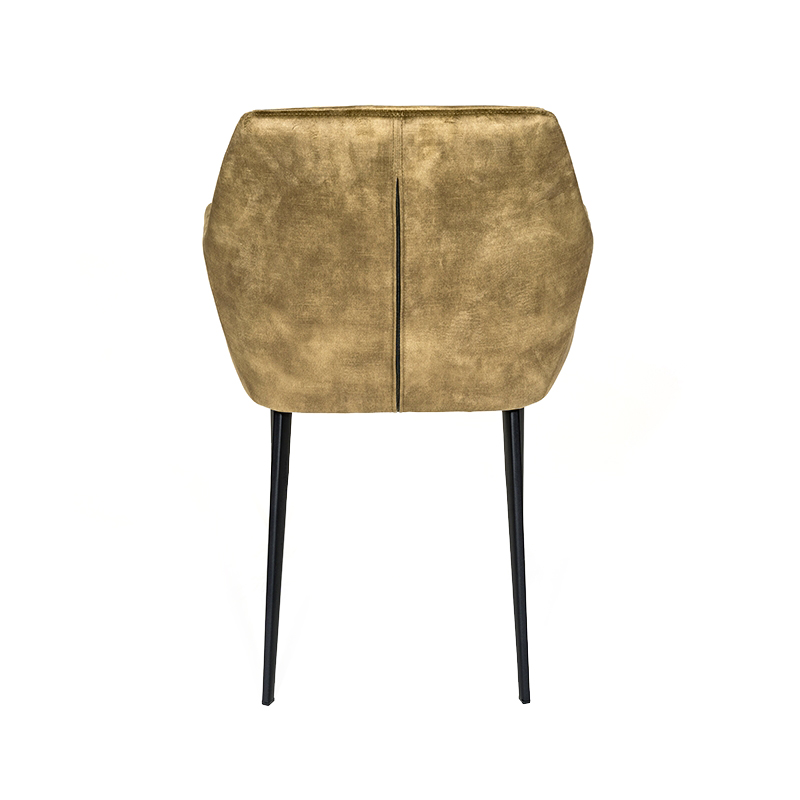 Wholesale Easy to clean, stain resistant, high back dining chair Suppliers, CompAnji Beifeite Furniture Co., Ltd Is China Wholesale Easy to clean, stain resistant, high back dining chair Suppliers, Company And Easy to...View Product →
Fabric choice is only one part of the procurement decision. The chair frame, foam density, and intended use all affect whether the product remains serviceable long enough to justify its environmental footprint.
A home dining chair may prioritize softness and style, while a restaurant chair needs liquid resistance, sanitizing ability, and predictable wear. If you are buying for one space or many, define the expected use first. For a mixed-use environment, contract-grade fabrics with high rub counts will be safer even if they cost more upfront. The actual total cost per year of service is often lower for a durable fabric.
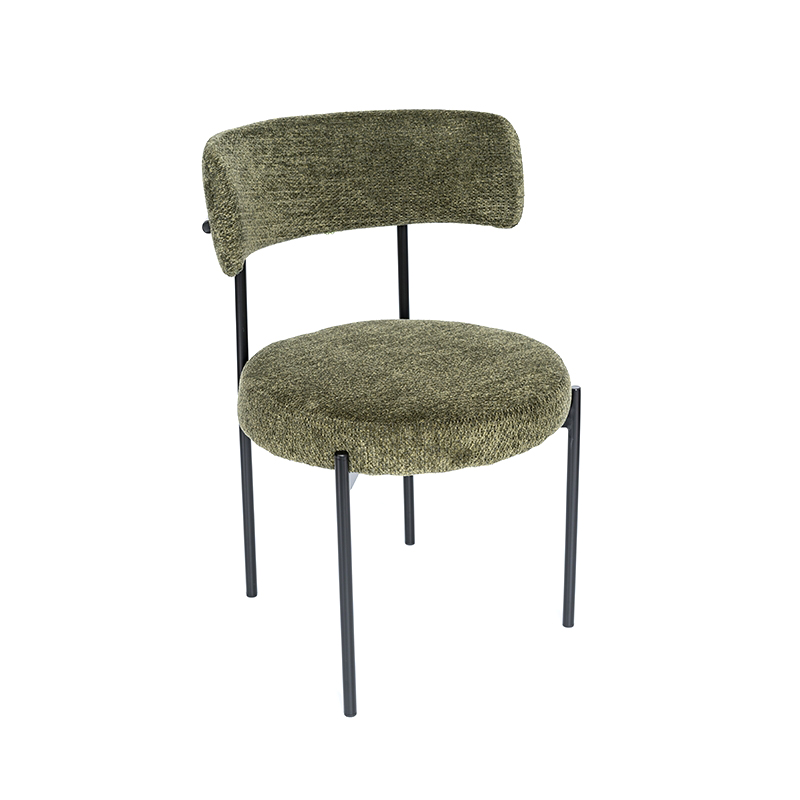
The fabric sits on a structure, and that structure must also be sustainable. Metal frames, especially steel, are strong and highly recyclable. A steel-framed dining chair with a replaceable cushion cover and a stable welded base can remain in service for a long time. For more flexible seating, a steel-framed upholstered swivel dining chair combines the durability of a metal structure with the comfort of a fabric seat, which makes it easier to justify a lower-impact upholstery choice.
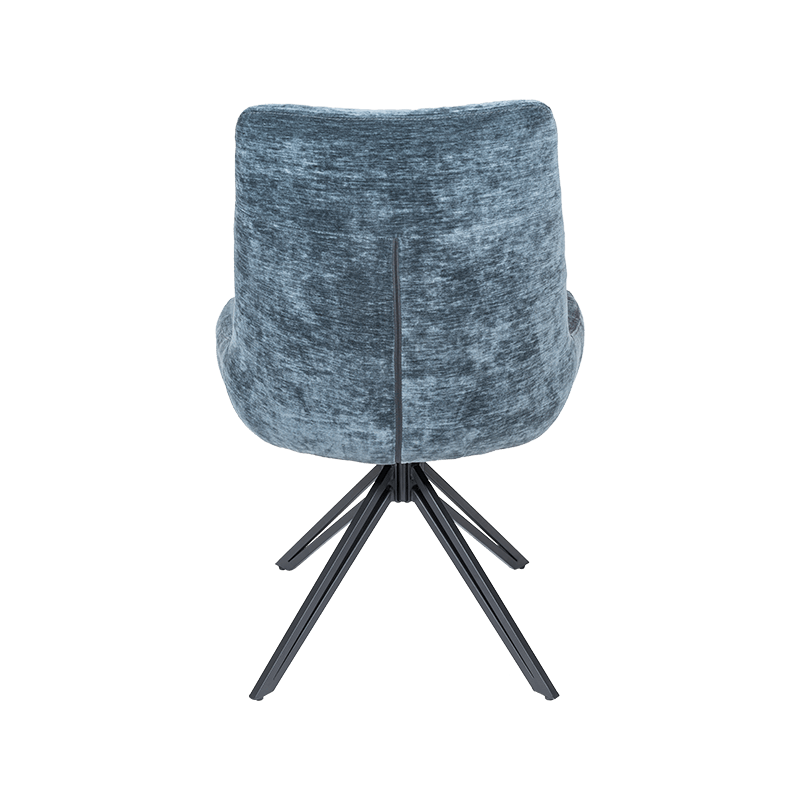 Wholesale navy blue velvet dining room chairs, Four Metal Legs Steel Frame UpholAnji Beifeite Furniture Co., Ltd Is China Wholesale navy blue velvet dining room chairs, Four Metal Legs Steel Frame Upholstered Armless ...View Product →
Even the best fabric will disappoint if it is cared for incorrectly. Check whether the cushion cover is removable, whether the foam is wrapped or bagged, and whether the recommended cleaning process uses solvents that could harm indoor air quality. Quick attention to spills is usually more effective than aggressive stain removers. For large orders, request cleaning instructions that are simple enough for restaurant staff or family members to follow. For more guidance on matching chairs to specific rooms, from home dining corners to commercial spaces, our space application guides can help you translate fabric priorities into layout decisions.
When you source through a furniture manufacturer, you are not just buying a finished chair; you are buying the knowledge that goes into selecting, testing, and producing that chair. As a manufacturer, we look at fabric behavior on the production line, not only its hand-feel. Seams must lie flat, edges must not fray, and the upholstery must fit the foam shape without wrinkling. That is why a factory with experience in metal-framed seating can help you avoid costly mistakes.
If you need a custom solution, our custom ODM/OEM design and development process lets you specify fabric type, color, finish, and even performance testing before bulk production begins. For projects that require high-volume consistency, a large-scale manufacturing facility can source materials, manage quality control, and produce sample batches so you know exactly what you are committing to.
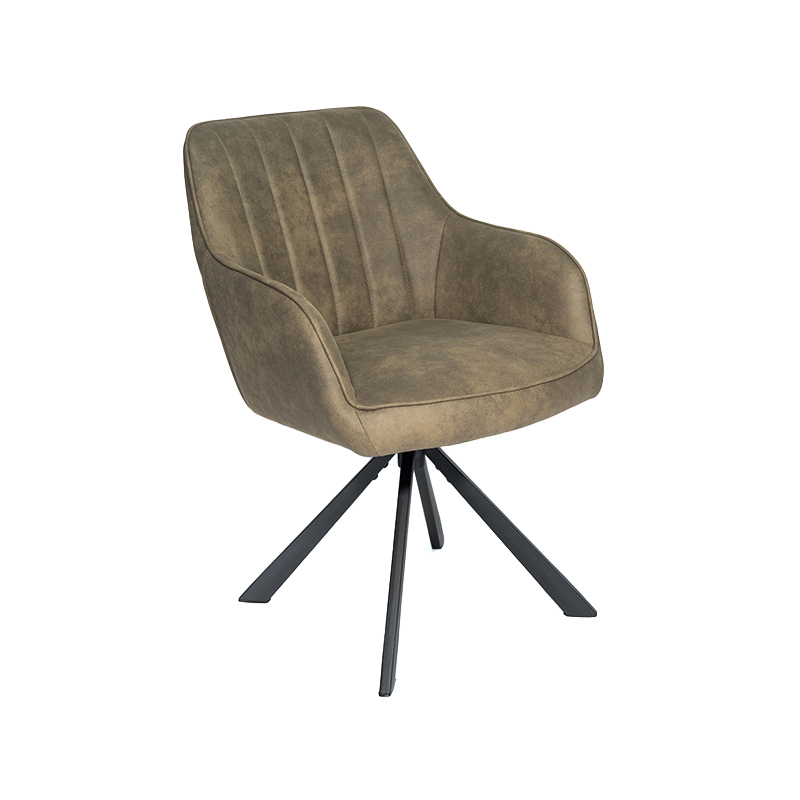
One dining chair style that allows this kind of flexibility is our 360-degree swivel dining chair with steel-frame padding. It can be upholstered with customer-selected sustainable fabric, making it easier to align aesthetics, budget, and environmental requirements in one product.
 Wholesale 360° Swivel Fabric Dining Chair With Steel Frame & Padded Upholstery SAnji Beifeite Furniture Co., Ltd Is China Wholesale 360° Swivel Fabric Dining Chair With Steel Frame & Padded Upholstery Suppliers, Compa...View Product →
There is no single perfect sustainable fabric for every modern dining chair. The right choice balances fiber sourcing, processing, durability, cleanability, and the realities of your setting. Ask suppliers for certifications, rub test results, and cleaning guidelines. Choose a chair frame that can last, and keep the option of reupholstery open. A dining chair that remains useful for decades, with a fabric that is safe to clean and produced with fewer chemicals, is a more sustainable seat than one made from a trendy fiber that needs replacing.

Products
Contact info.
No 1255, Xingye Road, Tianzihu Modern Industrial Park, Anji County, Zhejiang Province, China
+86-13587919519
sales@bftfurniture.com
