
 English
 русский
 Español
 عربى

No 1255, Xingye Road, Tianzihu Modern Industrial Park, Anji County, Zhejiang Province, China
Content
Custom fabric dining chairs are no longer a simple case of picking a color from a swatch book. For a furniture brand, the real challenge is turning a visual concept into a product that can be produced repeatedly, shipped safely, and perform well in a customer’s home or restaurant for years. The most successful custom projects begin with four decisions made early on: fabric behavior, frame construction, testing requirements, and the level of engineering support the factory can provide.
An experienced manufacturing partner like Anji Beifeite Furniture bridges that gap by working as an extension of your product team. Instead of managing separate mills, frame suppliers, and assembly workshops, you can rely on their custom design and engineering capabilities to translate your brief into technical drawings, prototypes, and production documents. That integration reduces miscommunication and shortens the distance between design approval and batch delivery.
At the same time, a custom solution should not be treated as a one-off project. The value for furniture brands comes from creating a repeatable process: the same quality standards, the same testing records, and the same consistency from order to order.
Fabric is the most visible and most touched surface of a dining chair, so it is natural to start there. In practice, fabric choice affects not only appearance but also how much foam support is needed, how the chair will be cleaned, and which durability tests are relevant. A simple rule: finalize the fabric direction before the frame design is frozen, because the softness and thickness of the upholstery change how the seat feels and how much seam allowance is needed.
Most commercial dining chair programs use performance velvet, textured polyester blends, or boucle and chenille. Performance velvet offers a smooth look and high abrasion resistance, making it suitable for family dining rooms and many restaurant settings. Textured polyester blends are easy to clean and provide consistent color across batches, while boucle and chenille add warmth and residential character but may require more careful maintenance.
Because custom work lets you match a specific brand identity, the factory should be able to recommend alternative materials if a chosen fabric fails a required test. For example, if the design team wants a light, bright color without showing every mark, a solution-dyed performance fabric can be more practical than a standard plain weave.
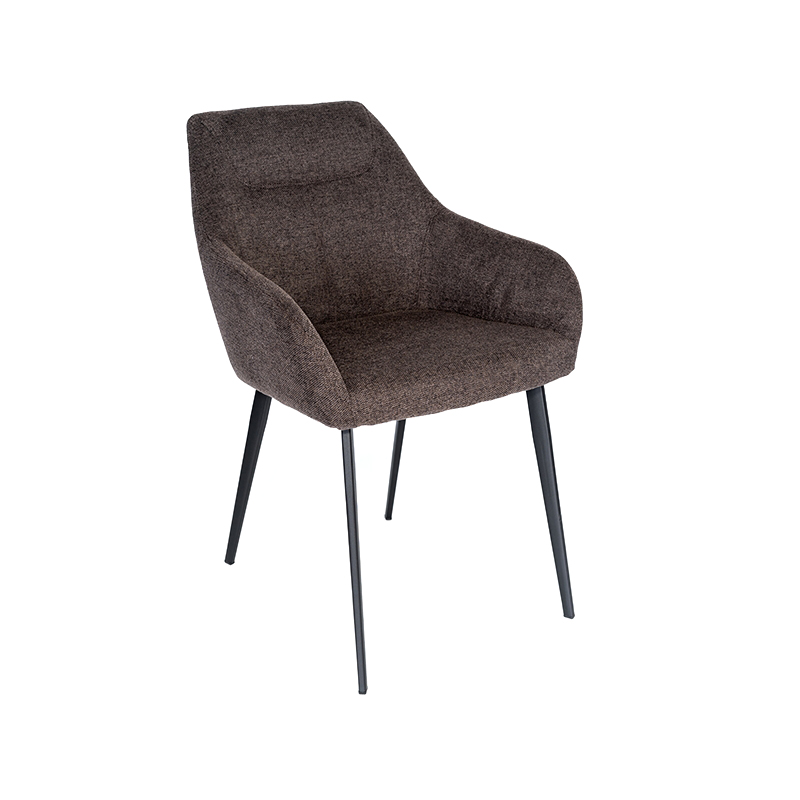
To reduce the risk of returns, the first sample should be evaluated the same way an end user will use the chair. Ask the factory to review fabric durability and color fastness before you commit to a full production run. If you are designing a low-maintenance dining series, our easy-to-clean high-back dining chair is a practical starting point that shows how stain-resistant fabrics work with a supportive backrest.
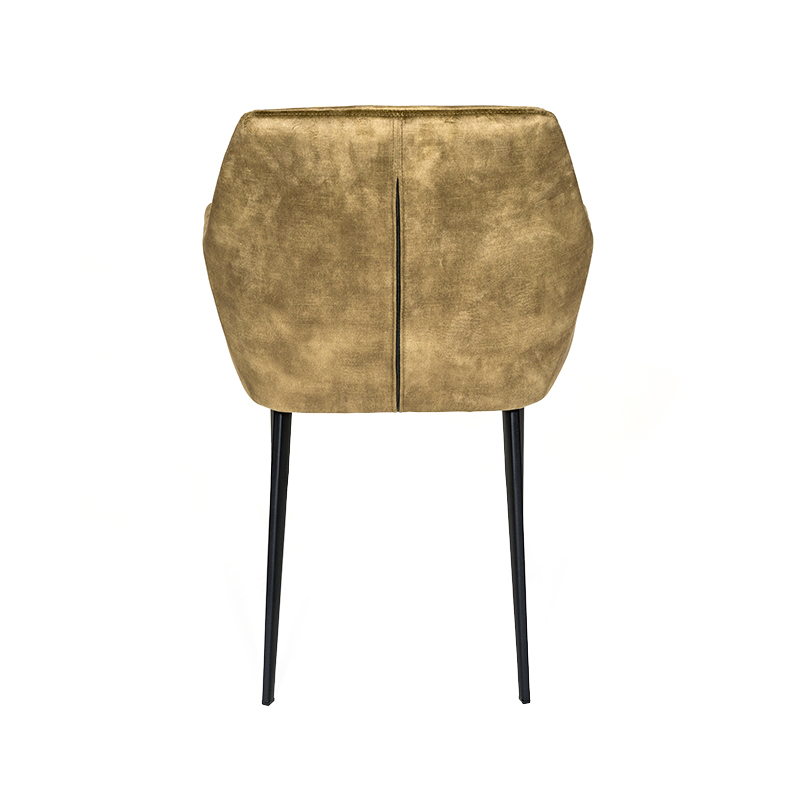 Wholesale Easy to clean, stain resistant, high back dining chair Suppliers, CompAnji Beifeite Furniture Co., Ltd Is China Wholesale Easy to clean, stain resistant, high back dining chair Suppliers, Company And Easy to...View Product →
| Fabric type | Typical abrasion range | Cleaning profile | Best suited for |
|---|---|---|---|
| Performance velvet | 30,000+ rubs | Easy to wipe | Restaurants and high-traffic homes |
| Textured polyester blend | 20,000–30,000 rubs | Easy | Family dining rooms and mixed use |
| Boucle or chenille | 15,000–20,000 rubs | Spot-clean only | Residential styling pieces |
The most frequently used abrasion benchmark is the Martindale test. A fabric that reaches around 15,000 rubs is commonly considered adequate for residential dining, while heavy commercial spaces often require 30,000 rubs or more. Light fastness, rubbing fastness, and pilling resistance are also important, especially for dining chairs that face direct sunlight or frequent contact.
Testing should be specified before the sample is approved. At that point, the cost of replacing a fabric is still small; after mass production, it becomes a much larger problem.
Once the fabric direction is clear, the frame and internal padding become the real engineering challenge. A dining chair looks stable on the showroom floor, but after a year of daily use, it can develop wobble, noise, or creases if the frame and foam were not specified correctly.
Most modern dining chairs use steel frames for strength and clean lines. The wall thickness of the tube, the quality of the welds, and the adhesion of the powder coating determine how the chair behaves over time. In coastal environments or restaurants with frequent cleaning, corrosion resistance is critical. Before approving a prototype, ask the factory to explain its manufacturing capabilities in terms of tube bending, welding, and coating.
Foam density is one of the least visible but most important factors in perceived quality. Low-density foam may feel soft in the showroom but can flatten within months, and the seat cover will then look loose. For a dining chair that sees short but repeated sitting, a firmer, medium-density foam is often a better choice than an ultra-soft foam.
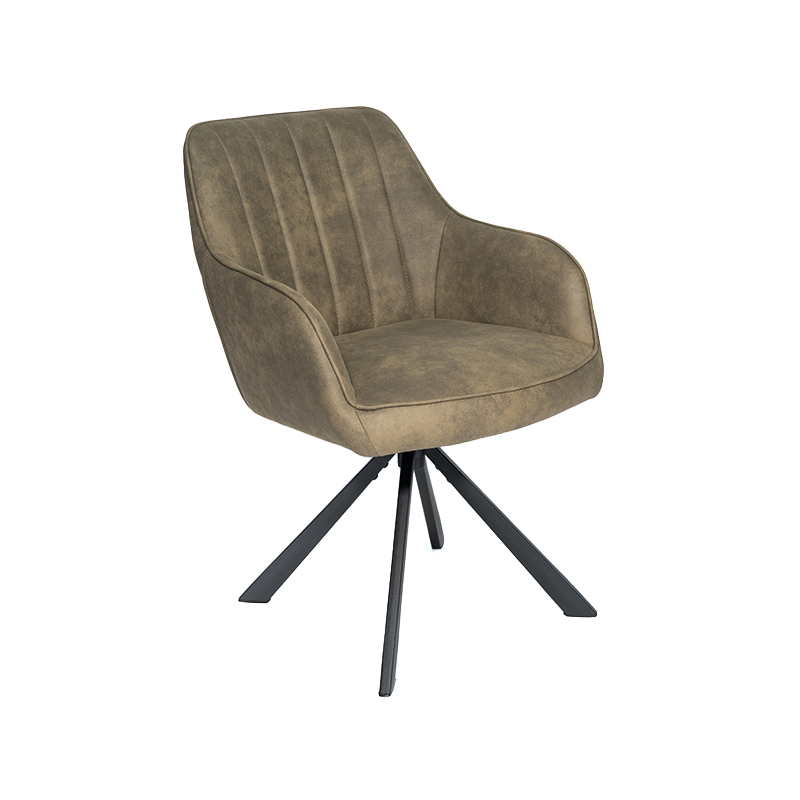
Swivel dining chairs are a growing category because they are convenient and practical for everyday use. But a swivel mechanism introduces moving parts that must be tested for long-term wear, and if the base is not stable the chair can develop wobble at the seat connection. For clients who want this function, the 360-degree swivel dining chair with steel frame is a common platform we build from, because its structure allows us to adjust padding height and upholstery without compromising the swivel assembly.
 Wholesale 360° Swivel Fabric Dining Chair With Steel Frame & Padded Upholstery SAnji Beifeite Furniture Co., Ltd Is China Wholesale 360° Swivel Fabric Dining Chair With Steel Frame & Padded Upholstery Suppliers, Compa...View Product →
Testing is the part of custom seating that furniture brands often underestimate. The consequences of skipping a test appear only after products are in customers’ hands, when returns are expensive and slow. A better approach is to define the necessary test levels during the sample stage and ask for reports before mass production.
For dining chairs, the most common structural requirements are seat static load, backrest load, impact resistance, and forward and backward stability. Many buyers use BIFMA-style protocols as a reference, even if they do not require formal certification. The factory should be able to explain what load values are used in its internal testing and how those values compare with the expected user weight.
The fabric tests described earlier, including abrasion, color fastness, and pilling, should be part of the technical file. In addition, some markets require flame retardancy compliance, such as EN 1021 standards in Europe or CA TB117-2013 in the United States. Because these requirements vary by channel, it is important to tell the manufacturer where the chair will be sold, not just how it should look.
| Test area | Typical expectation | Why it matters |
|---|---|---|
| Structural strength | Seat and backrest static load | Prevents collapse and warranty claims |
| Stability | Front and side force tests | Reduces tipping risk |
| Fabric abrasion | Martindale rubs | Predicts wear from daily use |
| Color fastness | Light and rubbing tests | Prevents fading and dye transfer |
| Flammability | EN 1021 or CA TB117 | Necessary for certain contract markets |
With a clear specification and agreed test levels, the production process becomes more predictable. A typical custom dining chair program follows six steps:
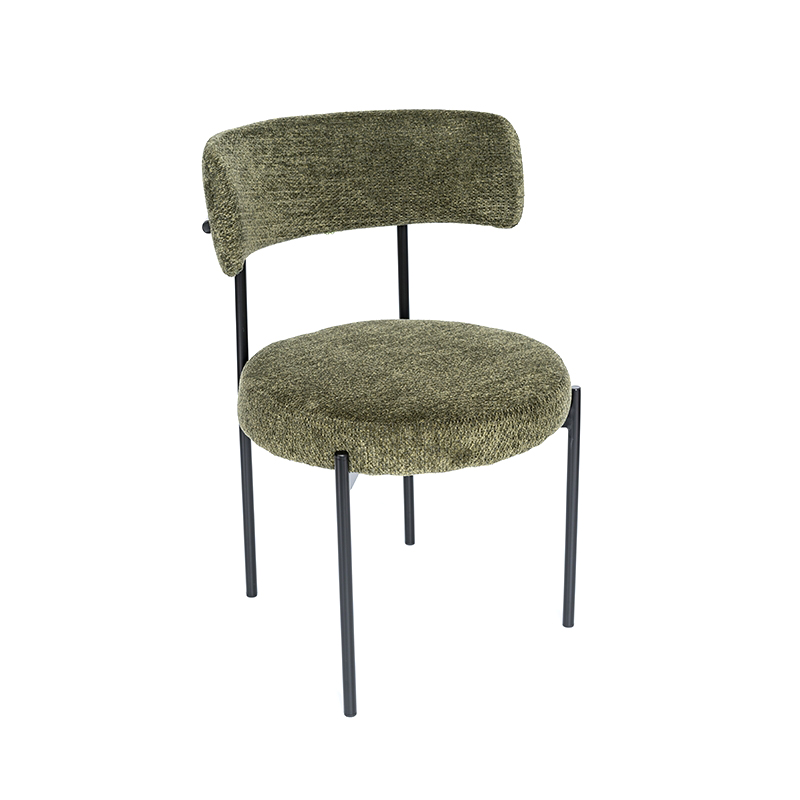
During the early steps, using an existing platform can reduce development time. For example, basing the first run on a simple iron-frame dining chair with your fabric and color choice allows the factory to focus on the visual identity instead of proving a new structure. This is often the fastest way for a furniture brand to launch a custom series.
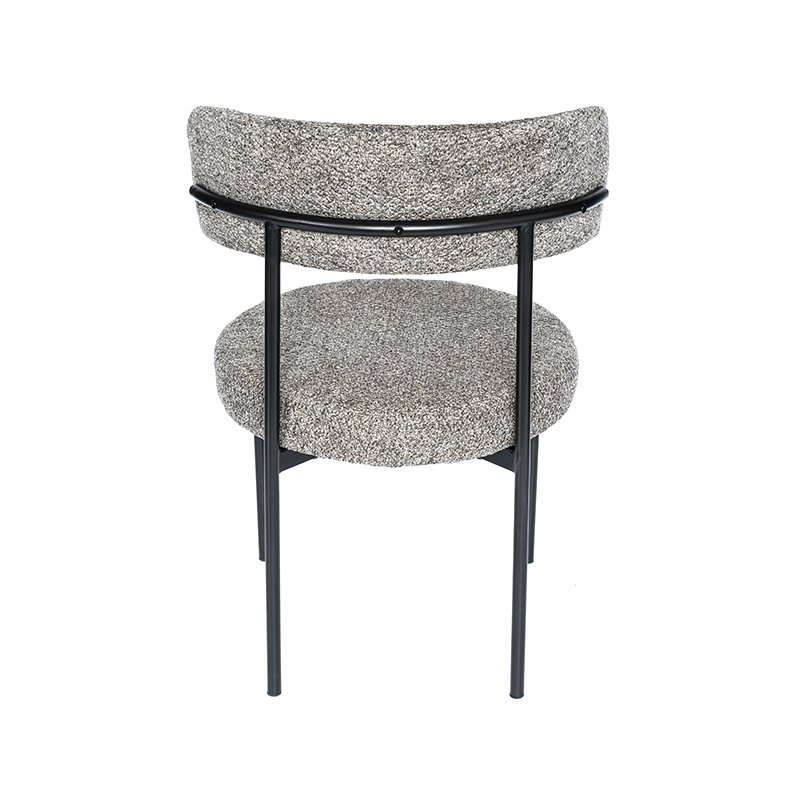 Wholesale Iron Frame, Soft Cushions Simple Fabric Dining Chair - Green/Grey SuppAnji Beifeite Furniture Co., Ltd Is China Wholesale Iron Frame, Soft Cushions Simple Fabric Dining Chair - Green/Grey Suppliers, Company ...View Product →
Not every custom chair project is equally easy to execute. To avoid surprises, ask the factory direct questions before signing an order:
Even a small number of precise questions will show whether the supplier works like a product partner or only takes instructions.
The brands that get the most value from custom fabric dining chairs treat their first program as a platform, not a single SKU. Once a base frame and a set of fabrics are approved, the same structure can generate several variations by changing color, upholstery texture, arm style, or swivel function.
Anji Beifeite Furniture has built its dining chair programs around this idea. The company operates as a custom ODM/OEM home chair manufacturer, which means the engineering resources you need for the first custom project are the same resources you can use for future line extensions. That consistency is often more valuable than the price of the first order.
By focusing on fabric performance, frame construction, testing, and a repeatable production process, your brand can offer custom fabric dining chairs that look bespoke but still meet the cost and quality targets of a commercial product line.

Products
Contact info.
No 1255, Xingye Road, Tianzihu Modern Industrial Park, Anji County, Zhejiang Province, China
+86-13587919519
sales@bftfurniture.com
