
 English
 русский
 Español
 عربى
No 1255, Xingye Road, Tianzihu Modern Industrial Park, Anji County, Zhejiang Province, China
Content
A buyer preparing to launch a private-label fabric dining chair range usually starts with two questions: what will it cost, and how long will it take. Both answers come from the same place - the factory's production process. In OEM fabric dining chair manufacturing, the decisions made before mass production determine nearly every later problem: fabric pilling, seat sagging, weld failure, color mismatch, or delayed delivery. This guide explains how the process works, what to specify, and where most sourcing programs go wrong.
Buying a finished product from a catalog is not the same as running an OEM project. With an OEM fabric dining chair, the buyer controls the fabric, the cushion feel, the frame finish, the dimensions, and sometimes the function itself. That control only creates value if the factory can execute it consistently. A supplier that only assembles standard chairs will struggle with custom specifications because every change affects the bill of materials, the sewing pattern, the testing procedure, and the inspection plan.
A more practical way to look at it: the quality of an OEM dining chair is fixed at the design and sampling stage, not at the packing stage. If the fabric is chosen only for appearance, or the foam is chosen only for price, no amount of final inspection will fix the result. That is why the first step in a successful program is a technical review between the buyer and the factory, before any sample is cut.
Before any fabric is cut, the chair exists as an engineering drawing plus a bill of materials. The OEM process starts when the factory translates the product concept into measurable parts: seat width, back height, leg clearance, foam thickness, fabric yardage, and hardware specifications. A capable partner should be able to take a reference photo, a sketch, or an existing sample and convert it into a production-ready design. This is why buyers should look for a manufacturer that offers a custom design and development service rather than only a fixed catalog. In that stage, the factory also confirms the ergonomic angles that make a dining chair comfortable for long meals, not just visually correct.
Fabric performance is the most visible quality driver in an upholstered dining chair. The most common standard is the Martindale abrasion test, expressed in rubs. For residential use, 20,000 to 30,000 rubs is acceptable; for daily family use or commercial settings, 30,000 to 50,000 rubs gives a wider safety margin. Stain resistance matters just as much, because dining chairs face food and drink spills rather than foot traffic. Buyers should also ask about color fastness to light and wet rubbing, since a chair placed near a window will visibly fade if the fabric dye is poor. The relationship between these parameters is explained in more detail in our article on commercial upholstery testing standards such as Martindale rubs and stain fastness.
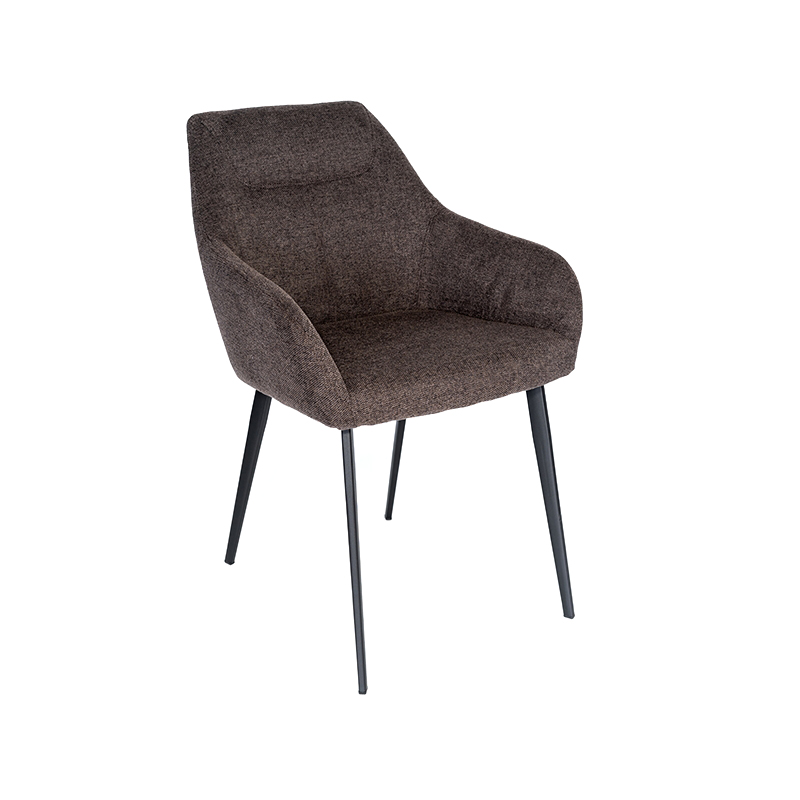
When the specification includes a stain-resistant finish, the factory needs to confirm that the treatment is applied before sewing, because post-construction treatment will miss seam areas and produce uneven coverage. In our own production line, the easy-to-clean, stain-resistant high-back dining chair is a practical example of a product where stain resistance and a high rub count are built into the fabric specification from the start.
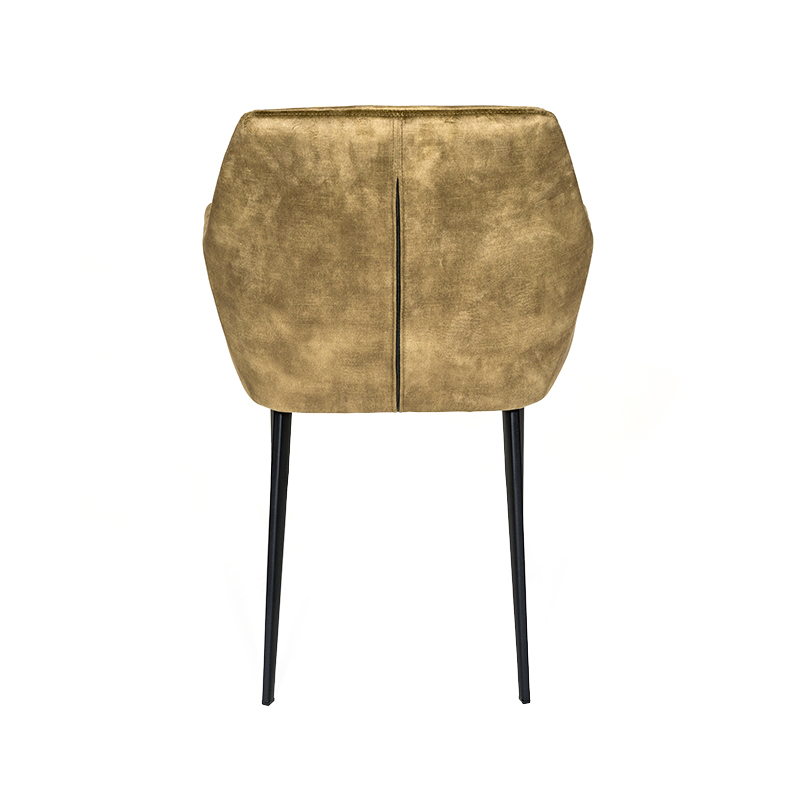 Wholesale Easy to clean, stain resistant, high back dining chair Suppliers, CompAnji Beifeite Furniture Co., Ltd Is China Wholesale Easy to clean, stain resistant, high back dining chair Suppliers, Company And Easy to...View Product →
Frame material determines whether the chair survives five years or fifteen. Most OEM fabric dining chairs from major manufacturing clusters are built on steel tube frames, welded at the joints and finished with powder coating or electroplating. Tube wall thickness matters: 1.0 mm is light and cheap, while 1.2-1.5 mm is the range that should be specified for dining chairs that will be lifted, dragged, and leaned on daily. Weld quality and coating adhesion are difficult to correct after production, so they deserve attention at the sample stage.
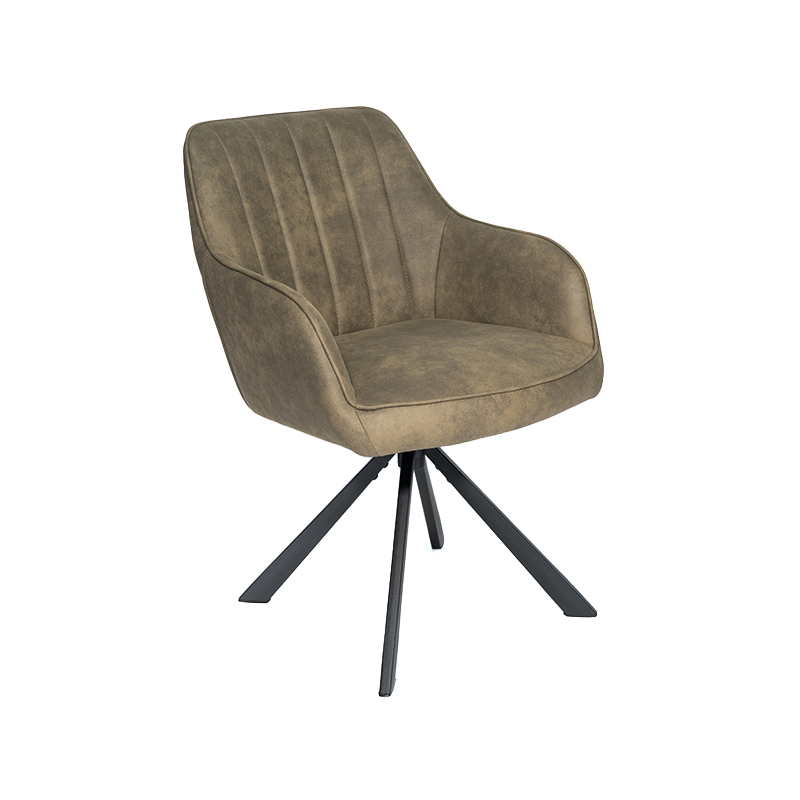
Foam is the second structural decision. Standard polyurethane foam at about 28 kg per cubic meter works for short-term seating, but high-density foam at 30-35 kg per cubic meter resists sagging and keeps the seat shape after thousands of sits. For commercial dining spaces, some buyers also request a denser base layer with a softer top layer. The steel-framed upholstered swivel dining chair in our range illustrates this combination: a formed steel underframe carries the padded upholstered seat, and the complete assembly is load-tested before it is offered to customers.
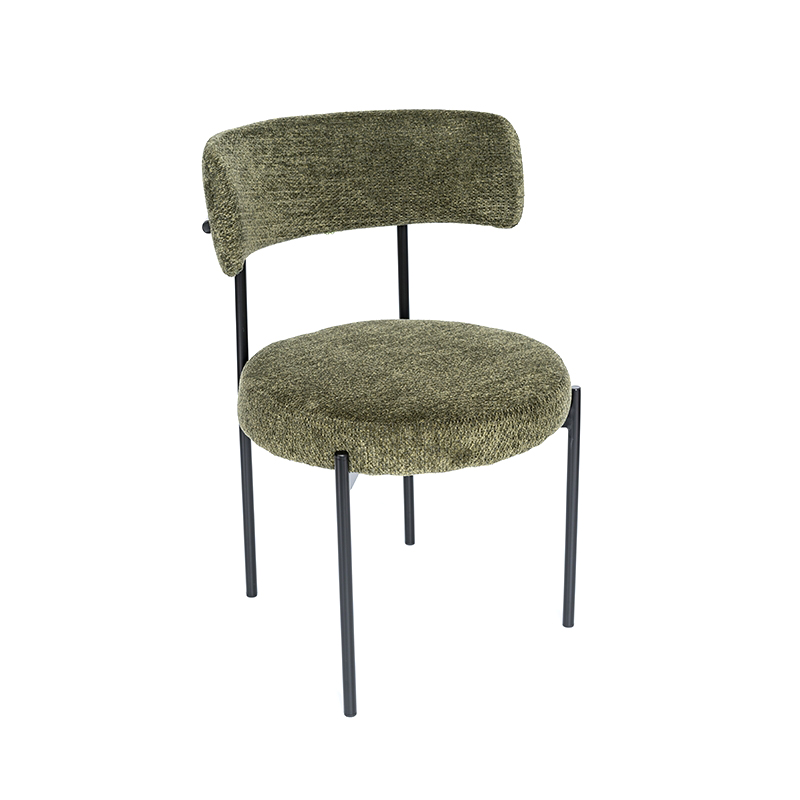
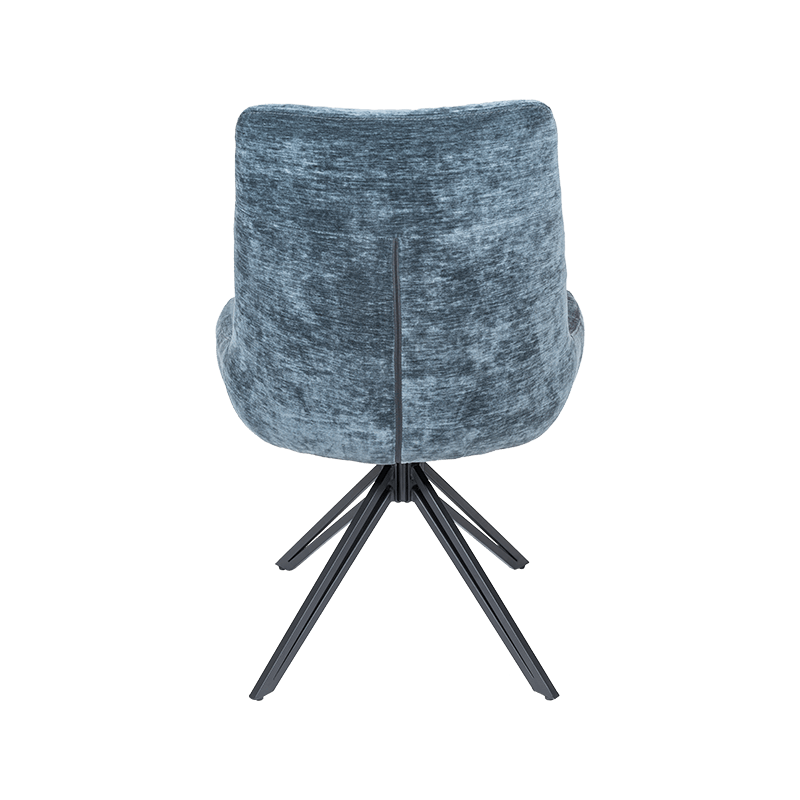 Wholesale navy blue velvet dining room chairs, Four Metal Legs Steel Frame UpholAnji Beifeite Furniture Co., Ltd Is China Wholesale navy blue velvet dining room chairs, Four Metal Legs Steel Frame Upholstered Armless ...View Product →
Once the frame, foam, and fabric are approved, the chair moves to cutting and sewing. Pattern tolerance matters more than most buyers realize: a difference of a few millimeters in the cushion cover changes the fit from tight to baggy. Sewing technicians adjust stitch density and tension to the fabric type because a stretch-backed knit behaves differently from a stiff woven fabric. The cushion is wrapped around the foam and fitted to the frame, with staples or clips placed so that they never surface through the fabric. Final assembly includes torquing all bolts to a set value and checking every moving part if the order includes a swivel base or height adjustment.
An OEM brief that leaves important decisions open will come back with surprises. The specifications below cover the minimum information required before a sample is produced, and they give the factory a clear reference for cost and testing.
| Specification | Typical Value for OEM Fabric Dining Chairs | Why It Matters |
|---|---|---|
| Fabric abrasion (Martindale) | 30,000+ rubs for residential; 50,000+ for commercial use | Predicts pilling and visible wear over time |
| Seat foam density | 30-35 kg/m3 high-density foam | Prevents seat sagging and loss of comfort |
| Frame material | Steel tube, 1.2-1.5 mm wall thickness | Determines structural durability and warranty risk |
| Load capacity | Static load 120-150 kg per seat, BIFMA-style test | Verifies the safe weight limit for real users |
| Fabric finish | Stain-resistant and anti-pilling treatment | Reduces cleaning problems in daily use |
If the program includes a swivel base or height adjustment, the mechanism should be added to this same specification list and tested during sampling. The 360-degree swivel dining chair with a steel frame and padded upholstery shows how a rotation mechanism is integrated into an upholstered seat. That kind of functional detail must be documented before mass production, because a swivel base changes the frame geometry, the foam thickness, and the inspection procedure.
 Wholesale 360° Swivel Fabric Dining Chair With Steel Frame & Padded Upholstery SAnji Beifeite Furniture Co., Ltd Is China Wholesale 360° Swivel Fabric Dining Chair With Steel Frame & Padded Upholstery Suppliers, Compa...View Product →
Once the sample is approved, the factory keeps it as the golden sample and uses it as the reference for bulk production. A mature OEM quality control plan works in three stages: first article inspection at the start of production, in-line inspection of stitching, welding, and fabric appearance, and final random inspection before packing. The most common defect in fabric dining chairs is color difference between batches. Fabric rolls purchased at different times can have small dye lot variations, so a reliable factory locks the approved fabric lot, keeps a reference cutting, and checks every incoming batch against it.
The final inspection should cover at least the following checkpoints:
Buyers who skip these checks usually discover problems only after the container arrives, when rework is expensive and time-consuming.
A factory that can build furniture is not automatically a good OEM partner. The evaluation should cover engineering support, production scale, and quality control, not only the unit price. Start by reviewing the manufacturing capabilities and production facilities the supplier openly presents, then verify the points below before committing to a bulk order.
The best OEM fabric dining chair program is not the one with the lowest quote. It is the one where the factory understands how the chair will be used, documents every specification, and treats the approved sample as a promise for what the bulk order will deliver. Buyers who invest time in the upfront technical review get a shorter sampling cycle, fewer rework rounds, and a fabric dining chair that performs reliably in their market.

Products
Contact info.
No 1255, Xingye Road, Tianzihu Modern Industrial Park, Anji County, Zhejiang Province, China
+86-13587919519
sales@bftfurniture.com
