
 English
 русский
 Español
 عربى

No 1255, Xingye Road, Tianzihu Modern Industrial Park, Anji County, Zhejiang Province, China
Content
A buyer ordering 1,000 fabric dining chairs from a furniture factory faces one question above all others: will unit 37 sit, look, and feel the same as unit 735? When production depends on hand cutting, manual sewing, and freehand welding, the answer is often no. When the factory uses automated cutting tables, computerized sewing machines, and robotic welding, the answer becomes much closer to yes. That is why technology has become the defining factor in fabric dining chair production — not because it replaces experienced workers, but because it gives them tools that remove human inconsistency.
Fabric is usually the most expensive raw material in an upholstered dining chair, so how it is laid out and cut affects both cost and fit. In modern production, automated spreading machines lay fabric in long, even layers while a computer-controlled cutting table follows digitized patterns. Nesting software arranges those patterns in the most efficient layout, reducing waste by a meaningful percentage compared with manual layout. The result is a lower cost per unit and covers that fit the frame consistently, because every panel is cut to the same digital geometry.
Hand cutting can drift by several millimeters over a long batch. CNC cutting holds far tighter tolerances. For fabrics with a pile or directional texture — such as corduroy, boucle, or velvet — the cutting system also controls nap direction automatically, making sure every panel faces the same way. That detail matters, because upholstered panels will show visible shading differences if the fabric direction is not consistent.
Once panels are cut, they must be sewn into covers. This is where visible quality is decided. Computerized sewing machines with automatic thread tension control produce uniform stitch density from the first seam to the last. Operators guide panels along laser-marked reference lines, and the machine maintains consistent fabric feed, preventing puckering or edge mismatches. Cushions that come off the line look identical when placed side by side.
When a fabric has stripes, checks, or a printed pattern, alignment becomes part of the quality standard. Digital projection systems let operators overlay the next panel position onto sections that are already sewn, making it easier to match patterns across seams. This is especially important for dining chairs with high backs or arms, where pattern continuity is immediately visible to anyone sitting at the table.
Seams in upholstered dining chairs carry real load — every time someone sits down, the seam is stressed. Automated sewing technology allows the factory to set exact stitch density and thread tension, and the machine holds those parameters across an entire order. For a buyer, that translates into fewer returned chairs with seam failure and a more predictable service life, even in daily-use dining environments.
Comfort in a fabric dining chair comes mostly from foam density and shape. If the foam density varies, two chairs from the same order can sit noticeably differently. CNC foam cutting machines shape seat and back cushions from slab foam with precise dimensions, and density verification ensures every batch matches the approved specification. Some factories also use molded foam for complex curves, which offers more consistent resilience than cut foam for high-use seating.
For the buyer, this means that the seat cushion which feels supportive in the pre-production sample will feel the same in mass production. That consistency is one of the most difficult promises for a dining chair manufacturer to make, and technology has made it possible to keep.
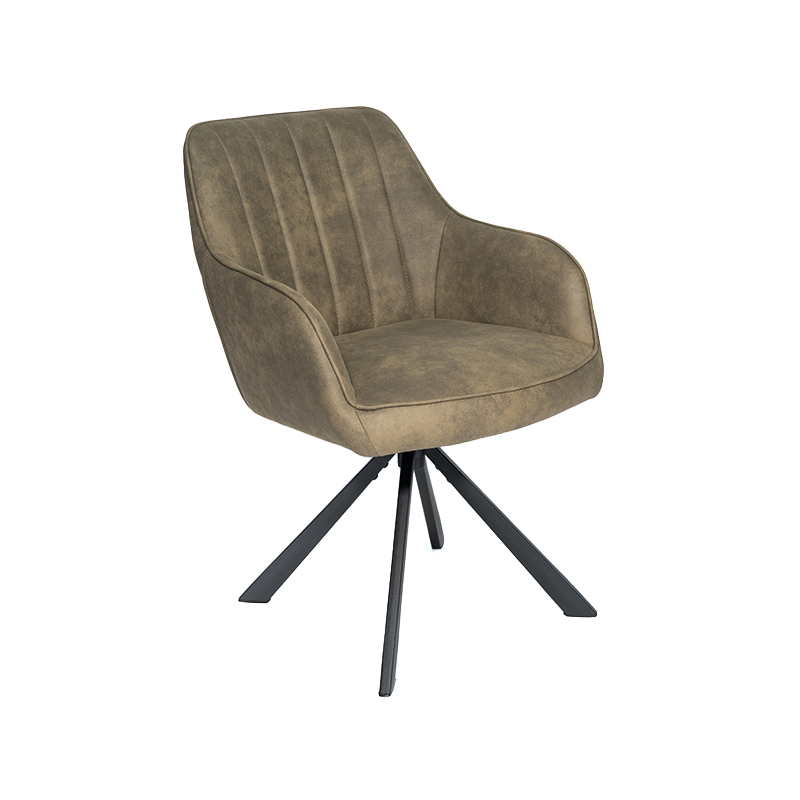
Most fabric dining chairs produced in China rely on steel or iron frames, and the strength of that frame determines how long the chair lasts regardless of the upholstery. Robotic welding provides consistent weld penetration at every joint. Frames are held in precision jigs so each one has the same geometry — legs sit flat, backrest angles match, and the chair does not wobble. This level of frame consistency is directly visible in models such as the 360-degree swivel dining chair with a steel frame and padded upholstery, where the rotating mechanism depends on a perfectly aligned frame to function smoothly over time.
 Wholesale 360° Swivel Fabric Dining Chair With Steel Frame & Padded Upholstery SAnji Beifeite Furniture Co., Ltd Is China Wholesale 360° Swivel Fabric Dining Chair With Steel Frame & Padded Upholstery Suppliers, Compa...View Product →
Before welding, individual tubes are cut and bent to exact lengths and angles. Jigs hold every component in position so the welded frame comes out square and level. A frame that is even a few millimeters out of square will cause the chair to rock on hard floors and place uneven stress on the joints.
After welding, frames move through a finishing line where they are cleaned, coated, and cured under controlled conditions. Powder coating lines have largely replaced manual painting, providing a more uniform layer that resists chipping and corrosion. For the end user, this means a chair that stays stable and keeps its appearance through years of household or restaurant use.
Production technology extends beyond manufacturing into verification. When a dining chair is designed for commercial or high-use residential settings, the fabric is tested for abrasion resistance using methods such as the Martindale test. Color fastness checks confirm whether the fabric fades under light exposure or bleeds during damp wiping. Frame durability is verified through load tests and fatigue testing that simulate years of use in a short period. These tests are not formalities; they are how a factory identifies weaknesses before a bulk order ships.
Testing data also guides fabric selection. A light linen blend may look attractive in a showroom but fail abrasion requirements for a busy restaurant. In contrast, a performance velvet can pass both abrasion and stain-resistance requirements while keeping a soft hand feel. Products like the easy-to-clean, stain-resistant high-back dining chair are engineered around exactly these performance criteria.
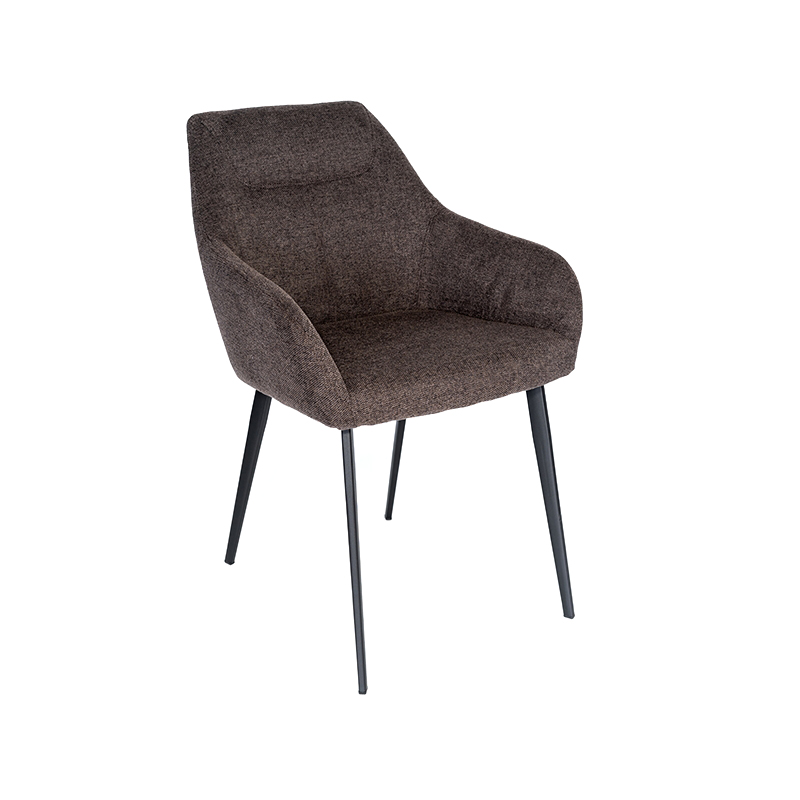
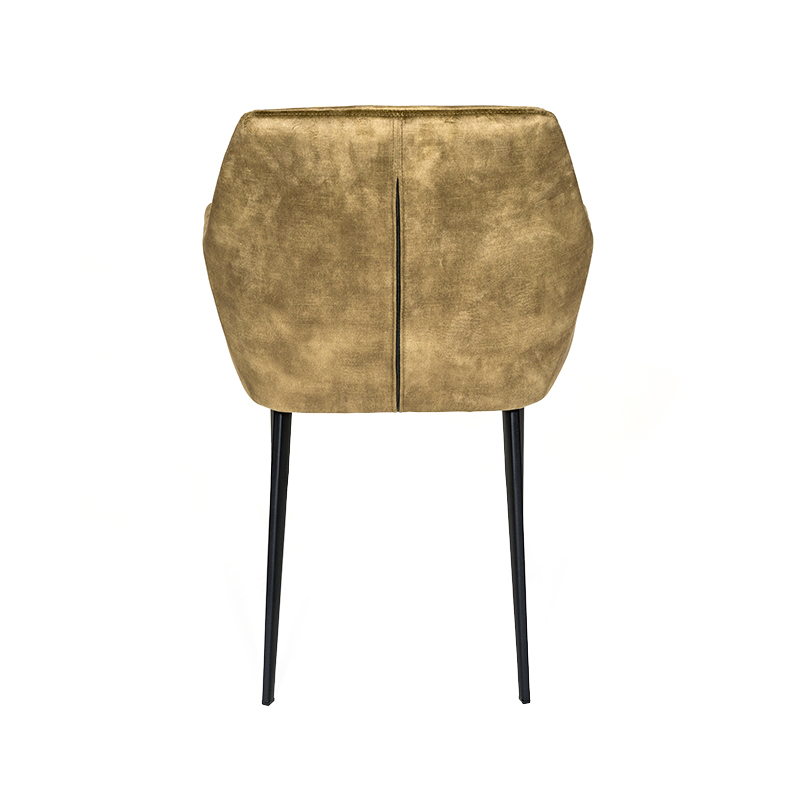 Wholesale Easy to clean, stain resistant, high back dining chair Suppliers, CompAnji Beifeite Furniture Co., Ltd Is China Wholesale Easy to clean, stain resistant, high back dining chair Suppliers, Company And Easy to...View Product →
For buyers who want deeper reference points, industry discussions of commercial upholstery testing standards explain how abrasion, stain resistance, and color fastness figures should be interpreted when comparing supplier quotes.
Frame testing goes beyond static weight. Dynamic tests apply repeated impact to the seat and backrest, replicating the way people sit down heavily, lean back, or slide chairs across floors. A passing result gives the buyer confidence that the chair will not develop cracks or loosened joints after a few months of normal use.
Fabric rolls are also inspected before they enter the cutting line. Shade variation within the same roll, or between rolls from the same dye lot, is a common reason for mismatched chairs. Small-scale tests on a sample swatch prevent a full batch from being cut from a fabric roll that will not meet the requirements.
Technology has also compressed the product development cycle. In the past, creating a sample meant cutting real fabric, sewing a prototype, and waiting for physical approval. Today, 3D modeling and digital fabric simulation allow a factory to show a buyer how a new design will look before the first physical sample is cut. Fabric texture, color, and frame finish can be rendered digitally, speeding up design iteration and reducing the number of physical samples required.
This is where an experienced manufacturer's development capability becomes an advantage. At Anji Beifeite, the in-house team can take a customer's sketch or reference image and turn it into a manufacturable product, with the ODM/OEM customization process covering everything from frame specification to fabric selection. Because the same digital files control cutting, sewing, and welding, a design such as the steel-framed upholstered swivel dining chair can move from approved sample to repeatable bulk production with minimal variation. Buyers working with overseas suppliers can also review the factory's manufacturing capabilities before committing to a production run, which reduces the risk of misaligned expectations.
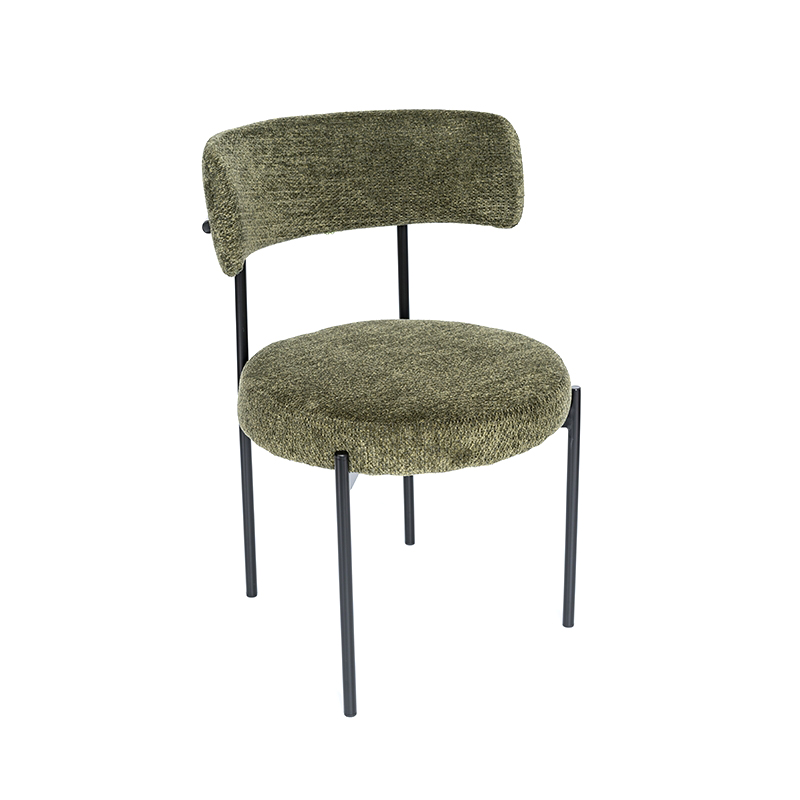
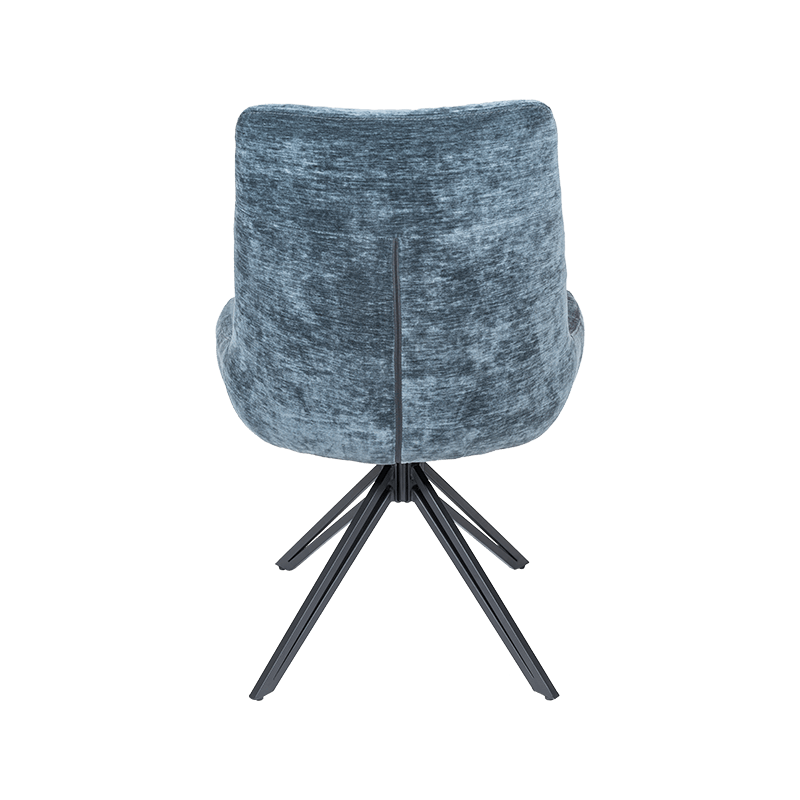 Wholesale navy blue velvet dining room chairs, Four Metal Legs Steel Frame UpholAnji Beifeite Furniture Co., Ltd Is China Wholesale navy blue velvet dining room chairs, Four Metal Legs Steel Frame Upholstered Armless ...View Product →
For an importer, retail brand, or restaurant operator, the impact of production technology appears in three concrete ways. First, defect rates fall, which means fewer chairs to reject or replace. Second, dimensional consistency improves, which matters when chairs need to line up neatly along a dining table. Third, lead times compress, because automated equipment runs faster and with fewer interruptions than manual processes.
| Production stage | Traditional approach | Technology-driven approach | Buyer benefit |
|---|---|---|---|
| Fabric cutting | Hand scissors and paper patterns | CNC cutting with nesting software | Less waste and consistent panel fit |
| Sewing | Manual machines with variable tension | Computerized machines with laser guides | Uniform seams and stitch density |
| Foam shaping | Manual cutting from slab | CNC cutting or molded foam | Consistent comfort across every unit |
| Frame welding | Manual torch welding | Robotic welding with precision jigs | Stable frames with identical geometry |
| Quality verification | Visual inspection only | Martindale, color fastness, and load tests | Verified durability and color performance |
These improvements matter most when a buyer is sourcing at scale. A short-run order of twenty chairs can survive a few imperfections; a 1,000-unit order cannot. The difference between a supplier that invests in production technology and one that relies entirely on manual labor shows up in the defect report, the consistency of the final shipment, and the number of customer complaints after delivery.
Technology is not making furniture production impersonal; it is making it reliable. In fabric dining chair production, the impact shows up in every layer of the product: fabric panels cut with precision, seams that are strong and even, foam that retains its resilience, and steel frames welded to hold their geometry. For a manufacturer serving importers, retail brands, and commercial buyers, this is not a theoretical advantage. It is the reason a chair can be reproduced consistently at scale, and why a customer's first order can grow into a long-term supply relationship.
For buyers evaluating a supplier, the practical question is not whether the factory owns expensive machines, but whether those machines are actually integrated into the production flow — from the cutting room to the welding line to the final inspection. When they are, the buyer receives exactly what was approved in the sample, order after order. That is the real value of technology in fabric dining chair manufacturing, and it is the standard that reliable factories are measured by.

Products
Contact info.
No 1255, Xingye Road, Tianzihu Modern Industrial Park, Anji County, Zhejiang Province, China
+86-13587919519
sales@bftfurniture.com
