
 English
 русский
 Español
 عربى

No 1255, Xingye Road, Tianzihu Modern Industrial Park, Anji County, Zhejiang Province, China
Content
A purchasing manager once approved a fabric dining chair after reviewing a single handcrafted sample. Two months after the container arrived, the seats had visibly softened, seams along the backrests had started to pucker, and the fabric began pilling where customers leaned back. The sample had been built by the factory's most careful technician; the production run had been built by whoever was available on the line that day.
A reliable fabric dining chair manufacturer is not the one with the best showroom sample. It is the one that can reproduce that sample across an entire order, document the materials behind it, and inspect the work at defined checkpoints. The rest of this guide covers what to verify before you place that order.
Reliability in this category comes down to one capability: repeating a specification at scale. Building one excellent chair can be done in an afternoon. Building 500 identical chairs requires controlled material purchasing, calibrated equipment, trained operators, and inspection points that catch defects before they are packed.
Ask for documentation before you compare samples. For seat foam, a density of 35–45 kg/m³ is the range most furniture engineers specify for dining chairs; below that, the seat will lose its recovery within months. For upholstery, request the fabric's abrasion result in Martindale rubs, its stain-resistance treatment, and the flammability compliance for your target market. A factory that provides these numbers in writing during the first conversation is already ahead of one that promises to "make it right" after the order.
Fabric dining chairs fail in visible ways, but the root cause is usually structural. A weak frame loosens, wobbles, and eventually destroys the upholstery attached to it. That is why the frame deserves as much attention as the fabric.
Steel is the most predictable frame material for dining chairs that will face daily use. Check the tube wall thickness: a 1.2 mm frame can serve light residential use, while restaurants, cafeterias, and busy family homes should look for 1.5 mm or heavier. The finish matters equally. Powder coating resists chipping and corrosion better than thin painted surfaces, and electroplated legs need a properly prepared base layer or the chrome will flake wherever moisture collects.
Metal frames also cause hidden upholstery damage. A poorly deburred frame corner rubs against the fabric from the inside and wears a hole long before the outer surface shows signs of age. Ask how the factory finishes frame edges and whether padding is placed at contact points. A steel-framed upholstered swivel dining chair, for example, should arrive with fully dressed edges where the seat cover wraps around the metal, not raw steel pressing against the fabric.
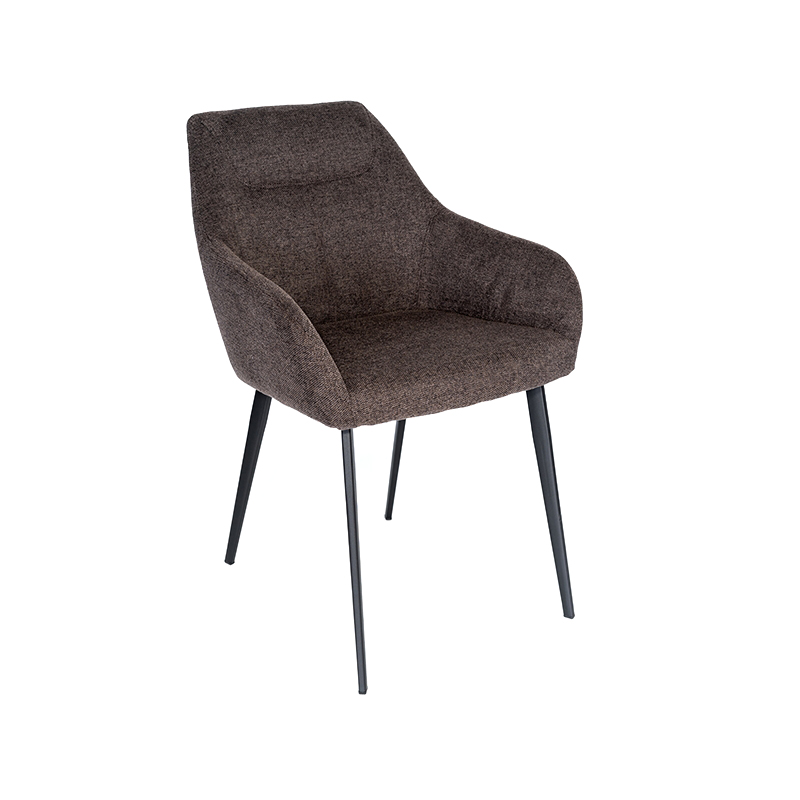
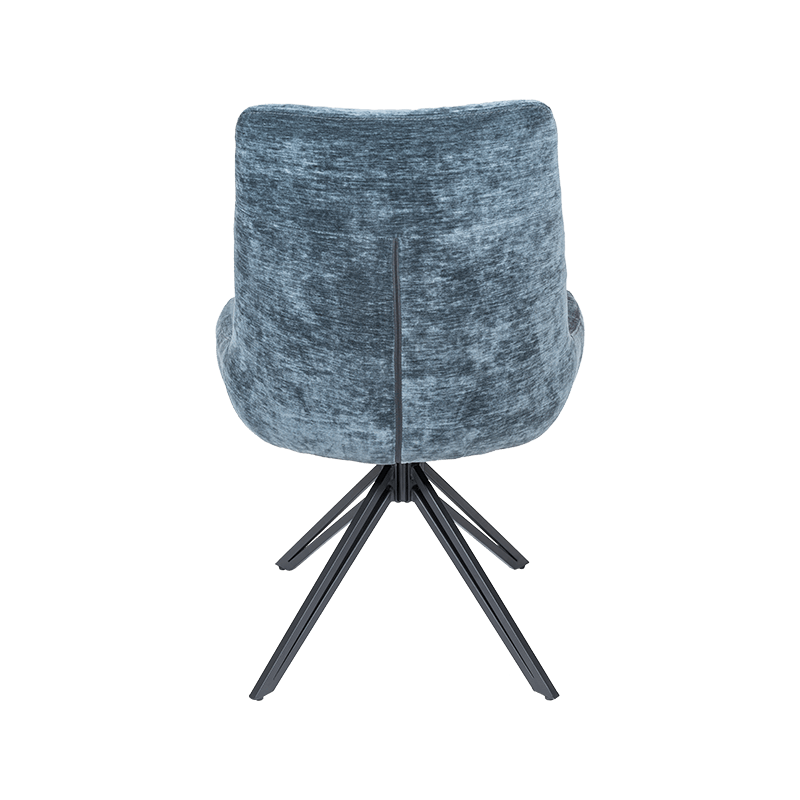 Wholesale navy blue velvet dining room chairs, Four Metal Legs Steel Frame UpholAnji Beifeite Furniture Co., Ltd Is China Wholesale navy blue velvet dining room chairs, Four Metal Legs Steel Frame Upholstered Armless ...View Product →
Ask how frame joints are made. Welded joints should be continuous at load-bearing points, not single spot welds that crack under side stress. Bolted connections should fix into welded brackets or reinforced inserts rather than thin sheet metal that strips over time.
Then ask for load-test evidence. Industry-standard seating protocols typically apply a static load of at least 136 kg to the seat without weld or joint failure, followed by cyclic tests that simulate years of sitting, leaning, and pushing back from the table. If the factory cannot share test records, request a sample chair for destructive testing before committing to bulk production.
Fabric is what customers judge first and what wears out first. The best way to compare options is with measurable fabric properties rather than labels, because commercial upholstery standards for fabric treat abrasion, staining, and color fastness as separate requirements, not a single "good quality" claim.
The Martindale method measures abrasion resistance in double rubs. Residential dining chairs typically need 15,000 to 25,000 double rubs; commercial settings such as restaurants and cafés should start at 30,000. Match the rub count to the actual environment, not to the supplier's marketing language.
Stain resistance is the second requirement, because dining chairs absorb spills, oil, and food residue. Ask whether the fabric is treated with a protective finish and how that finish behaves after cleaning. For family kitchens and food-service spaces, an easy-to-clean, stain-resistant high-back dining chair takes this logic further by reducing the exposed surface area. Also verify the fabric's color-fastness rating against light, because dyes that are not stabilized will fade unevenly near windows even when abrasion performance is acceptable.
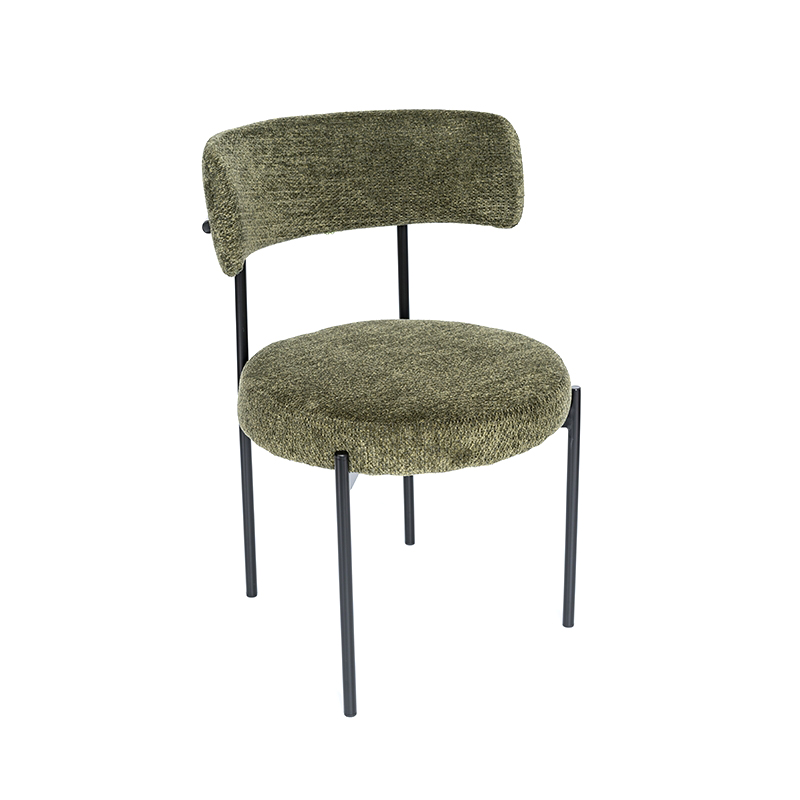
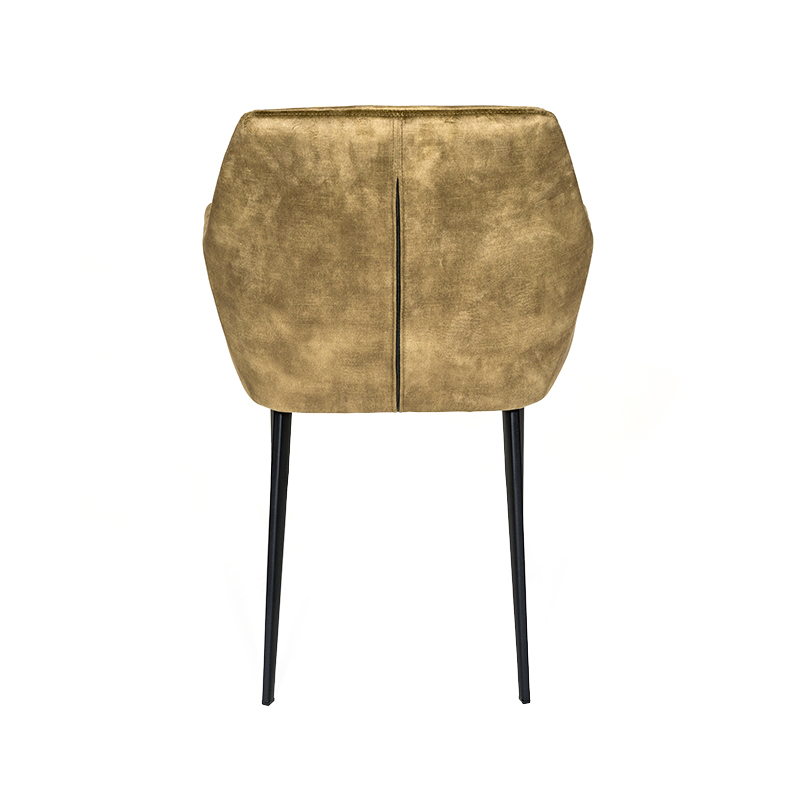 Wholesale Easy to clean, stain resistant, high back dining chair Suppliers, CompAnji Beifeite Furniture Co., Ltd Is China Wholesale Easy to clean, stain resistant, high back dining chair Suppliers, Company And Easy to...View Product →
The seat cushion decides whether a chair is comfortable in week one or still comfortable in year three. Foam density, measured in kilograms per cubic meter, is the key figure: 35–45 kg/m³ is the range most furniture engineers specify for dining seats. Lower-density foam compresses faster and loses its spring-back. You can test recovery by pressing a thumb into the seat: the foam should return quickly without leaving a dent.
The support layer beneath the foam matters too. Foam laid directly onto a hard board feels stiff and wears the cushion faster; a layer of webbing or springs distributes pressure and extends the seat's life. A thick block of soft foam is not a substitute for a moderate block of high-density foam over a proper base.
Reliability is built at checkpoints, not at the final pallet. A controlled factory inspects incoming fabric for flaws and shade variation, checks seams during sewing, verifies frame dimensions before upholstery, and performs a final inspection on finished chairs. Ask which checkpoints exist and what happens when a defect is found. The answer should describe repair and rejection procedures, not just "we check at the end."
Stitch quality is an observable indicator of process control. Consistent stitch length, even thread tension, and straight seam lines across a batch mean the line is running under control. Inconsistent stitching from chair to chair almost always means the sample was made by hand while production has no fixed standards.
Swivel mechanisms, height adjustments, and casters add function and failure risk. If your product is a 360-degree swivel dining chair with a steel frame and padded upholstery, confirm that the swivel base is tested for smooth rotation and side-load resistance and that every unit is checked before packing. Moving parts are where cost-cutting factories save money and where post-delivery returns are born.
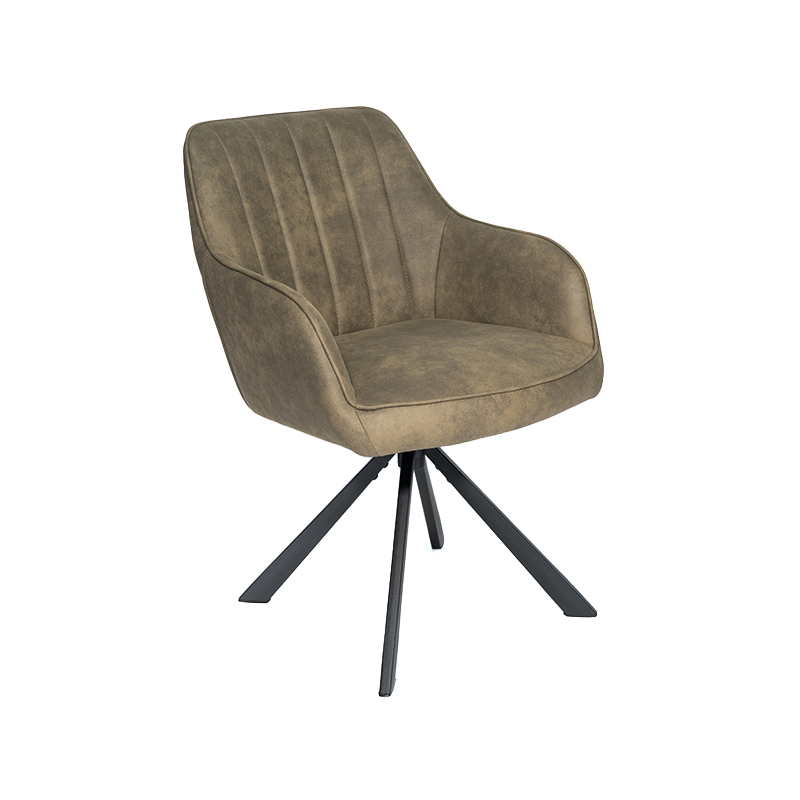
 Wholesale 360° Swivel Fabric Dining Chair With Steel Frame & Padded Upholstery SAnji Beifeite Furniture Co., Ltd Is China Wholesale 360° Swivel Fabric Dining Chair With Steel Frame & Padded Upholstery Suppliers, Compa...View Product →
A reliable manufacturer sizes production to your order rather than squeezing it in when convenient. For a typical order of a few hundred chairs, confirm line capacity, lead time, and how much of that time is actual production versus waiting for raw materials. Factories that integrate manufacturing capabilities with design and development under one roof tend to respond faster and control quality more consistently than companies that subcontract major steps. A factory in a mature furniture cluster such as Anji, Zhejiang, also benefits from a deep local supply base for steel, foam, fabric, and hardware.
Custom work is the clearest test of whether you are dealing with a real manufacturer. Can the factory change fabric, foam density, frame finish, swivel function, or dimensions? Can it develop a new chair from a sketch, a reference photo, or a competitor's product? Factories offering custom ODM/OEM support accept responsibility for engineering the product so it can be manufactured consistently, which is exactly the capability you need when your specification differs from a standard catalog item.
Also clarify the sampling process: how many sample rounds are included, how long they take, and whether the approved sample uses the exact materials of bulk production. The most common sourcing dispute is a beautiful sample built with premium fabric and hand-finished edges, followed by a production run using cheaper foam and thinner steel.
Use the following checklist when you shortlist factories. A documented answer to every question is the minimum standard for a reliable fabric dining chair supplier.
| Checkpoint | What a reliable supplier can document |
|---|---|
| Seat foam density | 35–45 kg/m³, written into the product specification |
| Fabric abrasion resistance | Martindale test result matched to your use: 15,000–25,000 double rubs for residential, 30,000 or more for commercial |
| Frame material and finish | Steel tube wall thickness stated (for example 1.2 mm or 1.5 mm) and finish specified as powder coating or plating |
| Load testing | Static and cyclic test records, or a sample available for destructive testing before the order |
| Inspection checkpoints | Incoming fabric inspection, sewing QC, frame checks, and final inspection with documented rejection procedures |
| Moving parts | Swivel bases, height mechanisms, and casters tested on every unit before packing |
| Customization scope | Documented ODM/OEM process, sample rounds, and lead times in writing |
Selecting a reliable fabric dining chair manufacturer is not about the lowest quote or the prettiest sample. It is about confirming that the factory can specify, produce, and inspect a chair to the same standard in every unit of your order. Verify the foam, the frame, the fabric, and the checkpoints behind them, and the chairs you sell will prove the decision right.

Products
Contact info.
No 1255, Xingye Road, Tianzihu Modern Industrial Park, Anji County, Zhejiang Province, China
+86-13587919519
sales@bftfurniture.com
