
 English
 русский
 Español
 عربى
عربى

No 1255, Xingye Road, Tianzihu Modern Industrial Park, Anji County, Zhejiang Province, China
Content
When a European restaurant group requested quotes for fabric dining chairs this year, the specification sheet contained a line item that would have been rare a decade ago: documented recycled content in the upholstery, low-emission coating on the steel frame, and a clear explanation of factory waste handling. That request is no longer unusual. Environmental performance has moved from a marketing talking point to a fixed part of procurement, especially for hospitality, retail, and residential buyers who plan orders around multi-year product life cycles.
For manufacturers in Anji's chair industry cluster, where companies like Anji Beifeite Furniture produce fabric dining chairs and other seating at scale, the change shows up in daily sourcing conversations. Buyers ask what is inside the upholstery, how the frame is coated, and whether the factory can prove its environmental claims. Many of the answers already exist inside a well-run production facility. The task is to convert them into material specifications, test reports, and product designs that buyers can evaluate.
The encouraging part is that eco-friendly manufacturing rarely forces a trade-off with commercial priorities. The same decisions that reduce environmental impact—durable materials, efficient cutting, clean finishing, longer product life—also tend to improve quality and lower the lifetime cost of a chair.
It helps to be precise about the term. A fabric dining chair is not made sustainable by a single recycled patch or certificate. It is the result of choices made across four dimensions: materials, production, durability, and end of life.
| Dimension | What It Covers | What a Buyer Should Ask |
|---|---|---|
| Materials | Fabric fibers, dyes, frame steel, coatings, foam | Is the material recycled, certified, or low-emission? |
| Production | Energy use, water consumption, waste, chemical handling | Can the manufacturer document process controls? |
| Durability | Construction quality, fabric abrasion, frame strength | How long will the chair perform in daily use? |
| End of life | Repairability, replaceable parts, material recyclability | Can the chair be maintained rather than discarded? |
Each dimension plays a role. A chair upholstered in recycled fabric but built with a weak frame and a thin coating will fail early and end up in landfill, canceling its environmental advantage. A highly durable chair with conventional materials can be the greener choice if it lasts significantly longer. Serious buyers evaluate the whole system instead of chasing one green claim.
Fabric is the most visible part of a dining chair, the first surface to wear, and the part most likely to be replaced. It is also where eco-friendly innovation is easiest to see.
Recycled polyester, made from PET bottles or post-industrial yarn waste, is now a standard upholstery option. It performs close to virgin polyester in abrasion resistance, color retention, and cleanability, and many mills blend it with natural fibers such as linen or cotton. For a buyer, the practical question is whether the supplier can confirm the recycled percentage and provide abrasion data. A fabric that fails at 20,000 Martindale rubs is not useful in a restaurant, no matter how much recycled content it contains. Understanding how fabric choices affect durability and maintenance requirements helps buyers specify the right balance.
Dyeing and finishing carry a large share of the environmental load in textile production. Modern mills use water-based dyes, lower chemical loads, and closed-loop water treatment. Low-VOC finishes reduce off-gassing, which matters in compact dining rooms and commercial interiors. Stain-resistant topcoats add a second benefit: they allow cleaning with milder detergents and slow the visual aging of the fabric, keeping the chair presentable for more years.
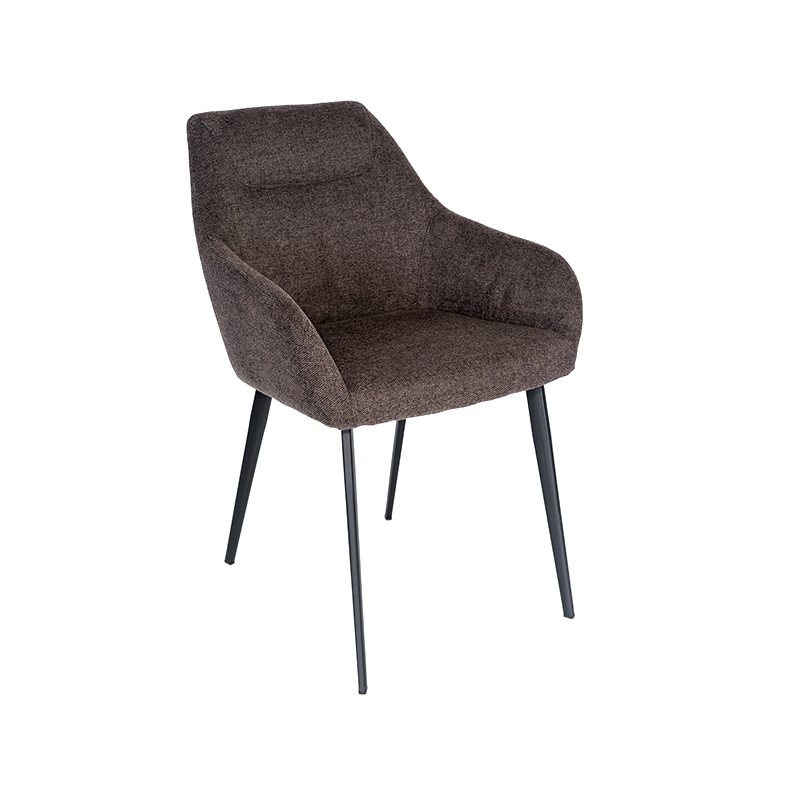
Easy-to-clean upholstery is usually discussed as a convenience, but it belongs in an environmental assessment. When fabric resists spills and stains, owners use fewer cleaning chemicals, replace the chair less often, and avoid premature reupholstery. For this reason, the easy-to-clean stain-resistant high-back dining chair has become a practical choice for families and restaurant operators.
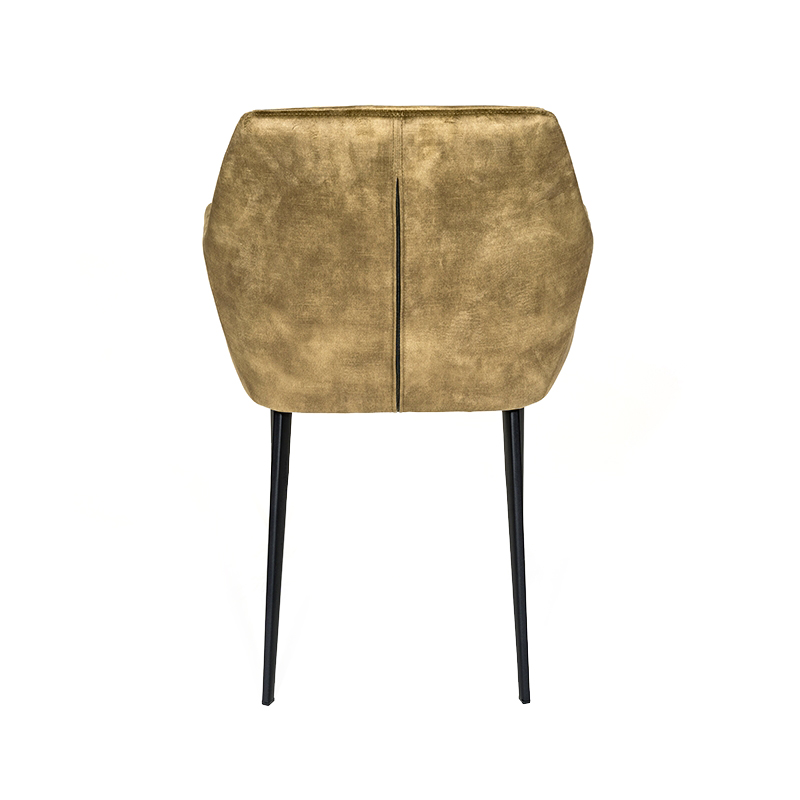 Wholesale Easy to clean, stain resistant, high back dining chair Suppliers, CompAnji Beifeite Furniture Co., Ltd Is China Wholesale Easy to clean, stain resistant, high back dining chair Suppliers, Company And Easy to...View Product →
The frame decides how long a fabric dining chair remains functional, and metal deserves more attention in eco-friendly sourcing than it usually receives.
Steel frames can include high recycled content without sacrificing structural performance. Welded joints, properly finished edges, and adequate wall thickness matter more than the origin of the steel. Powder coating, applied as a dry powder and cured with heat, has largely replaced solvent-based liquid paint in modern factories. It lowers VOC emissions, allows overspray recovery, and produces a surface that resists scratches and corrosion.
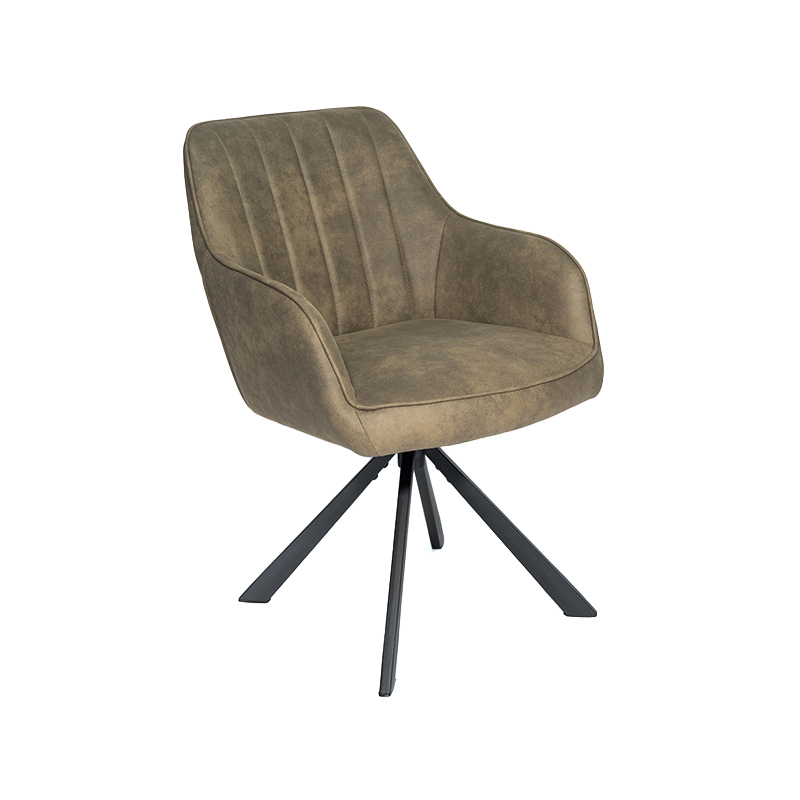
Swivel dining chairs add moving parts to the equation. A mechanism tested for many thousands of rotation cycles is an environmental feature as much as a comfort feature, because it prevents premature failure. Buyers should ask about steel grade, coating system, and mechanism test data rather than assuming all metal frames are equivalent. The steel-framed upholstered swivel dining chair shows how frame, fabric, and mechanism are combined into one durable product.
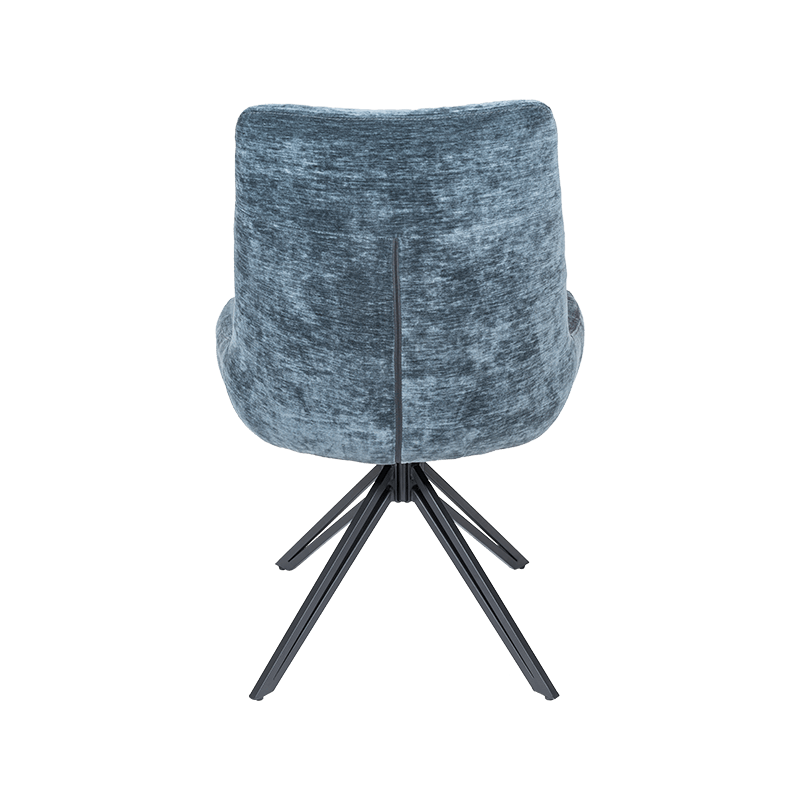 Wholesale navy blue velvet dining room chairs, Four Metal Legs Steel Frame UpholAnji Beifeite Furniture Co., Ltd Is China Wholesale navy blue velvet dining room chairs, Four Metal Legs Steel Frame Upholstered Armless ...View Product →
Factory processes decide whether environmental claims survive contact with mass production. A manufacturer can specify recycled fabric and then waste a third of it during cutting; the environmental benefit disappears.
Modern cutting rooms use optimized nesting layouts to maximize fabric utilization, and computer-controlled cutting reduces both waste and defects. Reproducible coating parameters, dust collection, and standardized inspection points lower emissions and catch problems before shipping. Efficient equipment reduces energy per chair, and simpler packaging cuts material use in transport.
Factory-level commitment matters as well. Anji Beifeite Furniture publicly states that it explores green manufacturing possibilities and works toward making its chairs more environment-friendly. Buyers can verify such commitments by visiting the factory or reviewing process documentation: waste segregation, solvent handling, energy metering, and quality checkpoints are all observable. Our in-house manufacturing capabilities make these details accessible to buyers who want evidence rather than summaries.
The most underrated environmental feature of a fabric dining chair is its service life. A chair used for eight to ten years carries a fraction of the environmental footprint of the same chair replaced every three years. Longer life means less material demand, fewer shipments, less packaging, and a lower cost of ownership.
That is why testing matters. Load testing verifies that the frame and seat structure tolerate daily use. Seam strength testing prevents premature fabric failure. Stability testing catches problems in swivel bases and leg attachment before products reach customers. Buyers sourcing in volume should review test reports and request samples for hands-on inspection. A chair that looks solid on the showroom floor but fails in the field is not sustainable, regardless of how green its material list appears.
Durability also intersects with repairability. Chairs with replaceable seat cushions, accessible fasteners, and standard coating systems are easier to refurbish. A scratched steel leg can be recoated, a tired cushion replaced, a worn mechanism swapped. When a manufacturer designs for repair, the product stays in service longer.
Environmental claims deserve verification. Objective standards and test methods make evaluation manageable:
A responsible supplier can provide at least part of this documentation. When a factory cannot produce test reports, treat its sustainability claims as unverified. Missing documents do not prove poor practice, but they shift the burden onto the buyer to inspect the process and commission independent checks.
Sourcing eco-friendly fabric dining chairs comes down to asking better questions and choosing a partner that answers them with evidence.
Start with the material sheet. Ask for fabric composition, recycled content, coating type, and foam specification. Request test reports for abrasion, seam strength, load capacity, and finish adhesion. If volumes justify it, visit the factory or take a virtual tour. Look at the cutting floor, the coating line, and the inspection stations, and ask how fabric waste is handled and which chemicals are used in finishing. A manufacturer that treats sustainability as a daily process will show you rather than tell you.
For buyers with specific requirements, custom design and OEM services make it possible to specify recycled fabric, alternative coatings, or modified mechanisms. This flexibility matters because environmental priorities vary: a hospitality group may focus on VOC emissions, a retailer on documented recycled content, an importer on abrasion and stain resistance.
A practical example is the 360-swivel dining chair with steel frame and padded upholstery, which combines a durable metal structure, cleanable fabric, and a mechanism built for frequent use. It shows that eco-friendly sourcing does not require sacrificing style, comfort, or commercial price points.
 Wholesale 360° Swivel Fabric Dining Chair With Steel Frame & Padded Upholstery SAnji Beifeite Furniture Co., Ltd Is China Wholesale 360° Swivel Fabric Dining Chair With Steel Frame & Padded Upholstery Suppliers, Compa...View Product →
Environmental expectations in fabric dining chair manufacturing are moving from optional to standard. Buyers who assess materials, processes, and durability together get chairs that perform, last, and justify their claims. Manufacturers that document processes, test products, and offer flexible customization will be the partners that make that possible.

Products
Contact info.
No 1255, Xingye Road, Tianzihu Modern Industrial Park, Anji County, Zhejiang Province, China
+86-13587919519
sales@bftfurniture.com
