
 English
 русский
 Español
 عربى
عربى

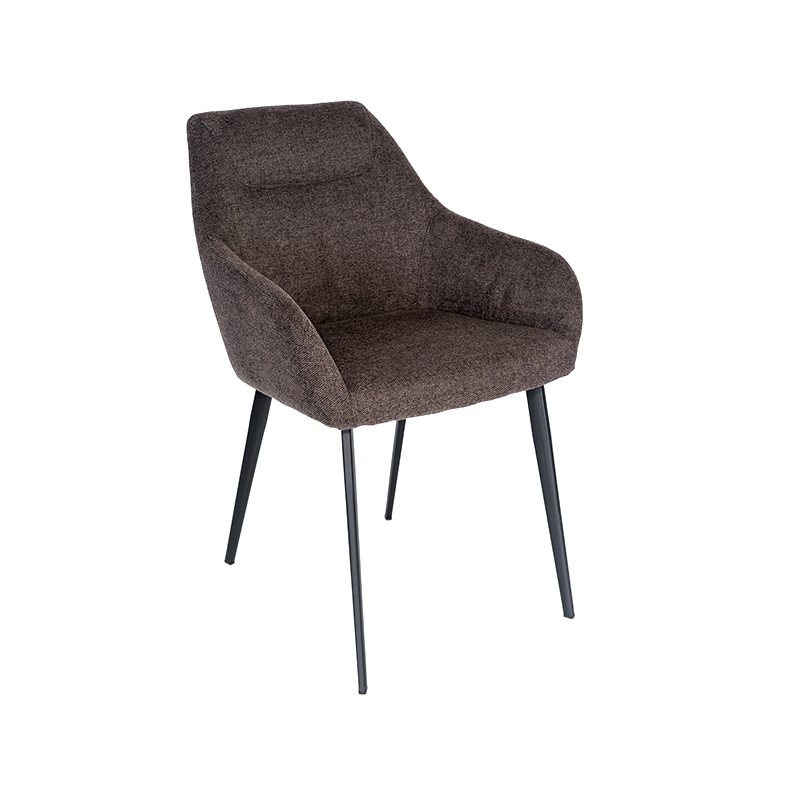
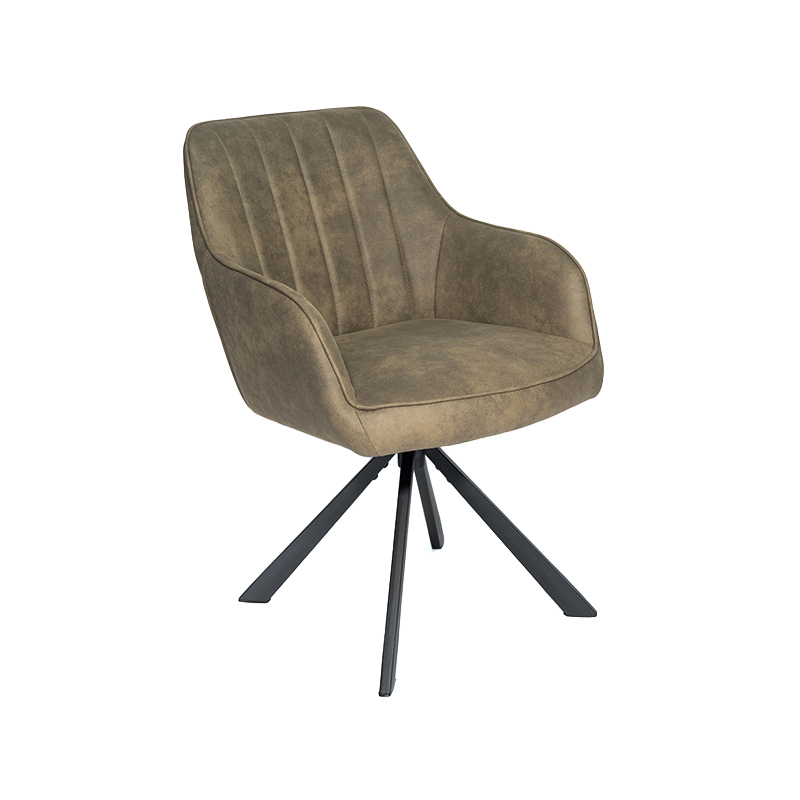
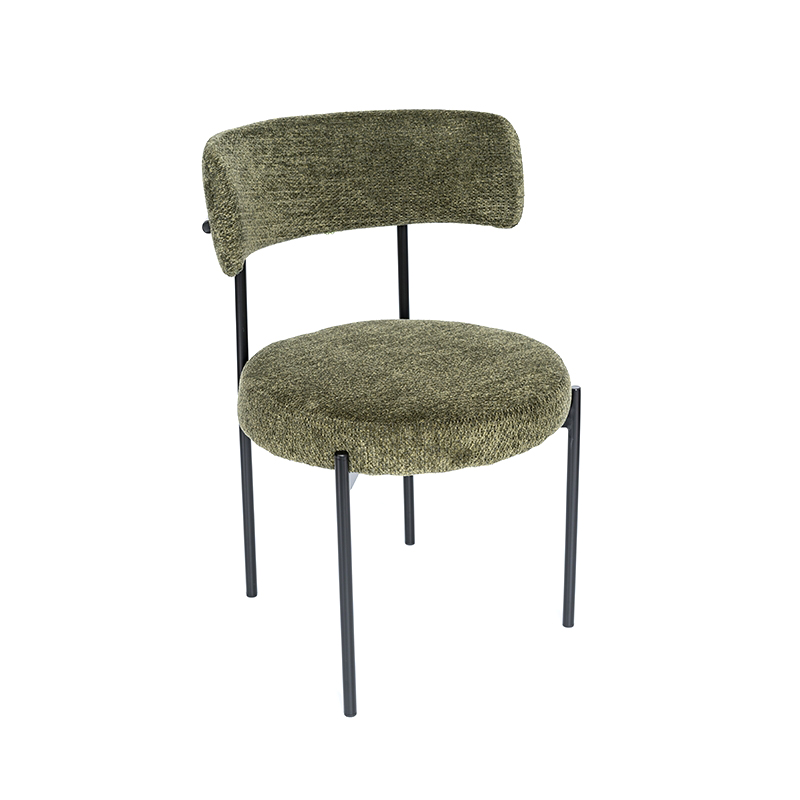
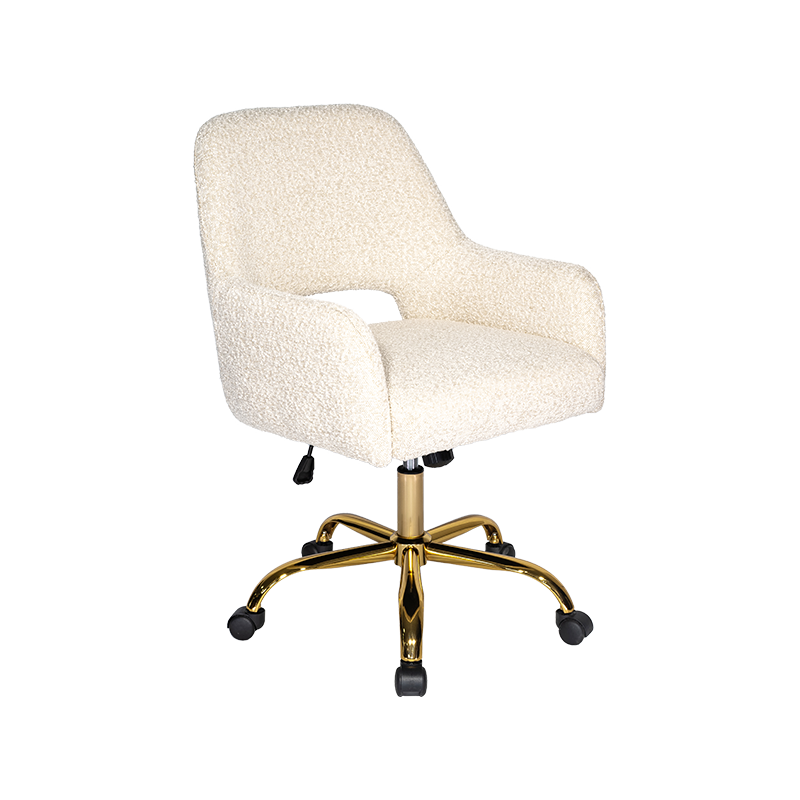
No 1255, Xingye Road, Tianzihu Modern Industrial Park, Anji County, Zhejiang Province, China
Content
After forty minutes at the table, you feel it: the lower back ache, the pressure under your thighs, the urge to shift every few minutes. That is not a sign that the conversation has gone on too long. It is a sign that the chair is not working with your body. An ergonomic fabric dining chair should let you finish a long dinner without thinking about the chair at all. That outcome depends on seat height, backrest geometry, cushioning, frame construction, and fabric performance working together.
An ergonomic dining chair is a system, not a single feature. It supports your natural posture at three contact points: your feet on the floor, your thighs on the seat, and your lower back against the backrest. When those three points are aligned, you can sit without slouching or tensing muscle groups. When one point is wrong, your body compensates by sliding forward, curling the lower back, or pressing extra weight onto the front of the thighs.
The simplest way to evaluate a chair is to sit on it and check these points. Your feet should rest flat on the floor, with knees bent at roughly 90 degrees. Your thighs should be supported along their length without hard pressure at the back of the knee. Your lower back should feel the backrest supporting the natural inward curve of the lumbar spine. This is the posture that keeps you comfortable through a long meal.
Fabric is not just a styling choice. It changes how the chair feels at two of those contact points. A fabric seat holds the body in place better than slippery leather or bare wood. It also gives an impression of softness, but the first ten minutes are not a reliable test. A soft surface can hide a cushion that sinks too deeply or a frame that is too weak. That is why fabric chairs need to be checked by their dimensions and construction, not just by touch.
To understand whether a fabric dining chair is ergonomic, start with dimensions. A chair that looks great in a showroom can still create strain if it is the wrong height for your table or the wrong depth for your legs. These are the easiest specs to measure, and they are also the most common source of discomfort. For a broader rundown of sizing, materials, and maintenance, see our fabric dining chair buying guide.
Standard dining tables are usually between 74 and 76 cm high. A matching dining chair should have a seat height around 46 to 48 cm. That leaves enough clearance for your legs to move under the table. If the seat is too high, your feet dangle and the front edge presses into the underside of your thighs. If the seat is too low, your knees rise above your hips, which tilts the pelvis backward and rounds your lower back.
Seat depth is a frequent miss on otherwise attractive chairs. A deep chair can feel luxurious, but if you cannot sit back against the backrest without the front edge pushing into your calves, it is too deep. A practical range for most adults is 40 to 48 cm. At the correct depth, you should be able to slide two or three fingers between the back of your knee and the front edge of the seat. A waterfall front edge, where the foam curves downward at the front, reduces pressure on the thighs during longer meals.
| Measurement | Comfort Range | Why It Matters |
|---|---|---|
| Seat height | 46 to 48 cm from floor to seat top | Keeps feet flat and knees close to 90 degrees. |
| Seat depth | 40 to 48 cm | Leaves clearance behind the knee and supports thighs without pressure. |
| Backrest angle | 100 to 110 degrees relative to the seat plane | Keeps the spine upright while reducing low-back strain. |
| Seat-to-table clearance | About 26 to 30 cm | Allows your legs to move freely under the table. |
The shape of the backrest determines how much of your body weight the chair carries. A dining chair should support an upright but relaxed posture, not force you into a stiff, military-style position.
Ergonomic backrests are not vertical. A slight recline of 100 to 110 degrees reduces pressure on the lumbar discs while keeping you upright enough to eat comfortably. The critical part is the lower curve. The backrest should have a gentle forward support around 15 to 25 cm above the seat, matching the inward curve of your lower back. If that support is missing, you will feel the gap between your lower back and the chair within the first few minutes.
Dining chairs normally use mid backrests to keep the room visually light and to allow movement around the table. High backs add support to the shoulders and neck, which is useful for chairs that also serve in a home office or a breakout area. A high-back fabric chair should still have a shaped lumbar area, not just a tall panel. The easy-to-clean, stain-resistant high-back dining chair in our dining chair range is an example of a high-back model designed for daily family use.
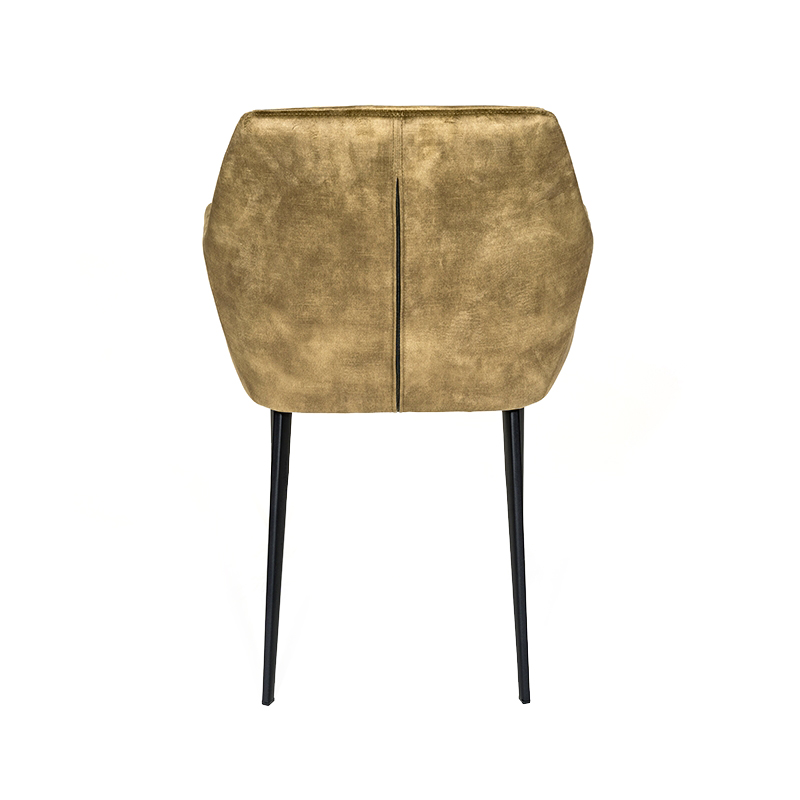 Wholesale Easy to clean, stain resistant, high back dining chair Suppliers, CompAnji Beifeite Furniture Co., Ltd Is China Wholesale Easy to clean, stain resistant, high back dining chair Suppliers, Company And Easy to...View Product →
Comfort in the first minute is not the same as comfort in the 60th minute. For daily use, ergonomics must be supported by a stable frame, a resilient cushion, and a fabric that does not degrade after a few weeks.
A chair that sinks too deeply forces your hips below your knees and tilts your pelvis forward. For dining, the foam should be firm enough to keep your hips stable but soft enough to distribute load over a larger surface. High-resilience foam returns to its shape after each use. If you press the center of the seat and feel the base board immediately, the cushion will not provide long-term support.
Ergonomics also depend on structural stiffness. If the frame wobbles, your body constantly makes small corrections, which turns into muscle fatigue after a meal. Steel frames are common in modern fabric dining chairs because they combine a slim profile with a high load capacity. Look at welded joints, support bars under the seat, and the thickness of the metal. The steel-framed upholstered swivel dining chair in our catalog uses a steel frame under a padded seat, which gives the stability needed for everyday use.
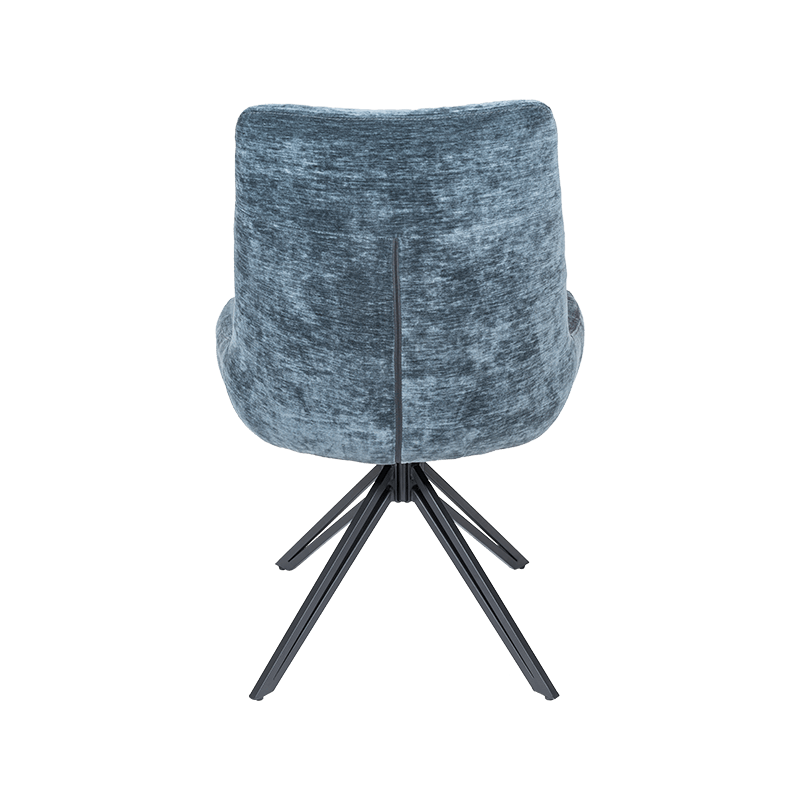 Wholesale navy blue velvet dining room chairs, Four Metal Legs Steel Frame UpholAnji Beifeite Furniture Co., Ltd Is China Wholesale navy blue velvet dining room chairs, Four Metal Legs Steel Frame Upholstered Armless ...View Product →
Fabric determines how long the chair stays pleasant to sit in. Tightly woven or stain-resistant fabric handles spills better than loose upholstery, which can soak up moisture and shorten the life of the foam. Breathability matters as well: a surface that traps heat against your legs becomes uncomfortable in warm weather. For a family dining area, a stain-resistant finish and an easy-to-clean surface make the chair easier to live with.
Movement is part of dining. You reach for a dish, turn to talk to the person beside you, and stand up when the meal ends. The way a chair responds to that movement affects how much strain your body absorbs.
Twisting your torso to reach something is a repeated strain on the lower back. A swivel base lets the seat rotate with your body instead of forcing the spine to twist. This is especially useful around kitchen islands and in small spaces where chairs are placed close together. The swivel mechanism should feel smooth, with no wobble at the pivot point. A padded 360-degree swivel dining chair with a steel frame is a practical option for a kitchen counter or compact dining space.
 Wholesale 360° Swivel Fabric Dining Chair With Steel Frame & Padded Upholstery SAnji Beifeite Furniture Co., Ltd Is China Wholesale 360° Swivel Fabric Dining Chair With Steel Frame & Padded Upholstery Suppliers, Compa...View Product →
Arms reduce shoulder strain by supporting your forearms during a long conversation after dinner. But arms take up space and can make a chair difficult to tuck under a low table. Armless chairs are more flexible in formal dining layouts. For a counter-height table or a kitchen island, arms may be worth the extra width. The right choice comes from your table’s clearance, not from the chair’s look alone.
Whether you are buying four chairs for a home or hundreds for a restaurant, the same logic applies. Comfort depends on measurable design decisions. A short technical check at the start prevents a table full of chairs that no one wants to sit on.
Before you buy a fabric dining chair, go through this checklist quickly:
For wholesale orders, ergonomic details affect returns and repeat business. Ask for foam density, frame material and tube thickness, weight capacity, and fabric abrasion data. Ask how the chair performs in load and stability tests. A supplier with in-house support should be able to adjust seat height, backrest angle, and foam firmness to match your target market. At Anji Beifeite Furniture, we review these points during production planning and can adapt standard models for ODM/OEM orders through our custom dining chair design and OEM services. If you want to see how we evaluate frames, upholstery, and tested joints before assembly, our manufacturing facility page explains the production process.
An ergonomic fabric dining chair cannot be judged by one curve or one thick cushion. Seat height, depth, backrest angle, cushion density, frame stiffness, and fabric behavior all work together. If you understand those measurements, a quick sit-down test plus a few technical questions will tell you far more than a promotional photo. And if the chair does not allow your feet to be flat, your knees to bend comfortably, and your lower back to maintain its natural curve, no amount of fabric softness can fix it.

Products
Contact info.
No 1255, Xingye Road, Tianzihu Modern Industrial Park, Anji County, Zhejiang Province, China
+86-13587919519
sales@bftfurniture.com
