
 English
 русский
 Español
 عربى
عربى

No 1255, Xingye Road, Tianzihu Modern Industrial Park, Anji County, Zhejiang Province, China
Content
Ten minutes into a meal, almost any chair feels acceptable. By the thirty-minute mark, a poorly designed seat cushion starts to announce itself. You shift your weight, cross one leg under the chair, and eventually cut the evening short. The real cause is rarely the backrest and almost never the leg material. It is the seat cushion design.
This conclusion matters whether you are furnishing a restaurant, specifying chairs for a hotel, or buying a set for a family dining room. The cushion is the only part of the chair that carries your body for the entire meal. Get the design wrong, and no amount of visual appeal will fix it. Get it right, and the chair quietly disappears beneath you.
Begin any comfort evaluation by asking about foam density, not foam thickness. These two numbers are constantly confused, and the confusion is where comfort gets lost.
Density is measured in kilograms per cubic meter and describes how much polyurethane material is packed into a given volume. It is the primary predictor of cushion durability. A 60-mm cushion made from 25 kg/m³ low-density foam will flatten under daily use and bottom out within months, leaving the sitter on a hard base. A 40-mm cushion made from 45 kg/m³ high-resilience foam can hold its shape for years. The millimetres you save up front become the support you never lose.
Firmness is a separate property, measured as Indentation Load Deflection, or ILD — the force required to compress the foam by a fixed percentage. The right firmness for a dining chair sits in the medium range. Foam that is too soft lets the sitter sink toward the base, increases pressure under the thighs, and tilts the pelvis backward into a slump. Foam that is too hard behaves like a wooden bench wearing a thin mask: tolerable for five minutes, punishing after twenty.
A well-tuned cushion is medium-firm. It compresses a little under your weight and pushes back before you reach the base. In practice, you should feel the support of the foam rather than the thinness of the fabric or the hardness of the frame beneath.
Put the measurement sheet aside for a moment. Sit on the chair for thirty minutes the way you would during a real meal. If you feel a growing need to shift before the half-hour mark, the support is wrong. If the chair still feels neutral after forty minutes and through a second sitting, the cushion design is doing its job. This test works for a single sample the same way it works for a hundred chairs.
State the conclusion first: cushion thickness is not an independent comfort feature, because it changes the effective seat height of the chair. Move the seat up or down by even two centimeters, and every other dimension of the dining setup starts working against you.
The geometry is simple. Most dining tables stand 74 to 76 centimeters high, and most dining chairs are specced at 45 to 48 centimeters at the seat. Add a loose 6-centimeter cushion to a 46-centimeter frame, and the seat rises to 52 centimeters. Knees come up too high, feet lose full contact with the floor, and thighs press against the front edge of the padding.
This is the moment where many buyers make their first mistake. They measure the bare frame, write "seat height 45 cm" on the order, and forget that the upholstered cushion adds height. The number that matters is the loaded seat height — the height measured with someone actually sitting on it, because foam compresses by several millimeters under weight. Ask your supplier for the loaded dimension, and compare it against your table.
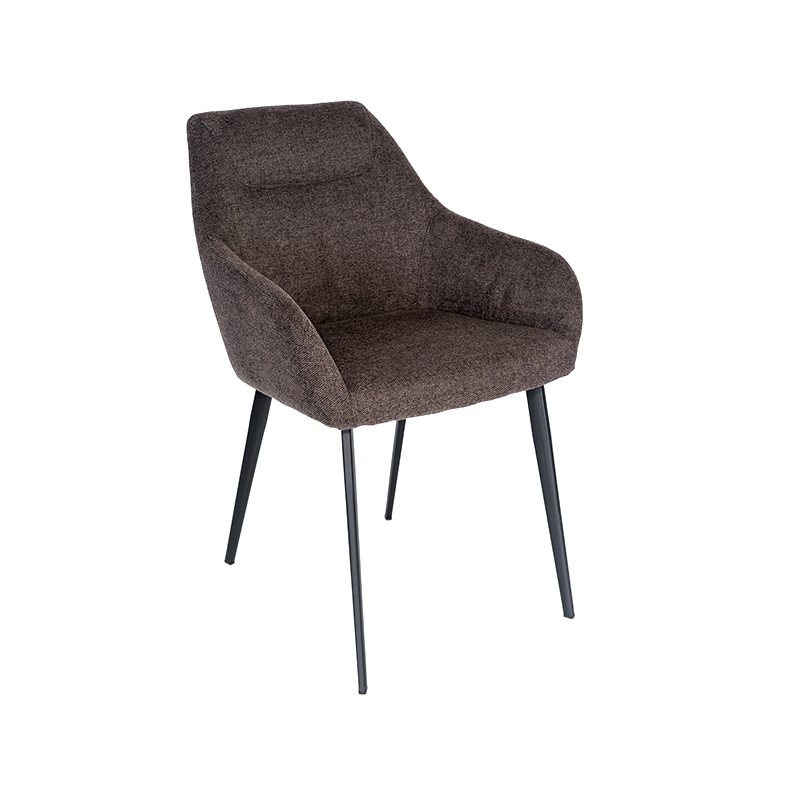
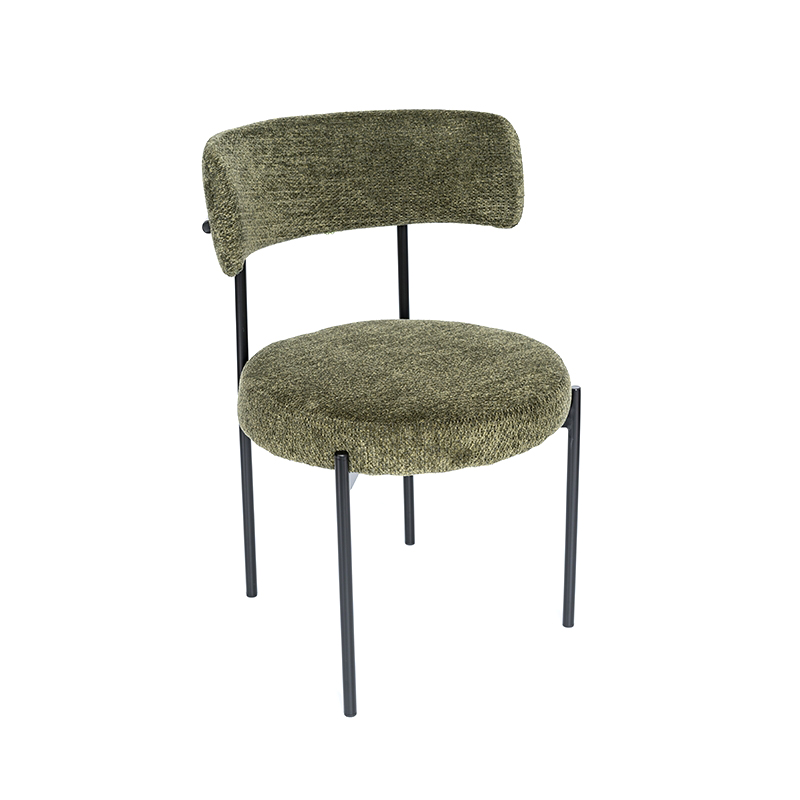
In dining rooms where you want a lighter silhouette, the same height rules still apply. If the visual goal is more chair and less pillow, an iron-frame simple dining chair paired with a separate seat pad gives you control over both aesthetics and height. You choose the pad thickness to dial in the final seat height, and you can replace the pad later without buying new chairs. The trade-off is that loose pads slide and need readjustment, so this route fits home and light-use settings better than busy restaurants.
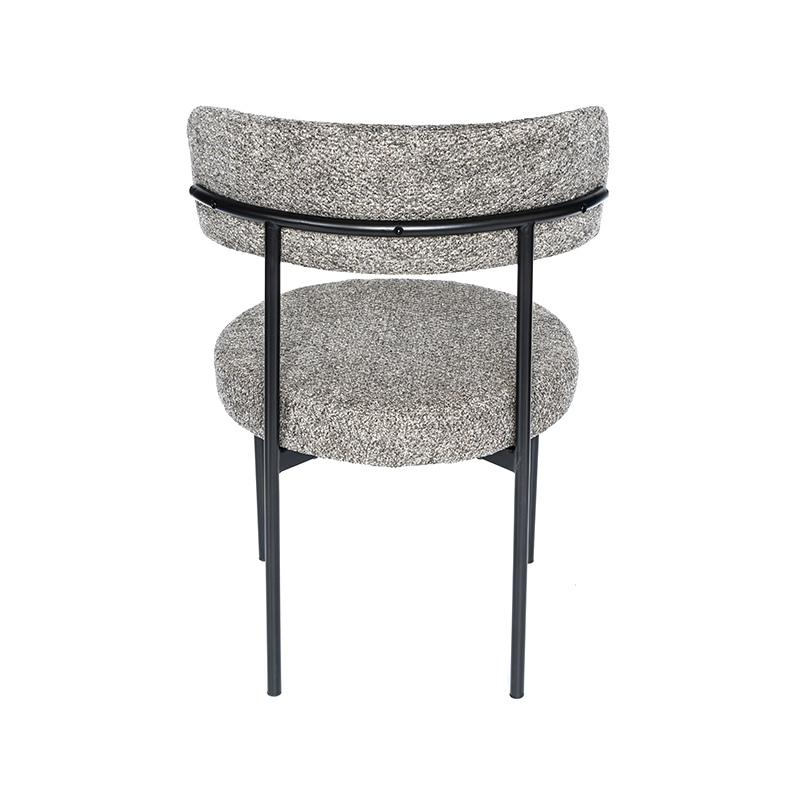 Wholesale Iron Frame, Soft Cushions Simple Fabric Dining Chair - Green/Grey SuppAnji Beifeite Furniture Co., Ltd Is China Wholesale Iron Frame, Soft Cushions Simple Fabric Dining Chair - Green/Grey Suppliers, Company ...View Product →
Once density and height are settled, geometry takes over. The best foam in the world still feels wrong if the cushion shape fights the seated posture.
A cushion with a waterfall front edge — a gentle curve that slopes down toward the front — lowers pressure behind the thighs and keeps blood moving during a long meal. A flat, hard front edge presses a sharp line into the back of the thighs within minutes. It is a small detail in photographs and a decisive one after an hour at the table.
Many dining chair frames use a contoured shell: a shallow backward tilt of one to three degrees and a subtle pocket where the pelvis sits. A contoured shell needs less foam because the shell itself positions the sitter. A completely flat shell demands a thicker, softer cushion to deliver the same support. If two chairs look equally padded but one feels clearly more supportive, the shaped shell is usually why.
Seat depth belongs in the same discussion. Long thigh support suits taller sitters, while shorter users need a shorter depth. When a cushion pushes the front edge too far forward, it presses into the back of the knees. For general-purpose dining, keep the loaded seat depth close to 43 to 46 centimeters.
One structural decision dominates real-world comfort: is the cushion attached to the chair at the factory, or added later as a loose pad?
Integrated cushioning — foam and upholstery fixed directly to the frame during production — stays where it belongs. It does not slide when someone sits down, does not bunch at the front, and does not need to be straightened between guests. In restaurants, cafes, and hotels, that stability is the difference between an orderly dining room and a constant battle with furniture. Integrated seats also clean up faster because the entire surface is one sealed unit.
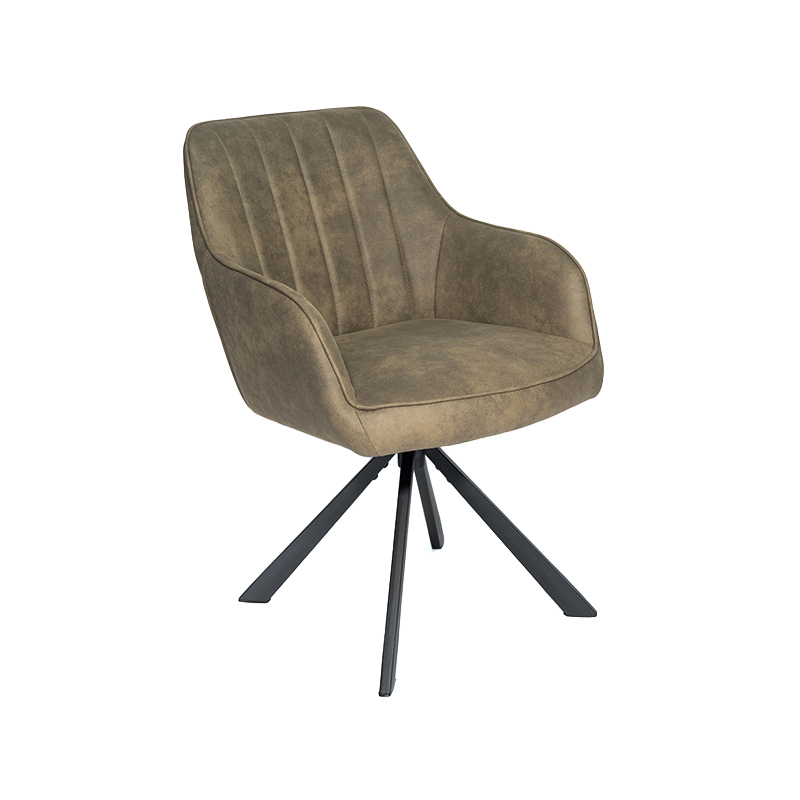
A good example is the 360-degree swivel dining chair with a steel frame and padded upholstery. The swivel mechanism adds a real comfort benefit beyond the cushion: diners rotate to push away from the table instead of twisting their hips against the seat, which reduces wear on the foam and makes getting up easier. In commercial seating, the cushion is the first component to wear out, so reducing unnecessary friction extends chair life.
 Wholesale 360° Swivel Fabric Dining Chair With Steel Frame & Padded Upholstery SAnji Beifeite Furniture Co., Ltd Is China Wholesale 360° Swivel Fabric Dining Chair With Steel Frame & Padded Upholstery Suppliers, Compa...View Product →
Loose pads still have legitimate uses. They are replaceable, can be washed, and let you change the color of a room without replacing the chairs. But they come with constant readjustment. Non-slip backings help, ties help more, and nothing matches the reliability of a cushion built into the chair during production.
The seat cushion is never foam alone. The fabric covering it changes both the first impression and the long-term survival of the cushion.
Moisture is the main enemy of foam. Once liquid penetrates the upholstery, the foam starts to break down from the inside, losing density in exactly the areas that carry the most weight. An easy-to-clean, stain-resistant cover is therefore a protective layer for the cushion, not just a convenience for the owner. This is why our easy-to-clean, stain-resistant high-back dining chair uses a performance cover over a cushion built for daily family and restaurant use.
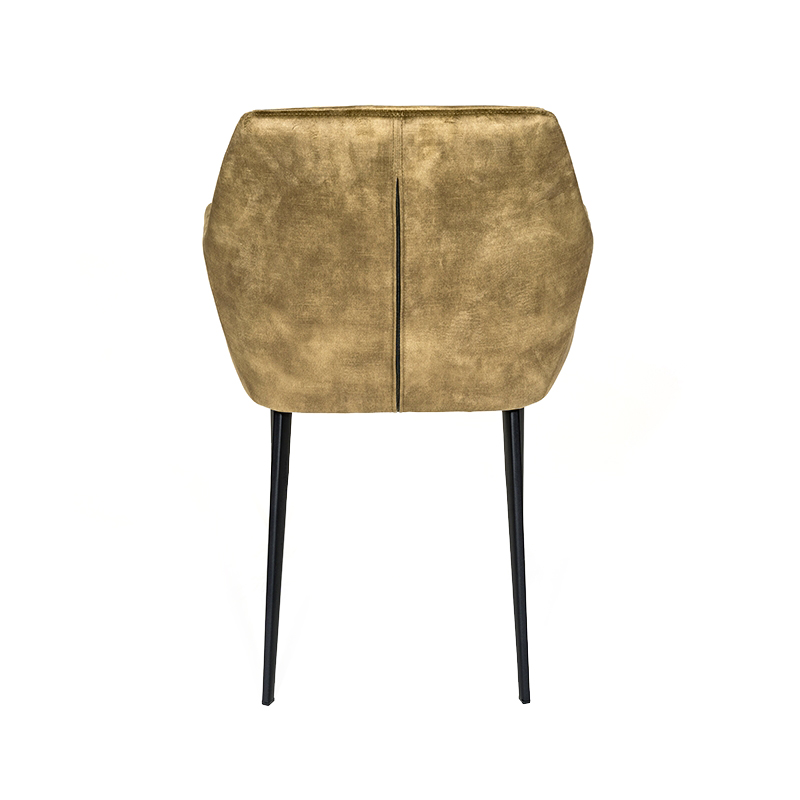 Wholesale Easy to clean, stain resistant, high back dining chair Suppliers, CompAnji Beifeite Furniture Co., Ltd Is China Wholesale Easy to clean, stain resistant, high back dining chair Suppliers, Company And Easy to...View Product →
The weave also changes perceived comfort. Smooth velvet and chenille feel pleasant to the hand but hold heat. Textured performance weaves breathe more and feel more structured. For short meals either option works. For long, relaxed dinners, a breathable surface with moderate firmness usually wins.
If you are selecting a custom color or material, fabric durability becomes a specification issue rather than an aesthetic one. Our guide to durability and comfort in custom dining chair fabrics walks through the main trade-offs between weave, cleaning, and cushion performance.
The table below compares the cushion constructions most commonly used under a dining chair.
| Construction | Typical foam density | Best suited for | Main limitation |
|---|---|---|---|
| Loose chair pad | 25–30 kg/m³ | Home dining, occasional seating | Slides and flattens; shortest life |
| Integrated seat with standard foam | 30–40 kg/m³ | Daily dining, light commercial use | Whole cushion must be replaced if foam fails |
| Integrated high-resilience contoured cushion | 40–50 kg/m³ | Restaurants, hotels, heavy daily use | Higher initial cost |
| Unpadded wood or steel frame | — | Bar counters, short meals | Pressure points after roughly 30 minutes |
When you move beyond a single set of chairs, comfort claims need to survive contact with a purchase order. Four checks will protect you.
These checks align with the ergonomic standards for upholstered dining chairs that commercial buyers increasingly require.
If your project involves your own design, put the cushion specification into the development stage instead of trying to fix it after delivery. Our design-custom process lets you define foam density, loaded seat height, contour, and cover fabric before mass production. This avoids the most common source of post-delivery complaints: a chair that looks correct in drawings and fails in the first week of use.
Seat cushion design determines dining chair comfort in a direct way. Density gives the cushion a lifespan, firmness gives it the right feel, thickness has to be counted against seat height, shape has to align with the shell, and the cover has to protect the foam from real dining room life. When these five elements line up, the chair supports a long meal without drawing attention to itself. That unremarkable experience is the most reliable definition of comfortable seating.

Products
Contact info.
No 1255, Xingye Road, Tianzihu Modern Industrial Park, Anji County, Zhejiang Province, China
+86-13587919519
sales@bftfurniture.com
