
 English
 русский
 Español
 عربى
عربى

No 1255, Xingye Road, Tianzihu Modern Industrial Park, Anji County, Zhejiang Province, China
Content
Two dining chairs can look identical on a showroom floor: the same silhouette, the same foam thickness, the same powder-coated steel frame. Then one develops a shiny, flattened seat after six months of daily use, while the other still looks presentable after three years. That divergence almost always comes down to one specification buyers overlook until it becomes a problem: fabric quality.
Fabric quality is not a cosmetic detail. It determines how the chair feels in the first hour and how it performs in the fifth year. A well-chosen upholstery fabric delivers stable support, breathable contact, and predictable wear. A poor one changes the entire seating experience as it stretches, pills, fades, and tears.
In a typical home, a dining chair accumulates somewhere between 1,000 and 3,000 hours of use per year; in a restaurant or café, that number climbs much higher. Over a five-year service life, the fabric has to absorb friction from clothing, pressure from the occupant, exposure to sunlight, and the occasional spill. That is why fabric quality is the first variable to check when you evaluate the true cost of a chair.
Comfort is not only about foam density. The fabric layer affects temperature, moisture, friction, and the way a body settles into the cushion.
Natural and semi-natural fibers such as cotton, linen, and wool allow air to move through the weave, which keeps the seat cooler during a 45-minute dinner. Tightly constructed polyester microfiber can trap heat and make the chair feel sticky, especially in warm weather. Higher-quality synthetic blends compensate for this by using textured yarns or open weaves, so you do not have to choose between durability and breathability.
Fabric hand feel matters whenever arms and legs make contact with the chair. A rough, low-grade polyester weave can irritate exposed skin, while a smooth performance velvet or a cotton-blend twill gives a more pleasant touch. Finishing processes such as brushing or shearing change this tactile quality without necessarily reducing abrasion resistance. This is one of the reasons the durability and maintenance requirements of dining chair fabrics vary so widely even when the fiber content looks similar.
Stretchy or loosely woven fabrics allow the cushion to bulge and deform over time, making the seat feel softer than it should and eventually saggy. High-quality upholstery fabric is woven tightly enough to hold the foam in place while still allowing a controlled amount of give. That interaction between fabric tension and foam compression is what keeps a chair supportive into the second hour of a meal.
Durability is not a single number. Several failure modes matter, and quality fabric addresses all of them.
Martindale testing measures how many rubs a fabric survives before visible wear appears. For dining chairs, 20,000 rubs is a reasonable minimum for light residential use; commercial seating should target 30,000 or more. Fabrics rated below 15,000 can show flattening and fiber breakage at the seat edge within a year.
Pilling happens when short fibers escape the yarn surface and tangle into small balls. It is caused partly by fiber length and partly by yarn twist. High-quality spun yarns are made from longer fibers that resist pilling, while low-grade blends with short fibers fuzz quickly. The ASTM D4970 pill test gives a rating from 1 to 5; look for at least 3.5 for a chair that has to survive everyday clothing friction.
Dining room chairs sit near windows and come into contact with cleaning agents. Poor colorfastness causes uneven fading on the seat and back, or dye transfer onto clothing and flooring. A lightfastness rating of at least 4 on the blue wool scale, and wet and dry crocking ratings of at least 3.5 according to AATCC 8, prevent most of those complaints. Buyers who compare these numbers will quickly see why the commercial upholstery standards for Martindale, stain resistance, and color fastness exist in the first place.
At the seams, fabric is held by just a few millimeters of material. If the weave is loose or the yarn strength is low, seams can pull apart when someone sits down heavily or shifts position. Seam slippage should stay below a few millimeters at a specified load, and tear strength matters most for fabrics subjected to heavy use. For standard commercial-grade upholstery, tear strength above 20 Newtons is a dependable target.
| Property | Test Method | Residential Minimum | Commercial Minimum |
|---|---|---|---|
| Abrasion resistance | Martindale (ASTM D4966) | 20,000 rubs | 30,000+ rubs |
| Pilling resistance | ASTM D4970 | 3.5 / 5 | 4 / 5 |
| Lightfastness | AATCC 16 | 4 / 5 | 4.5 / 5 |
| Crocking (dye transfer) | AATCC 8 | 3.5 dry / 3 wet | 4 dry / 3.5 wet |
| Seam slippage | ASTM D4034 | <3 mm | <2.5 mm |
Fabric weight, measured in grams per square meter, is a rough indicator of substance. Dining chair upholstery typically ranges from 250 to 600 gsm. A heavier fabric is not automatically better, but it usually indicates more material, tighter construction, and higher resistance to tearing. A 300 gsm polyester blend can outlast a 400 gsm low-density cotton weave if the construction quality is better.
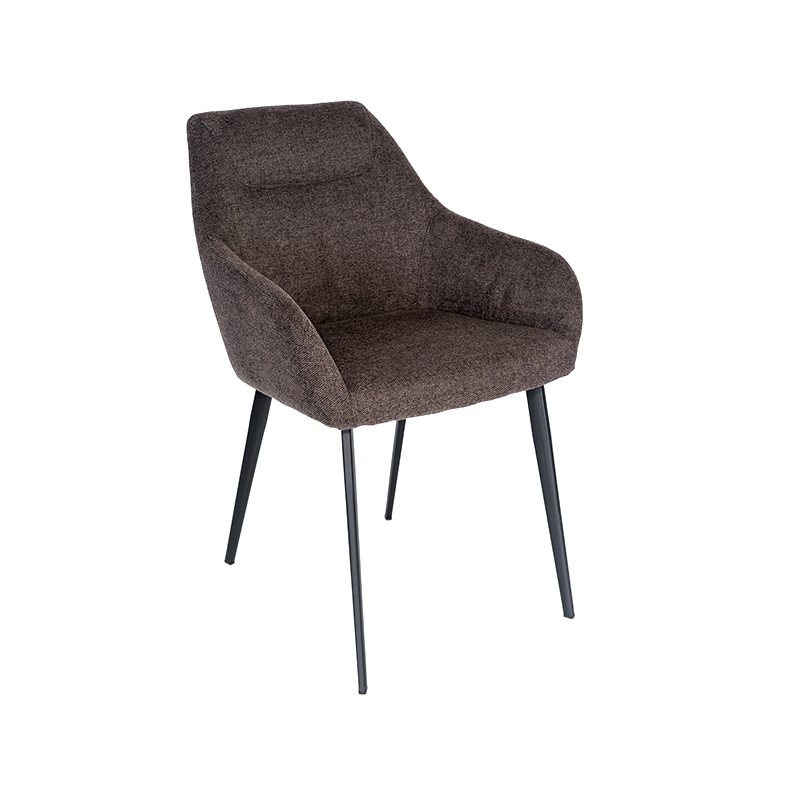
Stain-resistant and water-repellent finishes change how the fabric behaves in a real dining room. A quality finish bonds to the fiber and repels liquid long enough for you to wipe it off. Cheap finishes wash out after the first cleaning or leave the fabric feeling stiff. Performance fabrics engineered for dining chairs combine a stain-resistant treatment with a tightly woven face, which is why an easy-to-clean, stain-resistant high-back dining chair makes sense in settings where spills are frequent.
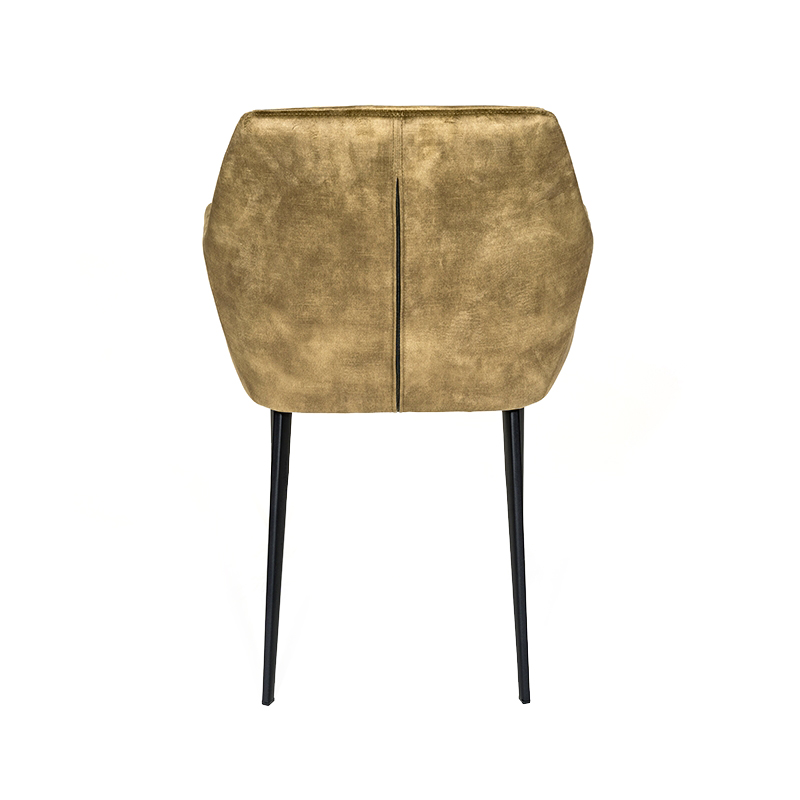 Wholesale Easy to clean, stain resistant, high back dining chair Suppliers, CompAnji Beifeite Furniture Co., Ltd Is China Wholesale Easy to clean, stain resistant, high back dining chair Suppliers, Company And Easy to...View Product →
Pure linen and pure cotton look excellent but wear faster at stress points. Polyester adds strength, nylon adds elasticity, and rayon or modal adds softness. A 60/40 polyester-cotton blend is a dependable choice for a dining chair because it keeps some breathability while improving abrasion resistance. Velvet made from a polyester-rayon blend keeps the soft hand feel of traditional velvet with far better durability.
Fabric quality issues usually surface after products reach the market, and returns cost far more than prevention. In a bulk purchase, these steps reduce the risk of receiving a chair that looks right in a photo but fails after months of use.
Ask the manufacturer for Martindale, colorfastness, and pilling test results on the exact fabric that will be used for production. A responsible furniture supplier either produces these reports or obtains them from the fabric mill. If the supplier cannot provide them, assume the fabric has never been tested.
Catalog photos do not show how a fabric behaves in a humid dining room or how much force it can take at the seams. Use the sample to check stiffness, stain behavior, and how the fabric is matched to the seat profile. Also confirm whether pattern repeats align with the chair shape, since poorly matched fabric can fail early at the seams.
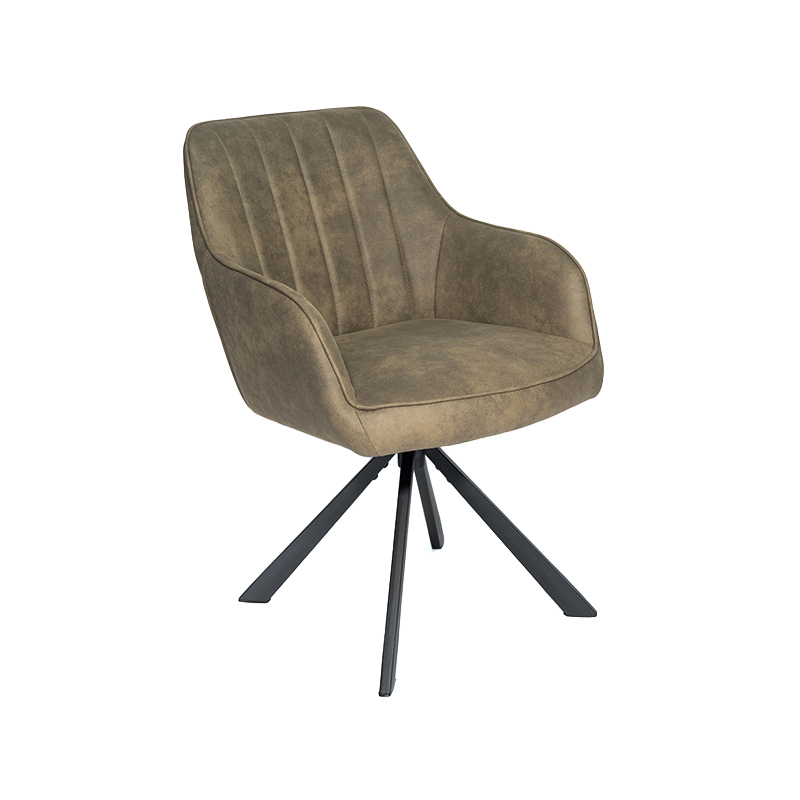
Fabric quality explains only part of a chair's performance. A soft, low-density foam under a good fabric will make the chair feel uncomfortable within months, because the fabric stretches to accommodate a collapsing cushion. A strong steel or iron frame protects the upholstery by maintaining a stable platform. One example of this coordinated construction is the steel-framed upholstered swivel dining chair, where the fabric, padding, and frame are specified as one system. For buyers comparing options, the relationship between the seat platform and the upholstery explains why metal legs affect the long-term durability of upholstered dining chairs.
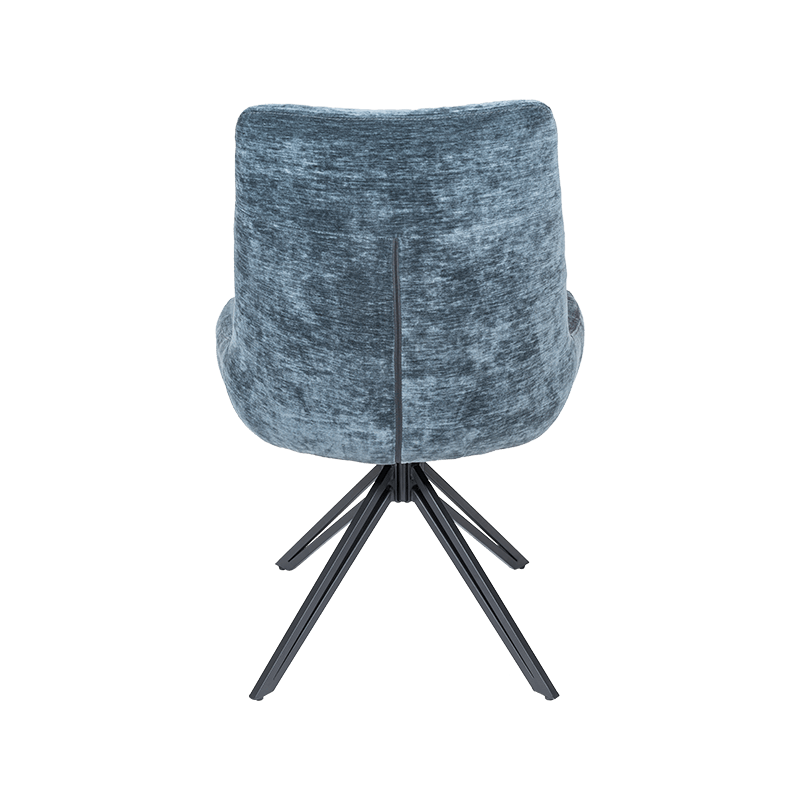 Wholesale navy blue velvet dining room chairs, Four Metal Legs Steel Frame UpholAnji Beifeite Furniture Co., Ltd Is China Wholesale navy blue velvet dining room chairs, Four Metal Legs Steel Frame Upholstered Armless ...View Product →
Fabric quality affects dining chair comfort and durability in ways that are easy to miss at a glance but impossible to ignore over time. It sets the thermal comfort of the seat, the way the cushion holds you, how quickly the appearance fades, and how many years the chair remains presentable. When you order dining chairs in volume, investing in verified fabric performance is not an extra cost; it is the most reliable way to avoid the most common seating complaints.
Ask for the test data, inspect the actual fabric construction, and evaluate how the fabric interacts with the foam and frame. A chair built around quality upholstery will still look and feel right long after a cheaper alternative has started to sag.

Products
Contact info.
No 1255, Xingye Road, Tianzihu Modern Industrial Park, Anji County, Zhejiang Province, China
+86-13587919519
sales@bftfurniture.com
