
 English
 русский
 Español
 عربى
عربى

No 1255, Xingye Road, Tianzihu Modern Industrial Park, Anji County, Zhejiang Province, China
Content
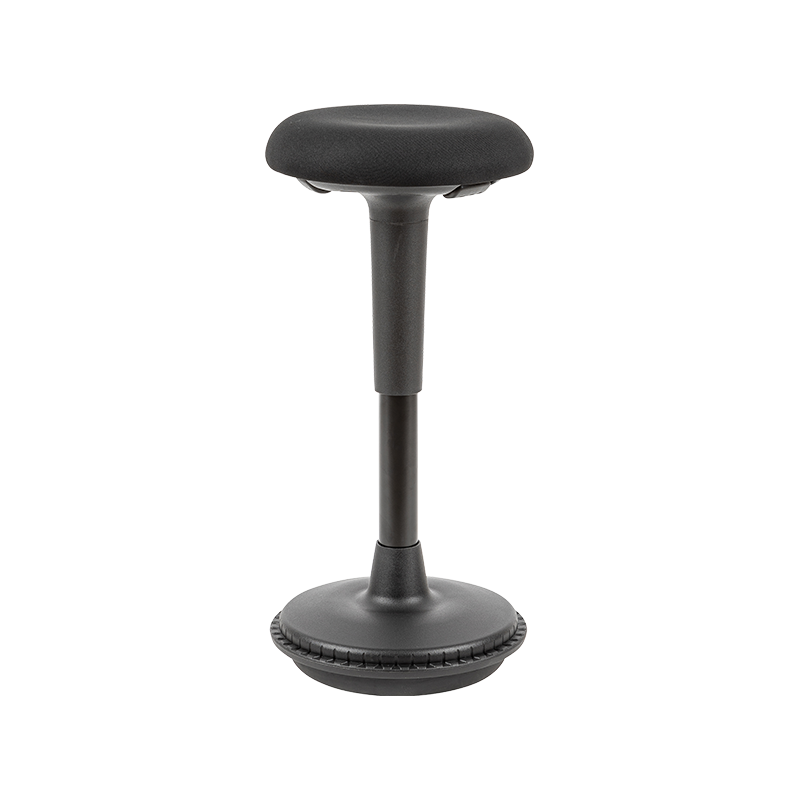
A Height adjustable swing wobble stool vertical table stool solves the structural static strain of traditional office seating by introducing a controlled 360-degree pivot axis at its base. This active seating mechanism forces continuous micro-contractions of the core musculature, reducing lumbar disc compression pressure by up to 30% compared to standard 90-degree fixed chairs. By pairing a gas-spring vertical lift range with a stable, rubberized slip-resistant counterweight base, it seamlessly bridges the gap between sitting and standing postures at industrial standing desks or vertical workstations.
Traditional flat-surface seating places the pelvis in a rearward tilt, flattening the natural lumbar lordosis curve and forcing spinal muscles to overcompensate. The engineering behind an active swing wobble stool introduces an unstable surface that triggers a continuous proprioceptive response. The user's center of gravity is constantly managed by minor stabilizer muscle adjustments, primarily involving the transversus abdominis and multifidus muscles.
This subtle, non-fatiguing movement increases metabolic rate and promotes spinal disc hydration through passive fluid exchange. Because the base utilizes an elastomer-molded joint rather than rigid mechanical metal hinges, the articulation remains completely silent and smooth, allowing natural lateral tilt and rotational swing trajectories without introducing jarring stop-points.
Deploying active vertical stools requires analyzing workspace architecture to maximize ergonomic gains. These seating platforms excel in high-interactivity environments where static posture causes rapid physical decline:
When looking at ergonomic interventions for workplace health, comparing the physical markers of traditional ergonomic chairs against wobble systems highlights distinct operational properties.
Safety managers evaluating active stools must check structural safety certificates before wide-scale deployment. Ensure the unit meets BIFMA X5.1 structural fatigue testing specifications for office seating. The base must have a non-scuffing rubber skin that grips industrial vinyl, concrete, or carpeted floors securely, preventing the stool from slipping out from under the operator at maximum tilt angles. Furthermore, an auto-return vertical axis orientation mechanism adds convenience by returning the seat profile to its central alignment once weight is removed.

Products
Contact info.
No 1255, Xingye Road, Tianzihu Modern Industrial Park, Anji County, Zhejiang Province, China
+86-13587919519
sales@bftfurniture.com
