
 English
 русский
 Español
 عربى

No 1255, Xingye Road, Tianzihu Modern Industrial Park, Anji County, Zhejiang Province, China
Content
Bar stools are more than an additional seat at the counter. In bars, restaurants, and hospitality projects, they determine how many guests you can serve, how comfortable those guests feel, and how easily staff can move around. A well-chosen bar stool improves seating by solving three problems at once: it fits the elevated counter height, it occupies minimal floor space, and it survives the heavy use that commercial spaces demand. The wrong bar stool, meanwhile, creates bottlenecks, discomfort, and maintenance issues that appear within the first few weeks.
At its core, a bar stool is an elevated seating unit designed to work with counters, high tables, and bar ledges. Unlike a dining chair, it allows guests to sit at the same level as the surface without taking up the footprint of a full chair and table set. In a typical floor plan, replacing a four-top table with a counter layout and bar stools can increase the number of guests seated along the same wall by 40 to 60 percent.
The main factor to plan is height matching. A counter surface at 90–100 cm normally calls for a seat height of 60–65 cm, while a bar top at 100–110 cm works best with a 70–75 cm seat. Fixed-height models are more reliable over time because they have no moving parts, but adjustable-height bar stools provide flexibility when one space is used for breakfast, business meetings, and evening cocktails.
Comfort is not only about where the seat sits. The footrest should be placed roughly 15–20 cm below the seat so feet can rest naturally. Seat depth needs to be short enough that the front edge does not press into the back of the knees, and a slight waterfall edge helps circulation. A backrest or a swivel function reduces the urge to twist the whole stool, while armrests should be kept low so they do not interfere with the counter surface.
Commercial bar stools are subjected to constant sitting, leaning, dragging, and spilling. Their materials and construction must therefore be chosen for long-term service rather than for a single look. The frame is the best place to start: industrial users should look for welded steel tube frames with a wall thickness of at least 1.2 mm. Cheap pressed metal or thin tubing tends to develop wobble within months of daily shift use.
The seat covering also matters. PU leather and performance fabrics with stain-resistant finishes clean quickly after spills, while high-density foam prevents the seat surface from flattening. In high-traffic venues, a darker texture or a slip-on cushion cover makes maintenance easier. Electroplated or powder-coated metal parts resist rust and scratching, especially near ice bins and cleaning stations.
| Component | Specification | Reason |
|---|---|---|
| Frame | Welded steel tube, minimum 1.2 mm wall | Resists bending and rocking |
| Footrest | Continuous ring or rung at correct height | Supports feet safely |
| Seat upholstery | PU leather or stain-resistant commercial fabric | Cleans quickly and wears well |
| Height mechanism | Pneumatic gas lift rated for 80,000 cycles | Withstands constant adjustment |
| Base | Wide foot ring or 360-degree swivel base | Adds stability and easy turning |
Choosing these specifications in advance prevents two common problems: stools that feel unstable, and surfaces that degrade before the first maintenance check. The same applies to cleaning protocols. With a non-absorbent seat cover, staff can wipe the stool after every service; with an open-pore fabric, the venue may need professional cleaning more often, which adds operating cost.
Seating is one of the most visible elements in any hospitality interior. Bar stools can quietly reinforce the style of the venue: a metallic gold base suggests a cocktail bar with a glamorous mood, while a simple black steel tube fits a modern bistro. Upholstery color and texture offer a low-cost way to align the stools with the brand without renovating the entire room.
Comfort is part of the brand experience too. A guest who can sit without feeling trapped at a counter will stay longer, order more, and remember the venue. Swivel stools are therefore a common choice for bars because they allow conversation with both neighbors and bartenders. For restaurants, footrests and backrests increase comfort during long meals, while for hotels, adjustable heights make a lounge area more versatile.
Different projects place different demands on a bar stool. The main requirements can be broken down by venue type.
In a bar, speed of seating and guest turnover matter. Guests often pull themselves in and out without help, so a sturdy base and a smooth swivel function are essential. A 360-degree swivel allows guests to face the bar, the band, or friends without dragging the stool. A padded seat with a slightly curved front adds comfort during long evenings. For this reason, swivel bar stools with steel frames have become a default specification in cocktail bars and high-volume pubs.
Restaurants use bar stools around chef counters, high communal tables, and open-kitchen ledges. A fixed-height stool simplifies operations because there are no cylinders to fail and no height mismatches if the counter height is consistent. The steel tube frame can be paired with a wood-look or upholstered seat to add warmth to the dining room. In many cases, a stackable or lightweight model makes it easier to clear the floor for events or cleaning.
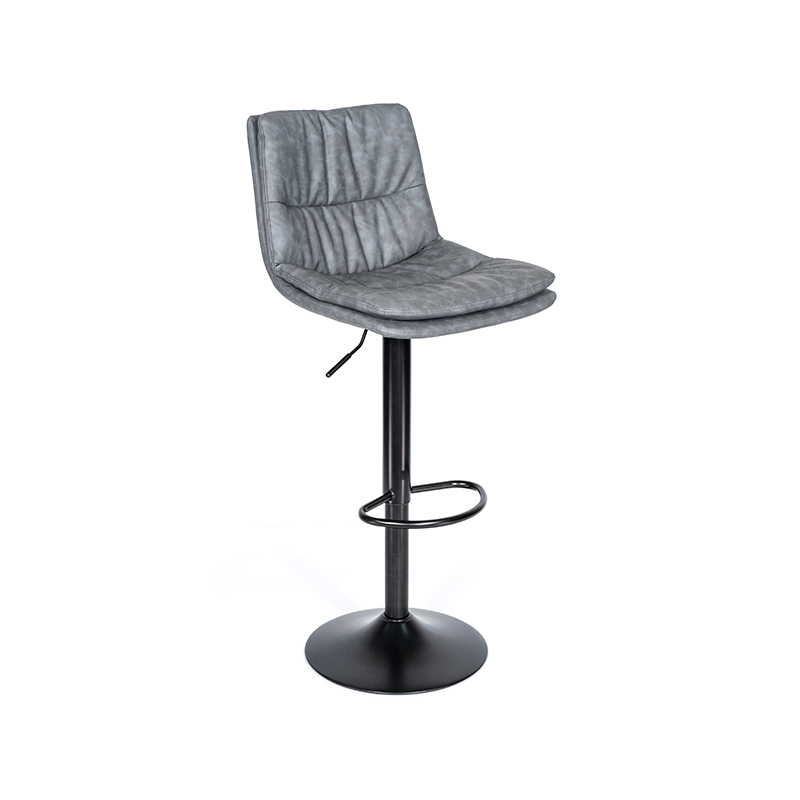
 Fixed-Height Steel Tube Bar Stool with Gray Fabric SeatThis non-adjustable steel tube stool suits restaurants with consistent counter heights, offering a durable frame, stain-resistant gray fabric, and a curved backrest for comfortable seating during busy service.View Product →
Hotel lobbies and lounges serve several functions during the day: coffee corner in the morning, business meeting area in the afternoon, and wine bar at night. Adjustable-height bar stools give the operator flexibility to switch between a 90 cm snack table and a 105 cm bar counter. PU or stain-resistant fabric matters because breakfast spills, coffee rings, and evening drinks all touch the same seat. A swivel base helps guests turn toward the conversation area, which makes the space feel more social.
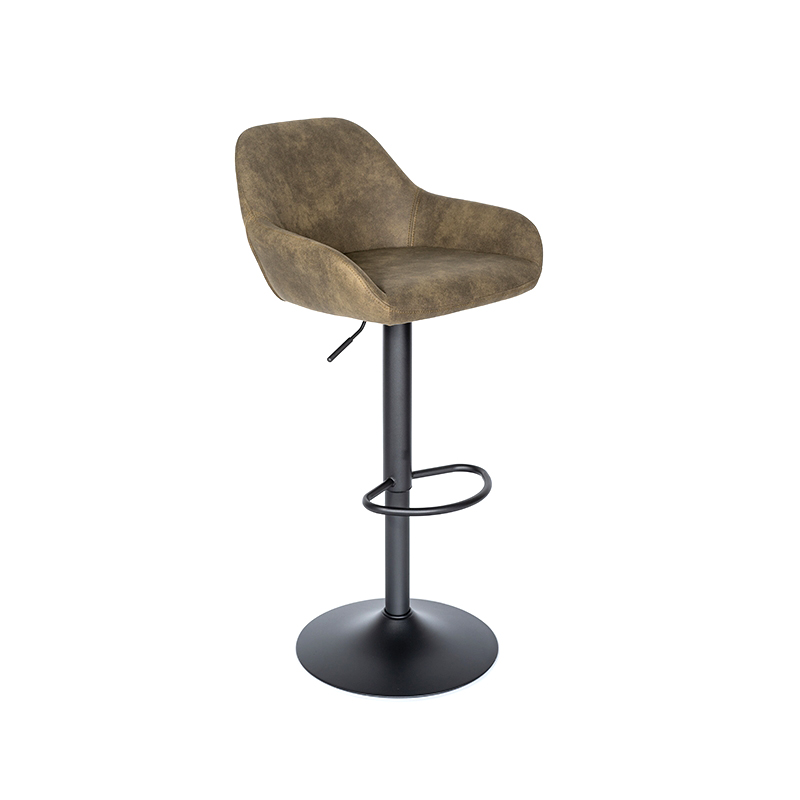
 Height-Adjustable Fabric Bar Stool with Curved BackrestThis swivel stool features pneumatic height adjustment, a curved backrest, and soft suede-like fabric, making it flexible for hotel lobbies that shift from coffee service to evening bar use.View Product →
Once the ideal bar stool is defined, the next question is how to source it reliably. Commercial projects usually need a consistent finish across dozens or hundreds of units, timely delivery, and the ability to adjust dimensions or materials without losing quality. Working directly with a manufacturer that supports ODM/OEM gives you control over these details.
At our factory in Anji, China, we produce bar stools and other seating under one roof, from tube bending and welding to upholstery and packaging. That vertical setup helps keep quality predictable and speeds up custom changes such as frame color, seat cover, height range, and logo placement. Our design team can also modify an existing product to meet your commercial specification, or build a new model around your drawings and functional targets.
Two resources are useful when planning a large order:
Because we focus on seating rather than full furniture lines, we can give more attention to the details that matter in hospitality: weld quality, seat density, gas lift performance, and packing that prevents transit damage. Asking a supplier about these details early reduces the risk of mismatched specifications after the order is in production.
Bar stools are not simply a catch-all solution for extra counter seats. Selected carefully, they can raise the capacity of a floor plan, shorten cleaning time, reinforce the interior concept, and make guests feel at ease. Start with the correct height range, choose materials that suit your traffic level and cleaning routine, then look for a supplier who can scale those specifications into a consistent commercial order. That approach turns bar stools from a commodity purchase into a genuine seating solution.

Products
Contact info.
No 1255, Xingye Road, Tianzihu Modern Industrial Park, Anji County, Zhejiang Province, China
+86-13587919519
sales@bftfurniture.com
